

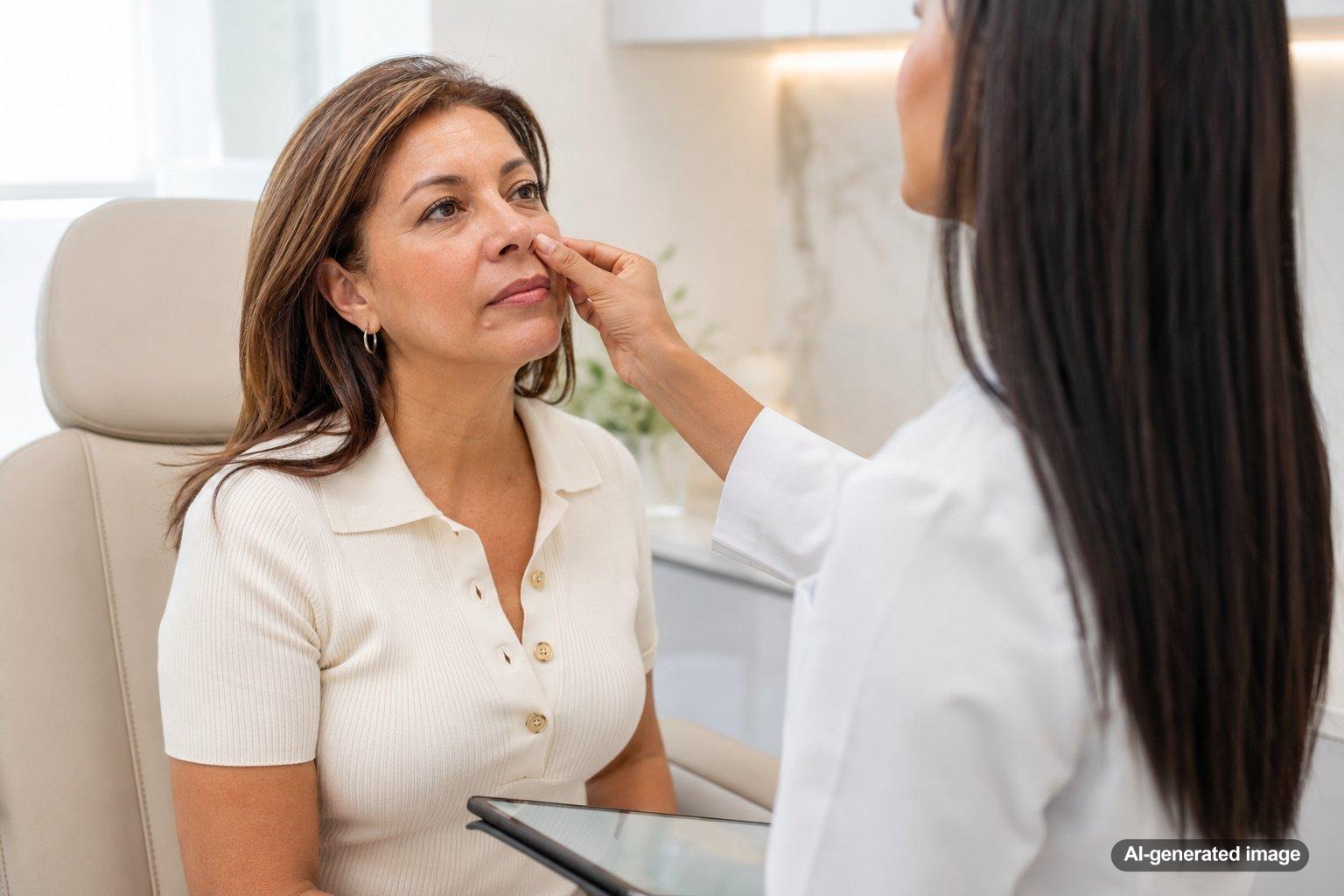
A persistent rash in the creases beside your nose can happen for several reasons. One common possibility is seborrheic dermatitis, an inflammatory condition that often affects oil-rich areas such as the sides of the nose, eyebrows, scalp, and ears. However, irritation from skincare products, contact dermatitis, periorificial dermatitis, rosacea, psoriasis, and certain infections can sometimes create a similar appearance.
Because several conditions can look alike in this small area of the face, the pattern, texture, symptoms, triggers, and products you use all matter. A dermatologist can evaluate a rash that keeps returning, does not settle with gentle care, or develops concerning changes.
Quick answer
- Seborrheic dermatitis is a common possibility. It can cause redness, discoloration, flaking, or greasy-looking scale along the sides of the nose.
- Skin irritation can look similar. Cleansers, exfoliating acids, retinoids, fragrance, makeup, and frequent wiping may irritate this delicate area.
- Other facial rashes can involve the nose. Periorificial dermatitis, rosacea, psoriasis, and contact dermatitis may overlap in appearance.
- A rash that persists deserves an evaluation. The right approach depends on what is actually causing the inflammation.
Why are the creases of the nose prone to rashes?
The folds running from the sides of the nose toward the corners of the mouth are called the nasolabial folds. These creases can collect oil, sweat, skincare products, makeup, and moisture. They also sit in an area with numerous sebaceous, or oil-producing, glands.
That combination can make the area more susceptible to irritation and certain inflammatory skin conditions. Friction from tissues, glasses, masks, or frequent touching may add to the problem. In Fort Lauderdale’s warm, humid climate, sweat and moisture can also make an already sensitive facial fold feel more irritated.
Common causes of a persistent rash beside the nose
Several conditions can affect this area, and appearance alone is not always enough to distinguish them.
- Seborrheic dermatitis: This inflammatory condition commonly affects the scalp, eyebrows, ears, and creases along the sides of the nose. It may appear flaky, scaly, pink, red, or differently colored from the surrounding skin. The scale can look dry or somewhat oily.
- Irritant contact dermatitis: Repeated exposure to strong cleansers, exfoliants, acne treatments, retinoids, aftershave products, fragrance, or frequent rubbing can disrupt the skin barrier and create burning, dryness, tenderness, or flaking.
- Allergic contact dermatitis: An ingredient in skincare, cosmetics, sunscreen, hair products, or another substance touching the face can sometimes trigger an allergic skin reaction.
- Periorificial dermatitis: This inflammatory rash can appear around the mouth, nose, or eyes. It may involve small bumps, dryness, flaking, burning, or sensitivity. Facial corticosteroid use can be associated with this condition, so persistent facial rashes should not automatically be treated with steroid cream without professional guidance.
- Rosacea: Rosacea can cause persistent or recurring facial redness, sensitivity, visible blood vessels, or acne-like bumps, often involving the central face and nose.
- Psoriasis or overlapping inflammatory conditions: Psoriasis can occasionally involve facial areas and may overlap in appearance with seborrheic dermatitis.
- Infection: Bacterial or fungal involvement can sometimes complicate irritated skin. Increasing pain, warmth, swelling, drainage, crusting, or rapid spreading deserves prompt medical attention.
Clues that may help your dermatologist narrow down the cause
Small details can be useful when your dermatologist evaluates a recurring rash. Consider whether the area is mainly flaky, greasy, bumpy, itchy, painful, burning, crusted, or simply discolored. Notice whether a similar rash appears in your eyebrows, scalp, around your ears, or elsewhere on your face.
It can also help to think about recent changes in facial cleansers, moisturizers, sunscreen, makeup, acne treatments, shaving products, hair products, or prescription creams. If the rash comes and goes, photographs taken during a flare can give your dermatologist additional context.
What can you do at home while the area is irritated?
Until you know what is causing the rash, keeping your routine simple is generally the most conservative approach. Avoid trying several new treatments at once, since that can make irritation worse and make it harder to identify a trigger.
- Wash with a gentle cleanser and lukewarm water rather than scrubbing the area.
- Use a simple, fragrance-free moisturizer if the skin feels dry or tight.
- Temporarily reduce potentially irritating products such as facial scrubs, strong exfoliating acids, retinoids, and heavily fragranced products around the irritated area.
- Pat the skin dry instead of rubbing it with a towel.
- Try to minimize repeated wiping, picking, scratching, or touching.
- Keep track of products that seem to make the area sting, burn, itch, or become visibly more inflamed.
Be cautious about repeatedly applying over-the-counter corticosteroid creams to a facial rash without knowing the diagnosis. Some facial conditions can worsen or become more difficult to interpret after inappropriate corticosteroid use. If you have already been prescribed a medication for the area, follow the instructions from your own clinician rather than changing it based on general information online.
How might a dermatologist treat a rash in the nose creases?
Treatment depends on the diagnosis. A dermatologist may examine the distribution of the rash, its surface texture, associated symptoms, and your skincare or medication history. In some situations, additional testing may be considered if the appearance is unusual or the rash is not responding as expected.
For seborrheic dermatitis, common medical approaches may include topical antifungal treatments and, when appropriate, carefully selected anti-inflammatory medications. Periorificial dermatitis, contact dermatitis, rosacea, psoriasis, and infections require different strategies. Your clinician can help determine which category best fits your skin and whether a prescription treatment is appropriate.
This is one reason a persistent facial rash is worth evaluating rather than repeatedly experimenting with different creams. A product that is helpful for one type of rash may irritate or complicate another.
When should you see a dermatologist?
Consider scheduling an evaluation if the rash has lasted for several weeks, keeps returning, spreads beyond the nose creases, or does not improve after simplifying your skincare routine. It is also worth getting checked if the area is interfering with shaving, makeup, skincare, sleep, or your comfort during the day.
Seek more prompt medical attention if you notice rapidly increasing redness or swelling, significant pain, warmth, pus, drainage, extensive crusting, open sores, fever, involvement close to the eyes, or a rapidly spreading rash. These features may require assessment for infection or another condition that should not be managed through trial and error at home.
FAQ
Why is the skin beside my nose always red and flaky?
Several conditions can cause recurring redness and flaking in this location. Seborrheic dermatitis is one common possibility because it frequently involves the sides of the nose, but irritation, contact dermatitis, periorificial dermatitis, rosacea, and other inflammatory conditions can look similar. A dermatologist can evaluate the pattern if it persists.
Can seborrheic dermatitis affect only the sides of the nose?
It can involve the sides and creases of the nose, although many people also notice scaling in other oil-rich areas such as the scalp, eyebrows, ears, or beard area. Having a rash in this location does not by itself establish the diagnosis.
Can skincare products cause a rash around my nose?
Yes. Facial cleansers, exfoliants, retinoids, acne products, fragrance, cosmetics, sunscreen, and other products may irritate sensitive skin or contribute to contact dermatitis in some people. Simplifying the routine can help reduce unnecessary exposure while you arrange an evaluation if the problem continues.
Should I put hydrocortisone on a rash beside my nose?
It is better not to assume every facial rash should be treated with a corticosteroid. Corticosteroids may be used for certain conditions under appropriate guidance, but they can complicate some facial eruptions, including periorificial dermatitis. Your clinician can help you decide what is appropriate for the specific rash.
Why does the rash keep coming back?
Some inflammatory skin conditions naturally flare and settle over time, while repeated exposure to an irritant or allergen can also cause recurrence. Weather, sweat, skincare habits, friction, and underlying skin sensitivity may contribute. Identifying the pattern is often more useful than repeatedly changing products.
Ready to get help?
Schedule an appointment or send a message and our team will get back to you.
Prefer to call? 954-666-3736
This article is for educational purposes and is not medical advice. For diagnosis and personalized treatment, please book an appointment with a board-certified dermatologist.
Sources & further reading
- American Academy of Dermatology (AAD) – Seborrheic dermatitis: Signs and symptoms
- DermNet – Seborrheic dermatitis: Causes and treatment
- Cleveland Clinic – Seborrheic Dermatitis: Symptoms, Causes & Treatment
- American Academy of Dermatology (AAD) – Red rash around your mouth could be perioral dermatitis
