

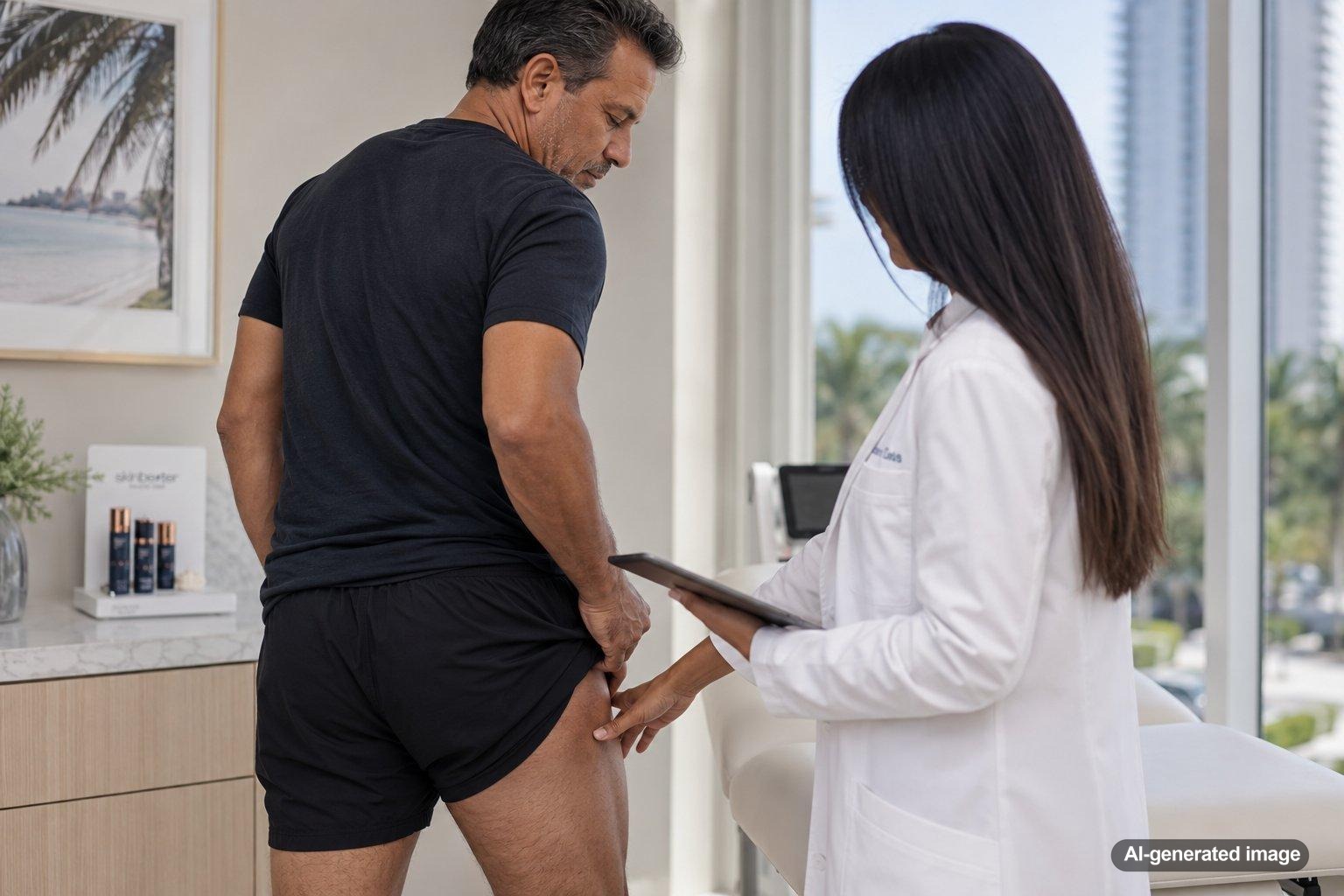
Loose skin along the back of the thighs can be frustrating, especially when exercise and a stable weight have not changed the way the skin looks. If the concern is primarily skin laxity rather than excess fat, a noninvasive radiofrequency treatment such as XERF may be worth discussing with a dermatologist.
The short answer is that XERF may help improve the appearance of mild to moderate loose skin on the back of the thighs in appropriately selected patients. It is not a substitute for surgery, and the degree of improvement can vary based on the amount of laxity, skin quality, age, weight changes, and individual response to treatment.
Quick answer
- XERF uses radiofrequency energy to deliver controlled heat into tissue without surgical incisions.
- Radiofrequency treatments may encourage gradual collagen remodeling and improved firmness.
- The back of the thighs can be evaluated for treatment when loose skin is the primary concern.
- Noninvasive tightening generally produces more subtle changes than surgical skin removal.
- A dermatologist should evaluate the area before treatment to determine whether XERF fits your goals and medical history.
How XERF works
XERF is a radiofrequency-based device. Radiofrequency treatments use electrical energy to create controlled heating within targeted tissue while the skin surface remains intact. This heating response can support collagen remodeling, which may gradually improve the appearance of firmness and laxity.
Radiofrequency is not the same as a laser. Rather than relying on a particular wavelength of light, RF technology delivers electrical energy that generates heat in tissue. The American Academy of Dermatology describes noninvasive radiofrequency as one of the approaches dermatologists may use for modest skin tightening.
Why the back of the thighs can become loose
Skin laxity in this area can develop for several reasons, and there is often more than one factor involved. Common contributors include:
- Natural changes in collagen and elastin over time
- Weight loss or repeated weight fluctuations
- Genetics and individual skin quality
- Sun exposure over many years
- Changes in the distribution of fat beneath the skin
- Normal differences in how skin responds to aging
It is also helpful to separate loose skin from cellulite or excess fat. These concerns can overlap, but they are not identical. A treatment intended to improve skin firmness may not address every dimple, contour irregularity, or area of fullness.
How much tightening can XERF provide?
Expectations matter with any nonsurgical tightening procedure. The goal is usually a gradual improvement in firmness rather than the dramatic removal of excess skin that can occur with surgery. The American Academy of Dermatology notes that noninvasive skin-tightening procedures generally provide modest tightening and are often better suited to people with a smaller amount of sagging skin.
For the back of the thighs, that means XERF may be more appropriate when the skin looks mildly crepey, less firm, or somewhat lax rather than when there are large folds of excess skin. Your dermatologist can examine the skin while you are standing and moving, since laxity can look different depending on position.
What happens during a radiofrequency skin-tightening treatment?
The exact treatment protocol depends on the device, treatment area, and clinical plan. In general, noninvasive radiofrequency procedures involve placing a treatment handpiece against intact skin and delivering controlled energy to heat tissue beneath the surface. Cleveland Clinic explains that RF skin tightening uses electromagnetic energy to heat tissue and stimulate changes associated with collagen and skin firmness.
Patients commonly describe warmth during RF procedures. Treatment settings and technique should be selected by a qualified provider based on the area being treated, the device being used, and individual factors. If anything feels unexpectedly uncomfortable during a procedure, tell your provider immediately.
When might XERF be a reasonable option?
A dermatologist may consider several factors when deciding whether a noninvasive tightening treatment makes sense. XERF may be worth discussing if your concern is a relatively modest amount of loose skin, you prefer a nonsurgical approach, and your expectations are consistent with gradual and potentially subtle improvement.
It may be less suitable when there is substantial excess skin, when another concern such as significant fat or cellulite is primarily responsible for the appearance, or when a medical issue affects the treatment area. In those situations, your clinician can explain whether another approach or a surgical consultation would better match your goals.
What can you do at home for loose thigh skin?
Home care cannot remove significant loose skin, but maintaining the overall health of your skin can still be worthwhile. Protect exposed skin from ultraviolet radiation, avoid indoor tanning, maintain a reasonably stable weight, and use a moisturizer if the skin tends to look dry or crepey.
Strength training may improve the shape and muscle tone beneath the skin, but it does not directly tighten excess skin. Similarly, topical firming products can temporarily improve hydration and texture, but creams generally cannot reproduce the deeper tissue effects of an in-office energy-based procedure. The American Academy of Dermatology notes that the tightening produced by creams and lotions tends to be subtle at best.
What about safety?
Any aesthetic device treatment should begin with an individualized consultation. The U.S. Food and Drug Administration advises people considering aesthetic devices to discuss potential benefits, risks, candidacy, and the provider’s training and experience before undergoing a procedure.
Your dermatologist should also review your medical history, medications, prior procedures, and the condition of the skin in the treatment area. Active irritation, infection, certain medical conditions, pregnancy, implanted devices, or other individual circumstances may affect whether an energy-based procedure is appropriate. Do not assume that a treatment recommended for someone else is automatically appropriate for you.
If you develop unexpected pain, blistering, significant swelling, skin color changes, persistent numbness, or another concerning reaction after an aesthetic procedure, contact your treating clinician promptly.
When to see a dermatologist
A consultation is useful when you are not sure whether the appearance behind your thighs is primarily loose skin, cellulite, fat, or a combination of concerns. A dermatologist can examine the area, discuss what degree of change is realistic, review potential risks, and explain available options without assuming that one device is right for everyone.
You should also have the area evaluated if a change in the skin is new, painful, rapidly progressing, associated with a rash or swelling, or otherwise seems different from ordinary cosmetic laxity.
FAQ
Can XERF completely remove loose skin from the thighs?
No nonsurgical tightening treatment should be expected to remove substantial excess skin in the way surgery can. XERF may help improve firmness in selected patients, but the amount of improvement varies.
Is XERF the same as a laser treatment?
No. XERF is based on radiofrequency energy rather than laser light. Both approaches can be used in aesthetic medicine, but they deliver energy differently and may be selected for different goals.
Can XERF help if I have cellulite on the back of my thighs?
Loose skin and cellulite can occur together, but they are different concerns. Improving skin firmness may change the overall appearance of an area, but it does not mean that every cellulite dimple will respond. A dermatologist can help identify what is contributing most to the texture you see.
How soon will I notice a difference?
Radiofrequency-related collagen remodeling is generally gradual rather than immediate. The timing and degree of visible change can vary, so your clinician should give you expectations based on your skin and treatment plan rather than promising a specific result by a specific date.
How many XERF treatments will I need?
There is no universal number that is appropriate for every patient. Treatment planning depends on the degree of laxity, treatment settings, your response, and your goals. Your clinician can recommend a plan after examining the area.
Who should evaluate me for XERF?
A board-certified dermatologist can assess whether your concern is suitable for nonsurgical tightening and review other options when necessary. This is especially useful when you are unsure whether laxity, cellulite, fat, or another skin change is responsible for the appearance.
At Waverly DermSpa, we offer XERF and can help you understand whether it may be appropriate.
Ready to get help?
Schedule an appointment or send a message and our team will get back to you.
Prefer to call? 954-666-3736
This article is for educational purposes and is not medical advice. For diagnosis and personalized treatment, please book an appointment with a board-certified dermatologist.
Sources & further reading
- American Academy of Dermatology (AAD) – Many ways to firm sagging skin
- Cleveland Clinic – Radio Frequency (RF) Skin Tightening: Benefits & Dangers
- U.S. Food and Drug Administration (FDA) – Aesthetic (Cosmetic) Devices
