

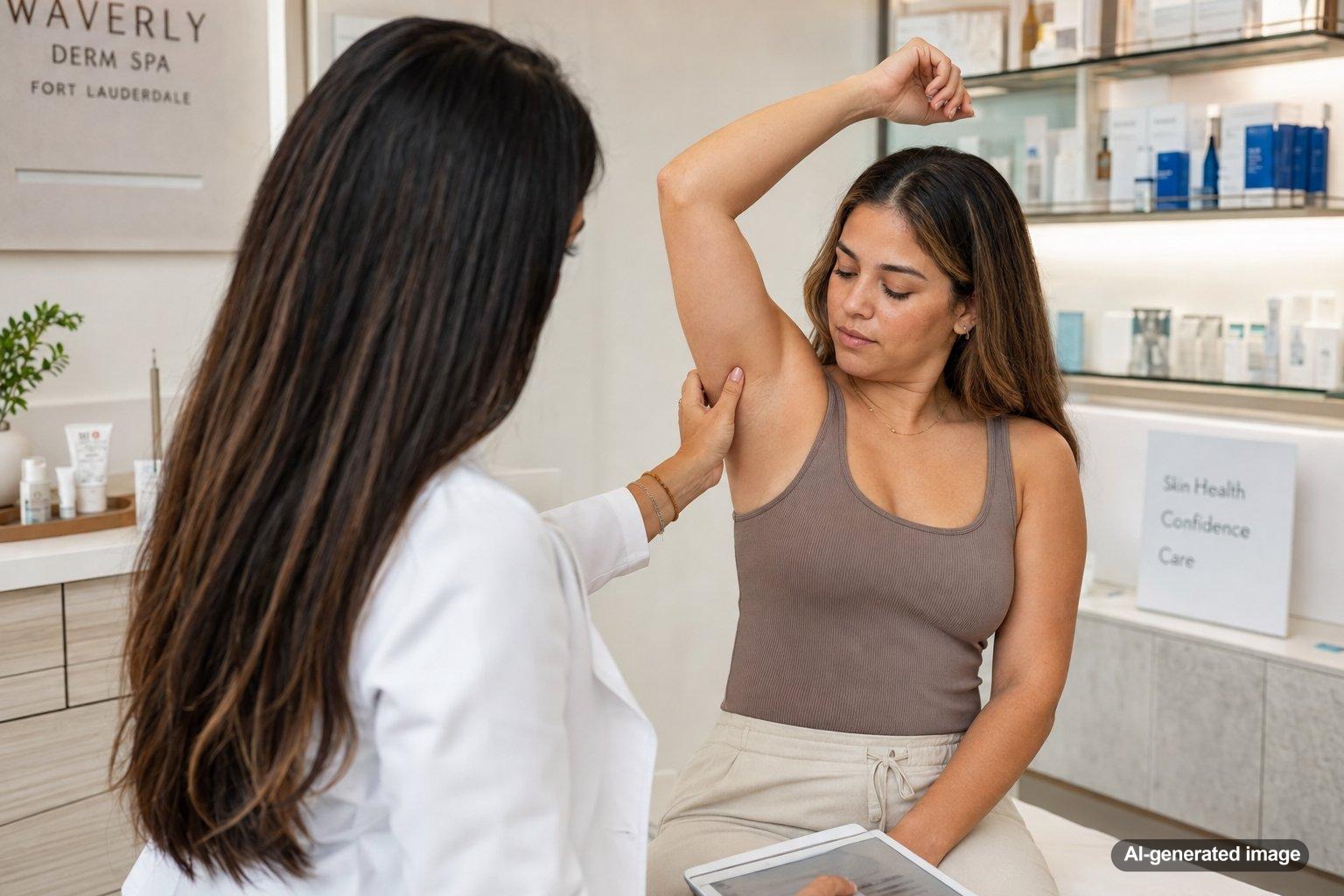
A persistent, itchy armpit rash that looks raw or burned may have several possible causes. One less familiar possibility is granular parakeratosis, an uncommon inflammatory skin condition that usually develops in body folds. It can create red, brown, scaly, or thickened patches that may itch, sting, or peel.
Appearance alone cannot confirm the cause. Contact dermatitis, intertrigo, psoriasis, and fungal or bacterial infections can produce similar changes. Because these conditions may require different care, a rash that persists, recurs, or becomes uncomfortable is worth having evaluated by a dermatologist.
Quick answer
- Granular parakeratosis may appear as a red or brown, scaly patch in one or both armpits.
- Heat, moisture, friction, occlusion, and exposure to certain personal care or laundry products can be associated with the condition.
- The rash may resemble irritation or a superficial burn, but several other skin conditions can look similar.
- Gentle cleansing, keeping the area cool and dry, and pausing potential irritants may help reduce further aggravation.
- A dermatologist can examine the area and determine whether testing or treatment is appropriate.
What is granular parakeratosis?
Granular parakeratosis is an inflammatory skin reaction that most often affects the armpits and other areas where skin touches skin. The word “parakeratosis” describes a pattern in how cells mature in the outer layer of the skin. This pattern is most clearly identified when a small skin sample is examined under a microscope.
The visible rash may consist of closely grouped, reddish-brown bumps or plaques with a rough or scaly surface. Some areas look shiny, peeling, or unusually dark after inflammation. Itching is possible, although symptoms vary. The condition can affect one armpit or both and may linger or return if contributing triggers remain present.
Granular parakeratosis is not the only explanation for a persistent armpit rash. Irritant or allergic contact dermatitis can follow exposure to deodorants, fragrances, preservatives, detergents, or fabric treatments. Intertrigo develops when moisture and friction irritate a skin fold, sometimes with secondary fungal or bacterial overgrowth. Eczema, inverse psoriasis, and other inflammatory conditions may also enter the discussion.
Common causes or triggers
The exact cause is not always clear. Granular parakeratosis appears to involve disrupted maturation of cells in the skin’s protective outer layer. Several environmental factors may contribute or make an existing rash more noticeable:
- Heat and sweating: Warm, humid conditions can keep the armpit damp and increase irritation.
- Friction: Tight clothing, repeated rubbing, or vigorous scrubbing may stress the skin barrier.
- Occlusion: Skin folds and close-fitting fabrics can trap moisture and product residue against the skin.
- Deodorants and antiperspirants: Fragrance, preservatives, or other ingredients may irritate sensitive skin or cause an allergic reaction.
- Laundry products: Detergents, sanitizers, rinse aids, and fabric treatments may leave residues that come into contact with the armpits.
- Shaving and hair removal: These can temporarily weaken the skin barrier and make other irritants feel more intense.
In Fort Lauderdale’s heat and humidity, moisture and friction can be especially difficult to avoid. Travel may add further variables, including unfamiliar hotel toiletries, laundry products, climates, or fabrics. These factors do not establish a diagnosis, but they can provide useful clues during an evaluation.
What you can do at home
While arranging an evaluation, a simple and conservative routine can reduce unnecessary irritation. Avoid testing several new products at once, since that can make it harder to identify a trigger.
- Pause recently introduced deodorants, fragranced body products, wipes, and laundry additives that contact the area.
- Cleanse gently with lukewarm water and a mild, fragrance-free cleanser, then pat the skin dry instead of rubbing.
- Choose loose, breathable clothing and change out of damp exercise or travel clothes promptly.
- Keep the fold comfortably cool and dry without aggressive scrubbing or frequent application of powders and creams.
- Pause shaving, waxing, exfoliating acids, and other potentially irritating treatments until the skin settles or a clinician advises otherwise.
- Avoid scratching, peeling, or trying to remove scale, since this may further disrupt the skin barrier.
It is helpful to note when the rash began and whether it changed after a new deodorant, detergent, medication, trip, workout routine, or hair-removal method. Photos taken in consistent lighting can also document changes for your appointment. Before applying an antifungal, antibiotic, steroid, retinoid, or exfoliating product, ask a qualified clinician whether it fits the suspected cause.
Professional evaluation and treatment options
A dermatologist may ask about product exposures, sweating, clothing, travel, allergies, and treatments already attempted. The examination focuses on the rash’s location, color, texture, border, symmetry, and any signs of infection. Depending on the findings, testing may include a skin scraping, swab, patch testing for contact allergy, or a small biopsy. Not every person needs every test.
If granular parakeratosis is identified, care often starts with removing suspected irritants and reducing moisture, friction, and occlusion. A dermatologist may consider a topical anti-inflammatory medicine, a medication that helps normalize surface-cell turnover, or another prescription approach based on the skin’s condition. Antifungal or antibacterial treatment is generally considered when examination or testing suggests secondary infection rather than being used automatically. Your clinician can help you decide which option is appropriate and how it should be used in the sensitive underarm area.
When to see a dermatologist
Schedule a dermatology visit when an armpit rash remains present despite gentle care, repeatedly returns, spreads, interferes with sleep, or makes ordinary movement uncomfortable. Earlier evaluation is also sensible when the diagnosis is uncertain or when you have been cycling through over-the-counter products without improvement.
Seek prompt medical attention if the area becomes increasingly painful, hot, swollen, blistered, or rapidly expanding. Drainage, pus, a strong odor, fever, red streaks, or feeling unwell can be associated with infection and should not be managed through trial and error at home. People who are immunocompromised or have diabetes should have a low threshold for contacting a clinician about worsening inflammation or broken skin.
Frequently asked questions
Is granular parakeratosis contagious?
Granular parakeratosis is considered an inflammatory skin reaction, not a contagious disease. However, an armpit rash may have another cause, and secondary infection is possible. An examination can help clarify what is happening.
Why can the rash look like a burn?
Inflamed skin in a moist fold can appear bright red, shiny, raw, peeling, or darker than the surrounding skin. These changes may resemble a superficial burn even when heat or chemicals did not directly burn the area. The appearance is not specific to granular parakeratosis.
Should I stop using deodorant?
If a deodorant or antiperspirant seems to coincide with the rash, temporarily pausing it may help avoid further irritation. Bring the product or its ingredient list to your appointment. A dermatologist can help determine whether irritant or allergic contact dermatitis should be considered.
Does granular parakeratosis require a biopsy?
A biopsy may be used to confirm the characteristic microscopic pattern, especially when the rash resembles another condition or has not responded as expected. Your dermatologist can decide whether an examination and less invasive testing provide enough information first.
Can humid weather make an armpit rash worse?
Heat and humidity can increase sweating, moisture retention, and friction within the armpit. These factors may aggravate several types of fold rashes, including granular parakeratosis and intertrigo. Breathable clothing and changing out of damp garments may help limit irritation.
Ready to get help?
Schedule an appointment or send a message and our team will get back to you.
Prefer to call? 954-666-3736
This article is for educational purposes and is not medical advice. For diagnosis and personalized treatment, please book an appointment with a board-certified dermatologist.
Sources & further reading
- DermNet – Granular parakeratosis
- Cleveland Clinic – Intertrigo: What Is It, Causes, Symptoms & Treatment
- American Academy of Dermatology (AAD) – Eczema types: Contact dermatitis tips for managing
