

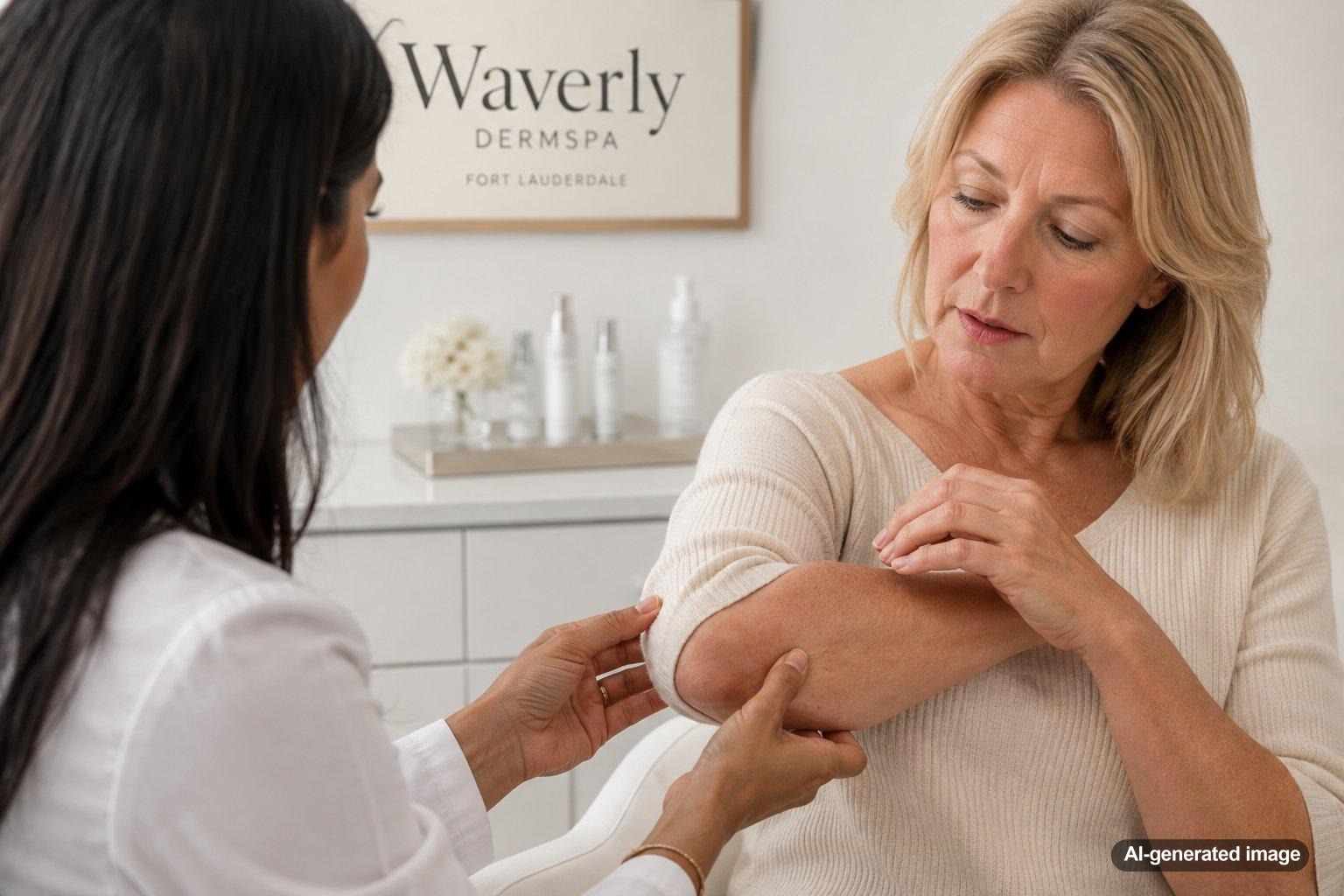
If the soft brush of a shirt, bedsheet, or waistband suddenly feels painful, the sensation can be confusing, especially when the skin looks completely normal. Pain from very light contact may happen when the skin itself is irritated, but it can also occur when the nerves that process touch become unusually sensitive.
One term clinicians use for pain caused by normally nonpainful touch is allodynia. Clothing brushing against the skin is a recognized example, although allodynia is a symptom rather than a diagnosis and can have many possible causes. A dermatologist can examine the area and help determine whether the discomfort appears to be coming primarily from the skin, the nerves, or another underlying issue.
Quick answer
- Light clothing can hurt when the skin is irritated, inflamed, injured, or unusually sensitive.
- Pain from touch that ordinarily would not hurt may be described as allodynia, a form of heightened pain sensitivity.
- The skin may look normal even when abnormal nerve sensations are present.
- New, persistent, severe, or unexplained sensitivity is worth discussing with a clinician.
- Rapidly worsening pain, weakness, numbness, significant swelling, fever, or a new blistering rash warrants prompt medical attention.
What does it mean when light touch hurts?
Your skin contains sensory nerves that continuously send information about pressure, temperature, texture, and potential injury to the nervous system. Usually, the light movement of fabric across your skin is interpreted simply as touch. When those sensory pathways become irritated or unusually responsive, an ordinary sensation can instead feel burning, stinging, sharp, raw, or painful.
Allodynia specifically describes pain caused by something that would not normally be painful. Cleveland Clinic includes wearing clothing among examples of touch that may trigger this type of sensitivity. Another related term, cutaneous dysaesthesia, describes unpleasant or abnormal skin sensations that can include burning, stinging, increased sensitivity, and pain. DermNet notes that these symptoms can sometimes occur even when the affected skin looks normal.
These terms describe what the sensation feels like. They do not identify why it is happening, which is why evaluation can be useful when symptoms are unexplained or do not settle.
Common causes or triggers
There is no single explanation for skin that hurts when clothing brushes against it. Possibilities can range from temporary surface irritation to nerve-related sensitivity.
- Skin irritation or friction: Tight clothing, repetitive rubbing, shaving, sweating, or a new fabric may leave the skin more reactive than usual.
- A weakened or irritated skin barrier: Dryness and exposure to harsh cleansers, fragrances, acids, retinoids, or other irritating products can make normally comfortable contact feel unpleasant.
- Sun or heat exposure: Recently sun-exposed or overheated skin may feel tender before or while visible redness develops.
- An inflammatory skin reaction: Redness, itching, scaling, bumps, or swelling alongside tenderness may point toward a skin process that needs to be identified rather than simply covered with more products.
- Nerve irritation: Nerve-related discomfort can feel burning, shooting, electric, tingling, or unusually painful with gentle touch. Pain pathways can sometimes become sensitive enough that pressure or brushing against the skin hurts.
- Localized abnormal skin sensation: Cutaneous dysaesthesia can affect a specific area or a broader region, and clothing or temperature changes may aggravate the sensation.
The location and pattern matter. A small irritated patch after friction is different from unexplained pain covering a large area, recurring symptoms in the same location, or sensitivity accompanied by numbness, weakness, or other neurologic symptoms.
What you can do at home
For mild symptoms without concerning changes, simplifying what touches the area may make it easier to tell whether ordinary irritation is contributing.
- Choose loose, soft clothing and avoid seams or waistbands that repeatedly rub the sensitive area.
- Pause newly introduced fragranced products, exfoliating acids, scrubs, or other potentially irritating skincare on the affected skin.
- Use lukewarm rather than very hot water when bathing.
- Keep cleansing gentle and avoid aggressive rubbing with towels, loofahs, or brushes.
- If the skin is dry or irritated, consider a simple fragrance-free moisturizer that you already tolerate well.
- Pay attention to whether heat, cold, movement, a particular garment, a skincare product, or another repeatable factor seems to trigger the discomfort.
Avoid repeatedly testing the painful area by rubbing or pressing on it. If discomfort continues despite removing obvious sources of irritation, an examination can provide more useful information than trying multiple new products at once.
What can a dermatologist do?
A dermatologist can look for subtle clues such as redness, scaling, swelling, a rash, changes in skin texture, localized tenderness, or signs that the skin barrier is compromised. Your clinician may also ask whether the sensation is burning, tingling, stabbing, itchy, numb, or triggered specifically by movement, pressure, or temperature.
If the skin appears normal but the pattern sounds more consistent with abnormal nerve sensation, your dermatologist can help determine whether additional medical evaluation may be appropriate. Treatment depends on the underlying cause rather than the sensitivity alone. Cleveland Clinic similarly notes that management of allodynia focuses on identifying and addressing what is causing the symptom.
Because many different issues can create similar sensations, prescription treatment or procedures should be selected only after an appropriate clinical evaluation.
When should you see a dermatologist?
Consider scheduling an evaluation when the sensitivity is new and unexplained, keeps returning, lasts despite gentle skin care, interferes with dressing or sleep, or comes with a visible skin change.
Seek prompt medical attention when pain develops suddenly or becomes severe, particularly if it is accompanied by rapidly progressing numbness or weakness. Cleveland Clinic advises medical evaluation for sudden or very painful allodynia and identifies quickly worsening severe pain, numbness, or weakness as symptoms that can require urgent assessment.
You should also get timely medical guidance if tenderness appears with fever, significant swelling, spreading redness, a new cluster of blisters, facial or eye involvement, or other symptoms that make you feel unwell. These features can change how urgently the area should be evaluated.
FAQ
Why does my skin hurt when my clothes touch it even though there is no rash?
Visible skin changes are not always present when discomfort comes from heightened sensory or nerve activity. DermNet notes that abnormal skin sensations can occur while the affected area appears normal. Because several causes are possible, persistent unexplained pain should be evaluated rather than assumed to have one specific explanation.
What is it called when light touch hurts?
The term allodynia describes pain caused by stimulation that would not ordinarily be painful, such as gentle pressure or fabric moving across the skin. It describes a symptom, not its underlying cause.
Can sensitive skin make clothing hurt?
Irritated or compromised skin can become tender enough that friction from clothing feels uncomfortable. Look for possible contributors such as dryness, recent shaving, heat exposure, tight garments, or newly introduced skincare products. Persistent pain without an obvious source deserves an evaluation.
Can nerve sensitivity make skin painful to touch?
Yes. Abnormal nerve signaling can be associated with burning, stinging, shooting pain, or pain triggered by gentle touch. A clinician can help distinguish a possible nerve-related pattern from discomfort caused primarily by a skin condition.
Should I worry if clothing suddenly hurts my skin?
Sudden sensitivity does not automatically indicate a serious problem, but context matters. If the pain is severe, rapidly worsening, associated with numbness or weakness, or accompanied by significant skin changes or systemic symptoms, seek prompt medical evaluation.
Ready to get help?
Schedule an appointment or send a message and our team will get back to you.
Prefer to call? 954-666-3736
This article is for educational purposes and is not medical advice. For diagnosis and personalized treatment, please book an appointment with a board-certified dermatologist.
Sources & further reading
- Cleveland Clinic – Allodynia: What It Is, Causes, Treatment & Types
- DermNet – Cutaneous dysaesthesia
