

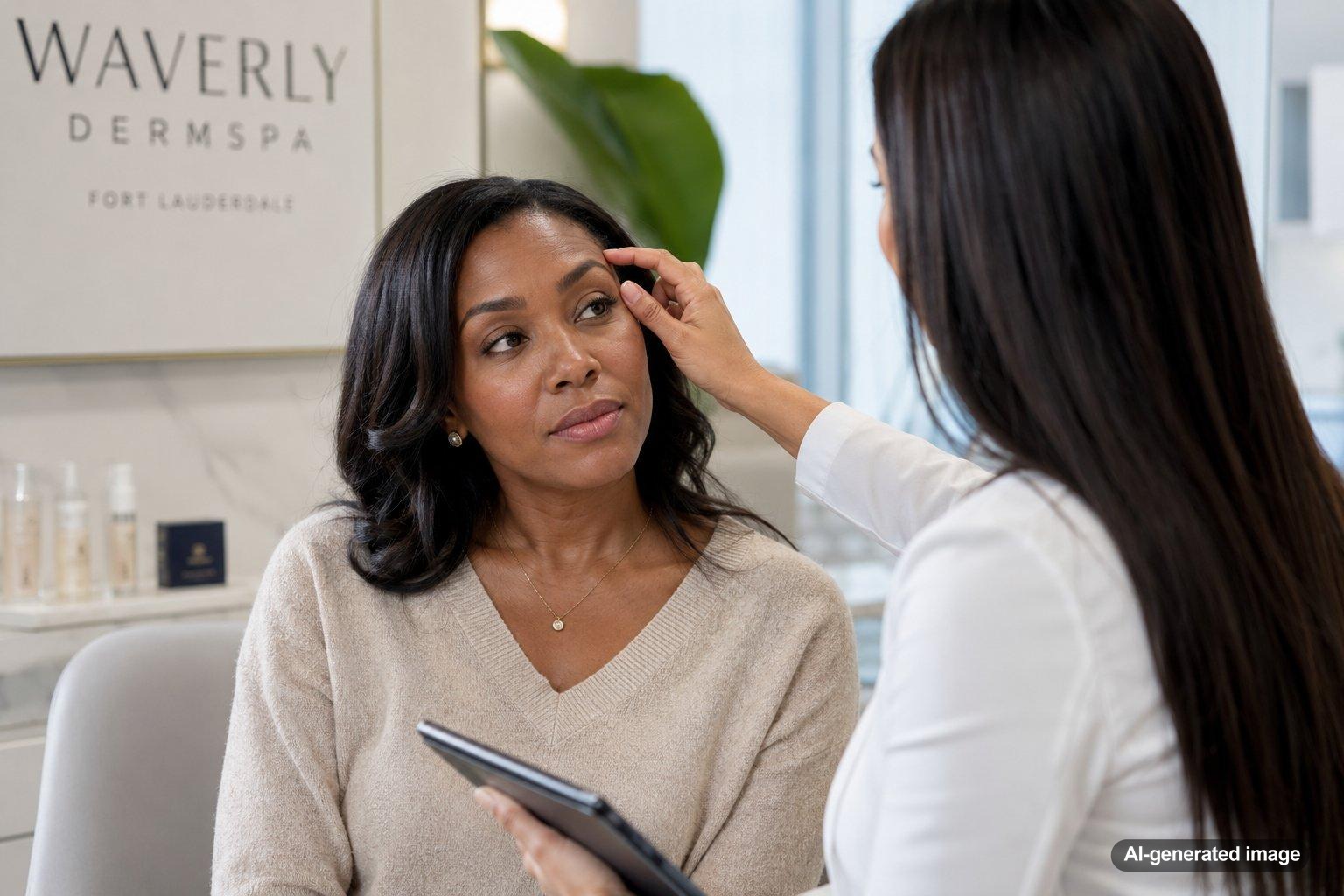
Itching and hair loss along the outer edge of an eyebrow can happen when the skin or hair follicles are irritated, inflamed, repeatedly traumatized, or affected by an underlying health condition. The pattern alone cannot identify the cause, but the combination of itching and thinning makes a careful look at the skin especially helpful.
Common possibilities include contact irritation from cosmetics, eczema or seborrheic dermatitis, rubbing, grooming-related damage, and certain forms of hair loss. Less commonly, eyebrow thinning may accompany a thyroid problem, nutritional deficiency, infection, medication effect, or inflammatory condition. A dermatologist can examine the area and determine whether testing is appropriate.
Quick answer
- Itching often suggests irritation or inflammation around the eyebrow, although more than one issue may be present.
- New cosmetics, skin care products, hair color, brow treatments, and repeated rubbing can affect the outer eyebrow.
- Smooth patches without visible scaling may be associated with alopecia areata or another hair-loss condition.
- Scaling, redness, crusting, pain, or continued thinning deserves professional evaluation.
- A dermatologist can distinguish temporary shedding or breakage from conditions that may damage follicles.
What does outer-edge eyebrow loss mean?
Loss of eyebrow or eyelash hair is called madarosis. It is a descriptive term rather than a diagnosis. Eyebrow hairs naturally cycle through growth, transition, and resting phases, but inflammation, physical damage, and changes elsewhere in the body can disrupt that cycle.
The skin’s appearance provides useful clues. Flaking or redness may point toward a skin condition, while short uneven hairs may suggest breakage. A smooth patch can occur with some autoimmune forms of hair loss. When the follicles appear scarred or the skin looks unusually shiny, prompt evaluation matters because certain inflammatory conditions can progressively damage follicles.
Common causes and triggers
- Contact irritation or allergy: Brow gels, pencils, dyes, adhesives, cleansers, sunscreens, retinoids, acids, fragrances, and hair products can reach the eyebrow area and cause itching or inflammation.
- Seborrheic dermatitis: This inflammatory condition can affect the scalp, eyebrows, eyelid margins, and creases around the nose. It may cause redness with fine, greasy, or flaky scale.
- Eczema: Dry, sensitive, or inflamed skin around the brows can become itchy. Scratching and rubbing may then loosen or break hairs.
- Grooming and friction: Overplucking, waxing, threading, aggressive exfoliation, tight sleep masks, and habitual rubbing can stress eyebrow hairs and nearby skin.
- Alopecia areata: This autoimmune condition may cause smooth, patchy hair loss on the scalp, eyebrows, eyelashes, or other areas. It does not always cause itching.
- Frontal fibrosing alopecia: This inflammatory form of scarring hair loss can affect the eyebrows and and frontal hairline. Some people notice itching or discomfort before obvious thinning.
- Systemic contributors: Thyroid disorders, nutritional deficiencies, significant physical stress, hormonal changes, and some medications can be associated with hair changes. These causes usually require medical history and, when appropriate, laboratory testing.
- Infection or eyelid inflammation: Less commonly, fungal, bacterial, or mite-associated inflammation may affect nearby skin or eyelids. Crusting, swelling, drainage, eye irritation, or spreading redness should be evaluated.
What you can do at home
Until the cause is clearer, keep the routine around your eyebrows simple. Consider pausing any recently introduced brow cosmetic, dye, adhesive, fragranced product, exfoliating acid, or retinoid that touches the irritated area. Wash gently with lukewarm water and a mild, fragrance-free cleanser, then pat the skin dry.
Avoid scratching, plucking, waxing, threading, and vigorous brushing while the area is irritated. A plain fragrance-free moisturizer may help support dry skin, but avoid applying prescription creams, essential oils, hair-growth products, or dandruff treatments close to the eyes without professional guidance. Take clear photos every week or two under similar lighting so you can show a dermatologist whether the pattern is changing.
How a dermatologist may evaluate and treat it
A dermatologist may examine the eyebrow skin, hair shafts, follicle openings, scalp, hairline, nails, and other areas of hair growth. Depending on the findings, evaluation may include magnified examination, a gentle hair-pull assessment, laboratory testing, a skin scraping, or occasionally a biopsy.
Treatment depends on the cause. Common categories include avoiding an irritant, supporting the skin barrier, controlling an inflammatory skin condition, treating an identified infection, or discussing therapies for a specific hair-loss disorder. Prescription therapies and procedures require individualized evaluation, particularly near the eyes. Regrowth potential and timing vary according to the condition and whether follicles remain intact.
When to see a dermatologist
Schedule an evaluation if the thinning is progressing, lasts despite a simplified routine, affects both eyebrows, or appears alongside scalp or eyelash loss. Earlier assessment is also worthwhile when the skin looks smooth and shiny, follicle openings seem absent, or the frontal hairline is receding.
Seek timely care for pain, marked swelling, pus, spreading redness, open sores, fever, eye redness, vision changes, or rapidly developing hair loss. Mention fatigue, unexplained weight changes, temperature sensitivity, menstrual changes, recent illness, dietary restriction, new medications, or a personal or family history of autoimmune disease, since these details may help guide the evaluation.
Frequently asked questions
Can dry skin make eyebrow hairs fall out?
Dryness alone may not explain substantial hair loss, but eczema and repeated scratching can loosen or break eyebrow hairs. Persistent scaling or thinning should be examined rather than assumed to be simple dryness.
Why is only the outer third of my eyebrow thinning?
The outer eyebrow may receive more friction from grooming, sleep masks, hair products, or rubbing. Certain skin, hair-loss, and systemic conditions can also create a lateral pattern, so location is a clue rather than a diagnosis.
Will my eyebrow hair grow back?
Regrowth depends on the cause and the condition of the follicles. Hair may return when a temporary irritant or non-scarring condition is addressed, but scarring inflammation can limit regrowth. A dermatologist can help assess which pattern is present.
Should I apply a scalp hair-growth product to my eyebrows?
Do not place a scalp product near the eyes unless a clinician specifically recommends it and explains how to use it safely. Eyebrow thinning has many possible causes, and a growth product will not address every one.
Can stress cause eyebrow hair loss?
Major physical or emotional stress can alter hair cycling, although stress-related shedding more often affects multiple areas rather than one itchy outer edge. Localized itching or visible inflammation may point toward an additional issue.
Ready to get help?
Schedule an appointment or send a message and our team will get back to you.
Prefer to call? 954-666-3736
This article is for educational purposes and is not medical advice. For diagnosis and personalized treatment, please book an appointment with a board-certified dermatologist.
Sources & further reading
- Cleveland Clinic – Madarosis (Eyebrow & Eyelash Hair Loss): Causes & Treatment
- American Academy of Dermatology (AAD) – Hair loss types: Alopecia areata signs and symptoms
- DermNet – Seborrheic dermatitis: Causes and treatment
