

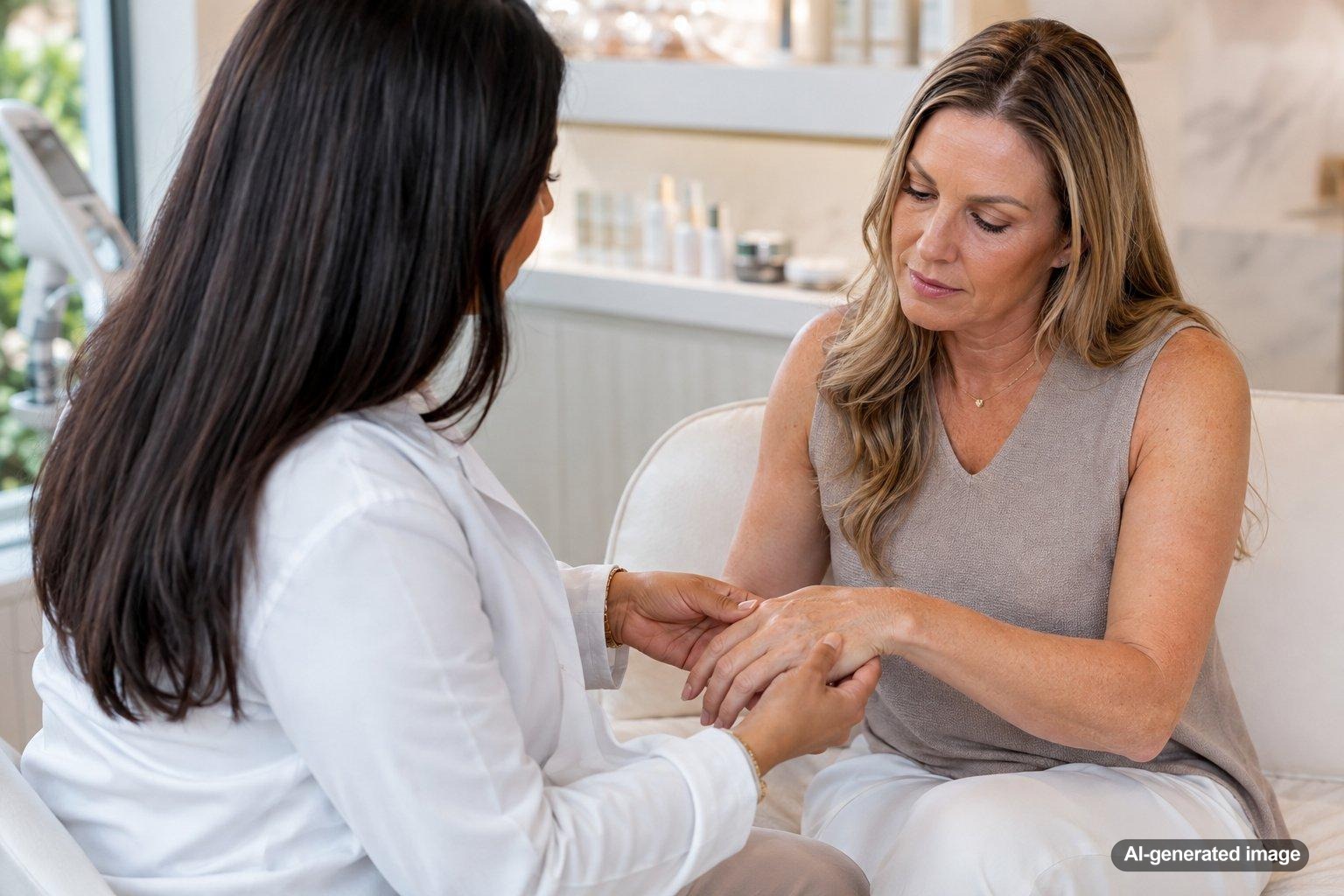
The backs of the hands often show sun exposure earlier than other areas because the skin is naturally thin and frequently uncovered. Over time, changes in collagen, moisture, and elasticity may create a crepey texture that looks finely wrinkled or less firm. XERF is a noninvasive radiofrequency treatment that may be considered for people who want to improve the appearance of mild skin laxity without surgery.
Treatment is not a substitute for sun protection, and results can vary based on skin quality, age, prior sun exposure, and individual healing response. A personalized consultation can help determine whether XERF fits your goals and whether another option may be more appropriate.
Quick answer
- XERF uses controlled radiofrequency energy to warm deeper layers of the skin.
- The goal is to support a smoother, firmer appearance over time.
- The thin skin on the backs of the hands may require a carefully tailored approach.
- Daily broad-spectrum sunscreen and moisturizer remain important for maintaining the look and comfort of treated skin.
- A dermatologist can evaluate spots, rough patches, or other changes before cosmetic treatment.
What crepey skin on the hands is
Crepey skin describes a thin, finely wrinkled texture that can resemble crepe paper. On the backs of the hands, it may become more noticeable when the skin loses moisture, elasticity, and underlying support. The appearance can be more pronounced when the hands are dry or when tendons and veins become more visible with age.
Crepey texture is cosmetic, but not every change on a sun-exposed hand should be assumed to be simple aging. Scaly areas, sores that do not heal, rapidly changing spots, bleeding, or persistent tenderness are reasons to schedule a dermatology evaluation.
Why sun exposure affects the backs of the hands
- Repeated ultraviolet exposure: Daily driving, walking, outdoor dining, and recreational activities can add up over the years.
- Thin skin: The backs of the hands have less natural padding than many other body areas.
- Reduced collagen and elasticity: Normal aging and cumulative sun exposure can contribute to a looser, more finely wrinkled texture.
- Dryness: Frequent handwashing, sanitizer, weather, and low humidity can make crepiness look more noticeable.
- Volume changes: Less fullness beneath the skin can make texture, veins, and tendons stand out.
How XERF may help
XERF delivers radiofrequency energy below the skin’s surface with the aim of creating controlled warmth in targeted tissue. This process may support gradual collagen remodeling and a firmer-looking texture. For the hands, the treatment plan should be adjusted to the area’s thin skin and visible structures.
XERF may be most relevant when the primary concern is mild laxity or crepey texture. It does not remove sun spots, replace lost volume, or address every type of discoloration. Some people may benefit from a broader plan that combines skin tightening with other dermatologist-guided options, depending on the concern.
What to expect from treatment
A visit typically begins with an assessment of the skin, including texture, pigmentation, visible vessels, prior procedures, and any areas that need medical evaluation. During treatment, the clinician moves the device across the planned area while monitoring comfort and tissue response.
The number and spacing of sessions can vary. Changes are generally expected to develop gradually rather than appear all at once, and no specific outcome can be promised. Your clinician can explain the recommended schedule, expected aftercare, and factors that may affect your response.
What you can do at home
- Apply broad-spectrum sunscreen to the backs of the hands each morning and reapply after washing or prolonged outdoor exposure.
- Use a fragrance-free moisturizer after handwashing to reduce dryness and improve the look of fine texture.
- Wear driving gloves or use other physical protection during extended sun exposure.
- Avoid picking at rough or scaly spots.
- Introduce active skincare ingredients slowly, especially if the skin is sensitive or recently treated.
Home care can support skin comfort and help protect against additional sun exposure, but it cannot fully reverse structural changes. A dermatologist or qualified clinician can help you build a routine that fits your skin and any planned procedures.
Professional options that may be considered
Depending on the cause of the hand’s appearance, professional options may include energy-based skin tightening, treatments for pigment, resurfacing procedures, injectable approaches for volume, or a combination plan. Each category addresses a different part of the concern, so the right choice depends on whether texture, laxity, discoloration, or volume loss is most noticeable.
At Waverly DermSpa, we offer XERF and can help you understand whether it may be appropriate.
When to see a dermatologist first
Book a dermatology evaluation before cosmetic treatment if you notice a new or changing spot, a sore that does not heal, repeated bleeding, persistent crusting, rapid growth, significant tenderness, or a lesion that looks different from the others. These changes should be assessed rather than covered or treated as ordinary sun damage.
It is also helpful to discuss a history of skin cancer, recent procedures, implanted medical devices, pregnancy, nursing, medications, or conditions that affect healing during your consultation. Your clinician can determine what information is relevant to treatment planning.
FAQ
Can XERF remove brown spots on the hands?
XERF is primarily considered for firmness and texture rather than pigment removal. Brown spots may require a separate evaluation and a different treatment approach.
Is XERF suitable for very thin hand skin?
Suitability depends on skin thickness, laxity, volume, visible structures, and overall health. A clinician should examine the area and tailor treatment settings carefully.
How soon might the hands look smoother?
Any visible change may develop gradually and varies from person to person. Your clinician can discuss a realistic range based on your treatment plan, but outcomes cannot be predicted with certainty.
Will moisturizer fix crepey skin?
Moisturizer may temporarily improve dryness and make fine texture look softer, but it does not replace lost collagen or volume. It is still an important part of supportive care.
Can I treat the hands if I have a suspicious spot?
A suspicious, changing, bleeding, or non-healing spot should be evaluated by a dermatologist before cosmetic treatment.
Ready to get help?
Schedule an appointment or send a message and our team will get back to you.
Prefer to call? 954-666-3736
This article is for educational purposes and is not medical advice. For diagnosis and personalized treatment, please book an appointment with a board-certified dermatologist.
Sources & further reading
- American Academy of Dermatology (AAD) – Sun damage and your skin
- The Skin Cancer Foundation – The Big See
