

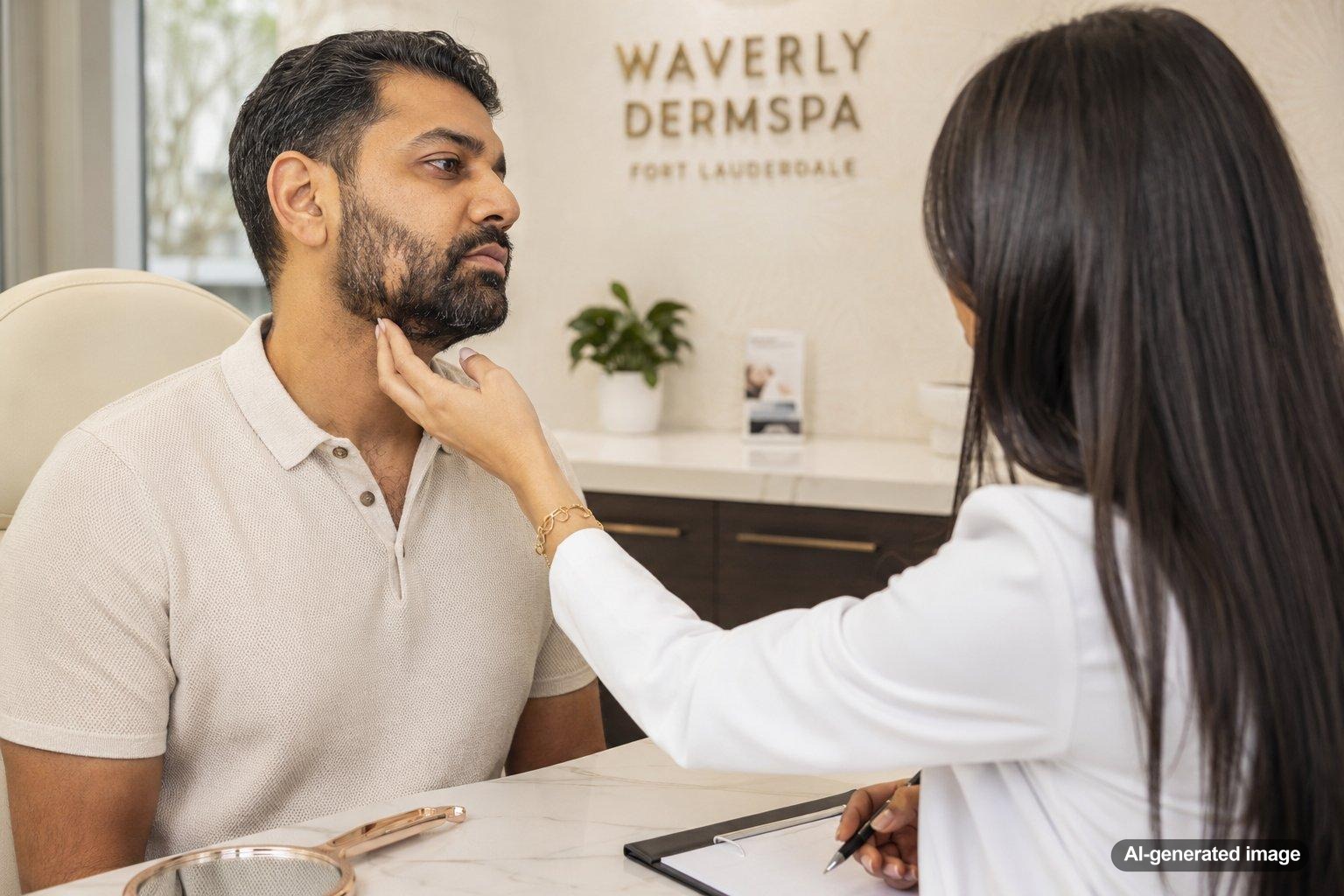
A smooth, round bald spot in the beard that gradually becomes larger can be consistent with alopecia areata, an autoimmune form of hair loss that may affect the beard, scalp, eyebrows, or other hair-bearing areas. When it affects facial hair, it is sometimes called beard alopecia areata or alopecia barbae.
However, appearance alone cannot confirm the cause. Fungal infections, irritation, inflammation, repeated friction, and certain types of scarring hair loss can create similar patches. Because some alternatives require different treatment, a growing beard patch is worth having evaluated by a board-certified dermatologist.
Quick answer
- Alopecia areata often produces a smooth, round or oval patch with little redness or scaling.
- The patch may widen when inflammation is active around nearby hair follicles.
- Scaling, broken hairs, crusting, tenderness, or pustules may point toward another cause.
- A dermatologist can examine the skin and follicles to distinguish alopecia areata from conditions that can look similar.
What alopecia areata in the beard can look like
Alopecia areata develops when the immune system mistakenly targets hair follicles. The follicles usually remain present, but their normal growth cycle is disrupted. In the beard, this may appear as one or more clearly defined patches where the skin looks relatively smooth and normal.
Some people notice short, tapered hairs near the edge of a patch or white hairs beginning to grow within it. Others develop patches on the scalp, eyebrows, or elsewhere. Small dents or roughness in the fingernails can sometimes occur alongside alopecia areata, although many people have no nail changes.
The condition is not contagious. Its course is variable: hair may regrow, additional areas may appear, or a patch may return after improvement. A patch becoming larger does not by itself establish how extensive the condition will become.
Other causes of a bald spot in the beard
Alopecia areata is an important possibility, but it is not the only explanation for patchy beard hair loss. A dermatologist may consider:
- Fungal infection: A beard infection can cause scaling, broken hairs, redness, swelling, or tenderness. Unlike alopecia areata, some fungal infections can spread to other people.
- Folliculitis or other inflammation: Inflamed follicles may produce bumps, pustules, crusting, discomfort, or areas of temporary hair loss.
- Friction or traction: Repeated rubbing, pulling, tight grooming practices, or habitual touching can damage beard hairs.
- Scarring hair loss: Certain inflammatory disorders can permanently damage follicles if they are not addressed. Shiny skin, loss of visible follicle openings, pain, or persistent redness deserves prompt attention.
- Hair breakage: Harsh grooming, chemical products, and close shaving can make an area look thinner without causing hair to shed from the root.
Alopecia areata is associated with immune activity and genetic susceptibility. People sometimes notice a patch after stress or illness, but these events do not prove the cause, and many cases have no obvious trigger.
What you can do at home while arranging an evaluation
- Take a clear photograph in consistent lighting every one or two weeks so changes are easier to compare.
- Use a gentle cleanser and avoid aggressive scrubbing, picking, or repeated rubbing.
- Pause new beard dyes, fragranced oils, or irritating grooming products if the skin became uncomfortable after their use.
- Avoid sharing razors, trimmers, towels, or grooming tools when scaling, crusting, or inflammation is present.
- Protect exposed skin with a broad-spectrum sunscreen suitable for facial use.
- Do not apply prescription steroid creams, antifungal medication, or hair-growth treatments based only on photographs or online advice.
Shaving the surrounding beard may make the patch less noticeable, but shaving does not change activity inside the follicles or make hair grow back thicker. If you divide your time between Fort Lauderdale and another home, keeping dated photos and a list of products or treatments can make follow-up more consistent.
How a dermatologist evaluates and treats beard patches
A dermatologist will usually begin by examining the patch, surrounding hairs, skin surface, scalp, and nails. A magnifying tool called a dermatoscope may reveal details that are difficult to see without magnification. Depending on the appearance and medical history, testing may be considered to check for infection or another cause. A skin biopsy or blood testing is reserved for situations in which the diagnosis remains uncertain or another condition is suspected.
If alopecia areata is confirmed, common options for limited beard involvement may include topical or carefully administered injected corticosteroids. Other topical or systemic immune-modifying treatments may be considered based on the location, extent, duration, age, medical history, and response to prior care. Each option has limitations and potential side effects, so a dermatologist can help determine whether treatment or observation is the more appropriate approach.
When to see a dermatologist
Schedule an evaluation if a beard patch continues to enlarge, new patches appear, or hair loss develops on the scalp, eyebrows, eyelashes, or other areas. Earlier assessment is also important when there is pain, marked itching, scaling, pus, crusting, swelling, bleeding, shiny scar-like skin, or loss of visible follicle openings.
Seek timely medical care for rapidly worsening swelling, spreading redness, fever, or significant tenderness. These features are not typical of an uncomplicated smooth alopecia areata patch and may indicate an infection or another inflammatory process.
Frequently asked questions
Is beard alopecia areata contagious?
No. Alopecia areata does not spread between people. Some fungal infections can resemble it and may be contagious, which is one reason an examination matters when a patch is scaly, inflamed, or filled with broken hairs.
Will the beard hair grow back?
Regrowth is possible, including without treatment, but the course varies considerably. Hair may return fully, grow back with a different color at first, recur later, or remain sparse. An individual outcome cannot be predicted from the patch’s size alone.
Does shaving make alopecia areata worse?
Shaving generally does not alter the autoimmune activity affecting the follicles. It can irritate sensitive skin, however, so use clean tools, light pressure, and a fragrance-free shaving product if you choose to shave.
Can stress cause a bald patch in the beard?
Stress may coincide with hair-loss episodes for some people, but it is rarely possible to identify one event as the sole cause. Avoid blaming yourself or assuming stress management alone will resolve an enlarging patch.
Should I take supplements for patchy beard hair loss?
Supplements are unlikely to address alopecia areata unless a relevant nutritional deficiency is present. Unnecessary high-dose supplements can have side effects or interfere with testing, so discuss them with a qualified clinician first.
Ready to get help?
Schedule an appointment or send a message and our team will get back to you.
Prefer to call? 954-666-3736
Medical disclaimer
This article is for educational purposes and is not medical advice. For diagnosis and personalized treatment, please book an appointment with a board-certified dermatologist.
Sources & further reading
- American Academy of Dermatology (AAD) – Hair loss types: Alopecia areata overview
- National Institute of Arthritis and Musculoskeletal and Skin Diseases (NIAMS) – Alopecia Areata: Overview, Symptoms, and Causes
