

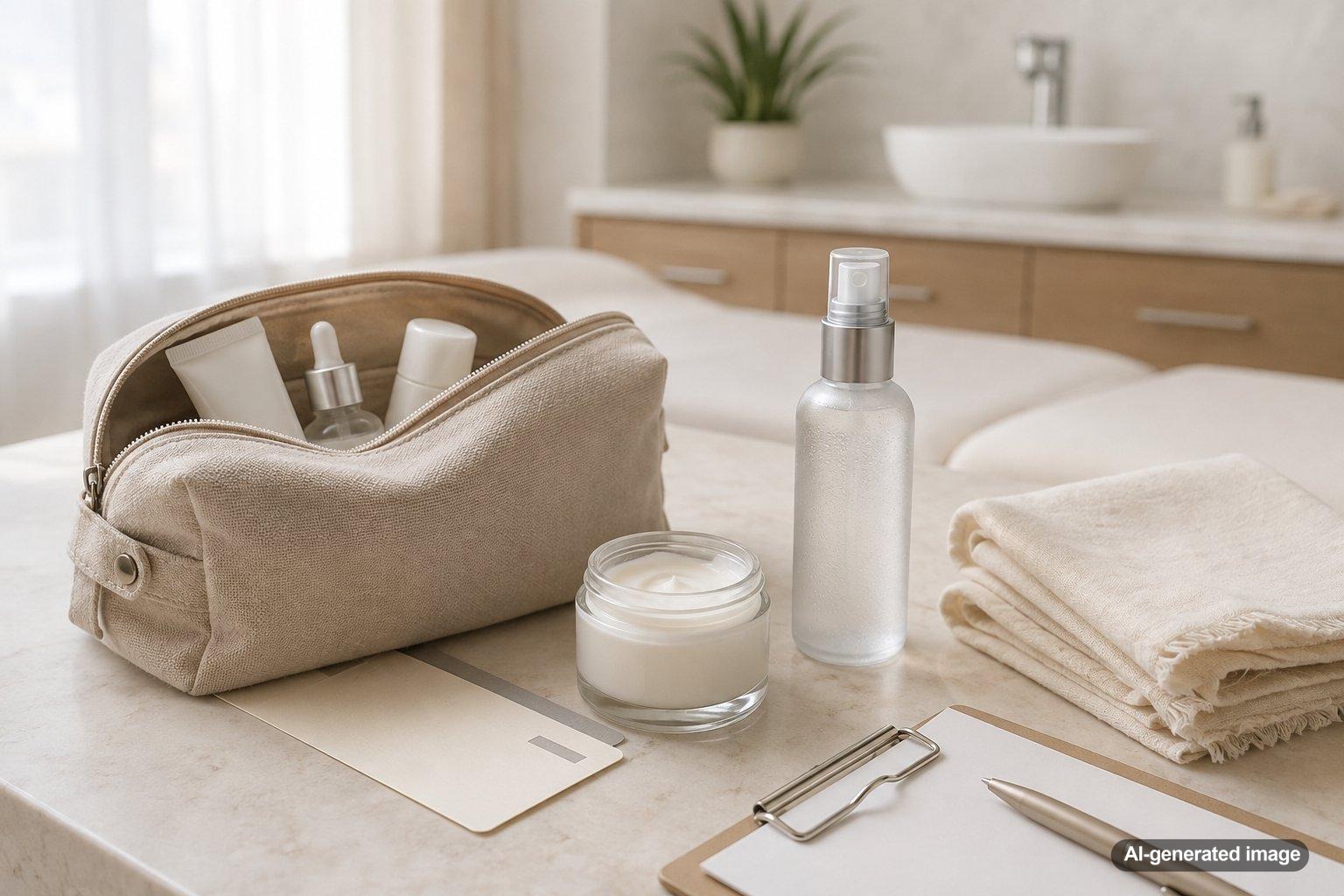
Tiny bumps that appear during or after a flight may be related to several overlapping factors, including dry cabin air, friction, sweat, heavier travel products, and changes to your normal skincare routine. The flight itself is not always the direct cause. Long periods in the same clothing, touching your face, disrupted sleep, and a different climate can all contribute.
The appearance of the bumps matters. Clogged pores, irritation, heat rash, and folliculitis can look similar without being the same condition. A gentle reset may help minor travel-related congestion, but persistent, painful, itchy, or spreading bumps deserve professional evaluation.
Quick answer
- Dry cabin conditions may leave the skin dehydrated and more sensitive to irritation.
- Friction and trapped sweat can affect areas beneath masks, collars, hats, or tight clothing.
- Heavy or unfamiliar products may contribute to clogged pores or contact irritation.
- Folliculitis can resemble a sudden acne breakout and may require a dermatologist to distinguish it from acne.
- Travel-related routine changes often matter as much as the time spent on the airplane.
What are these tiny bumps?
Tiny post-flight bumps are a description rather than a diagnosis. They may be flesh-colored, red, itchy, tender, or centered around hair follicles. Their location and accompanying symptoms can provide useful clues, but visual similarities make self-diagnosis difficult.
Small, relatively uniform bumps may reflect clogged pores or irritation. Folliculitis may also appear as an acne-like eruption around hair follicles. Contact dermatitis can produce itching, redness, or burning after exposure to a product, fabric, detergent, or fragrance. In warm destinations, sweat and occlusion may contribute to heat-related bumps.
Why flying and travel can trigger bumps
- Low humidity: Cabin air can make the skin feel dry or tight. Dehydrated-feeling skin may become more reactive, especially when its protective barrier is already sensitive.
- Friction and pressure: Masks, neck pillows, headrests, collars, and tight travel clothing can repeatedly rub the skin.
- Heat and sweat: Moving through terminals, carrying luggage, and arriving in a humid climate can trap perspiration beneath clothing or accessories.
- Occlusive products: Rich creams, facial oils, heavy makeup, or repeated sunscreen application may feel more congesting than your usual routine.
- Face touching: Resting your chin on your hand or frequently adjusting a mask can add friction and transfer oil or residue to the skin.
- Routine disruption: Sleeping in makeup, cleansing less thoroughly, changing products, or skipping normal care may contribute to a breakout.
- Shaving or hair removal: Shaving shortly before travel can leave follicles more vulnerable to irritation from sweat and rubbing.
Is it airplane acne or folliculitis?
People sometimes use the phrase “airplane acne” for any breakout that develops around a flight. Acne commonly includes clogged pores, blackheads, whiteheads, or inflamed pimples. Folliculitis affects hair follicles and can create clusters of similar-looking bumps that may itch or feel tender.
Timing alone cannot reliably separate them. A dermatologist can examine the pattern, location, and symptoms and determine whether the eruption is more consistent with acne, folliculitis, dermatitis, or another condition. This distinction matters because products intended for acne may further irritate some rashes.
What you can do at home
Keep your routine simple while the skin settles. Avoid squeezing or scrubbing the bumps, since added inflammation can prolong redness and increase the chance of discoloration.
- Wash gently with lukewarm water and a mild, fragrance-free cleanser.
- Use a lightweight moisturizer that you already know your skin tolerates.
- Pause new exfoliants, scrubs, peels, and multiple active ingredients.
- Remove sweaty clothing and shower when practical after reaching your destination.
- Wash reusable masks, pillowcases, hats, and other items that contact the affected skin.
- Avoid shaving directly over inflamed or irritated areas until they calm down.
- Use sun protection appropriate for your skin, particularly when traveling to South Florida or another sunny destination.
If you routinely develop bumps after travel, note what you wore, which products you applied, where the bumps appeared, and how quickly they developed. Photos taken in consistent lighting can help a dermatologist recognize a pattern.
How to reduce bumps on your next flight
Start with clean skin and a streamlined routine rather than layering several unfamiliar products. Choose comfortable, breathable clothing and reduce unnecessary friction where you tend to break out. Keep hair products away from acne-prone facial areas, and clean objects that repeatedly touch your skin, such as your phone or travel pillow cover.
Pack familiar skincare in travel-size containers. A trip is usually not the ideal time to introduce a strong exfoliant, retinoid, or fragranced product. If you are headed to a humid climate, a lighter moisturizer may feel more comfortable than a heavy ointment, although individual needs vary.
Professional options
If the bumps recur or do not respond to a gentle routine, a dermatologist can evaluate whether they represent acne, folliculitis, contact dermatitis, heat rash, or another eruption. Depending on the findings, professional care may include adjustments to skincare, high-level guidance about nonprescription ingredients, or prescription treatment when appropriate.
An aesthetician may support a dermatologist-directed plan with gentle skincare maintenance when the concern is uncomplicated congestion or texture. Inflamed, painful, itchy, or unexplained bumps should be assessed medically before scheduling extractions, peels, or other procedures.
When to see a dermatologist
Arrange an evaluation if the bumps persist, repeatedly return after travel, or are difficult to identify. Seek more prompt medical attention when the area is rapidly spreading, increasingly painful, warm, swollen, draining pus, or accompanied by fever or feeling unwell. Blistering, facial swelling, trouble breathing, or involvement around the eyes requires urgent medical care.
It is also worth getting checked before applying stronger acne treatments if the eruption is intensely itchy, appeared after a new medication or product, or affects a large area. A dermatologist can help avoid treating the wrong condition.
Frequently asked questions
Can dry airplane air directly clog my pores?
Low humidity does not simply fill pores, but it may leave the skin dry, tight, or reactive. Combined with heavy products, friction, sweat, and disrupted cleansing, it can create conditions in which bumps become more noticeable.
Are the bumps caused by an unclean airplane seat or headrest?
Contact with shared surfaces may concern travelers, but bumps appearing after a flight should not automatically be attributed to contamination. Friction, occlusion, products, sweat, and preexisting skin tendencies are also plausible. Avoid touching or picking the area, and seek an evaluation if infection is a concern.
Should I exfoliate immediately after landing?
Usually, a gentle approach is more sensible when the skin feels irritated. Strong acids, scrubs, or multiple active ingredients may worsen sensitivity. Begin with mild cleansing and moisturizer, then resume tolerated products gradually.
Why do I get bumps along my jawline or around my mask?
Those areas experience repeated pressure, warmth, moisture, and rubbing. Makeup, sunscreen, facial hair, and frequent touching may add to the irritation. Similar-looking bumps can have different causes, so recurring eruptions are worth discussing with a dermatologist.
How long should travel-related bumps last?
There is no single reliable timeline because the underlying causes vary. Minor irritation may settle after the trigger is removed, while acne, dermatitis, or folliculitis may persist or need targeted care. Worsening or lingering bumps should be evaluated rather than repeatedly treated at random.
Ready to get help?
Schedule an appointment or send a message and our team will get back to you.
Prefer to call? 954-666-3736
Disclaimer
This article is for educational purposes and is not medical advice. For diagnosis and personalized treatment, please book an appointment with a board-certified dermatologist.
Sources & further reading
- American Academy of Dermatology (AAD) – Acne-like breakouts could be folliculitis
- Mayo Clinic – Folliculitis: Symptoms and causes
