

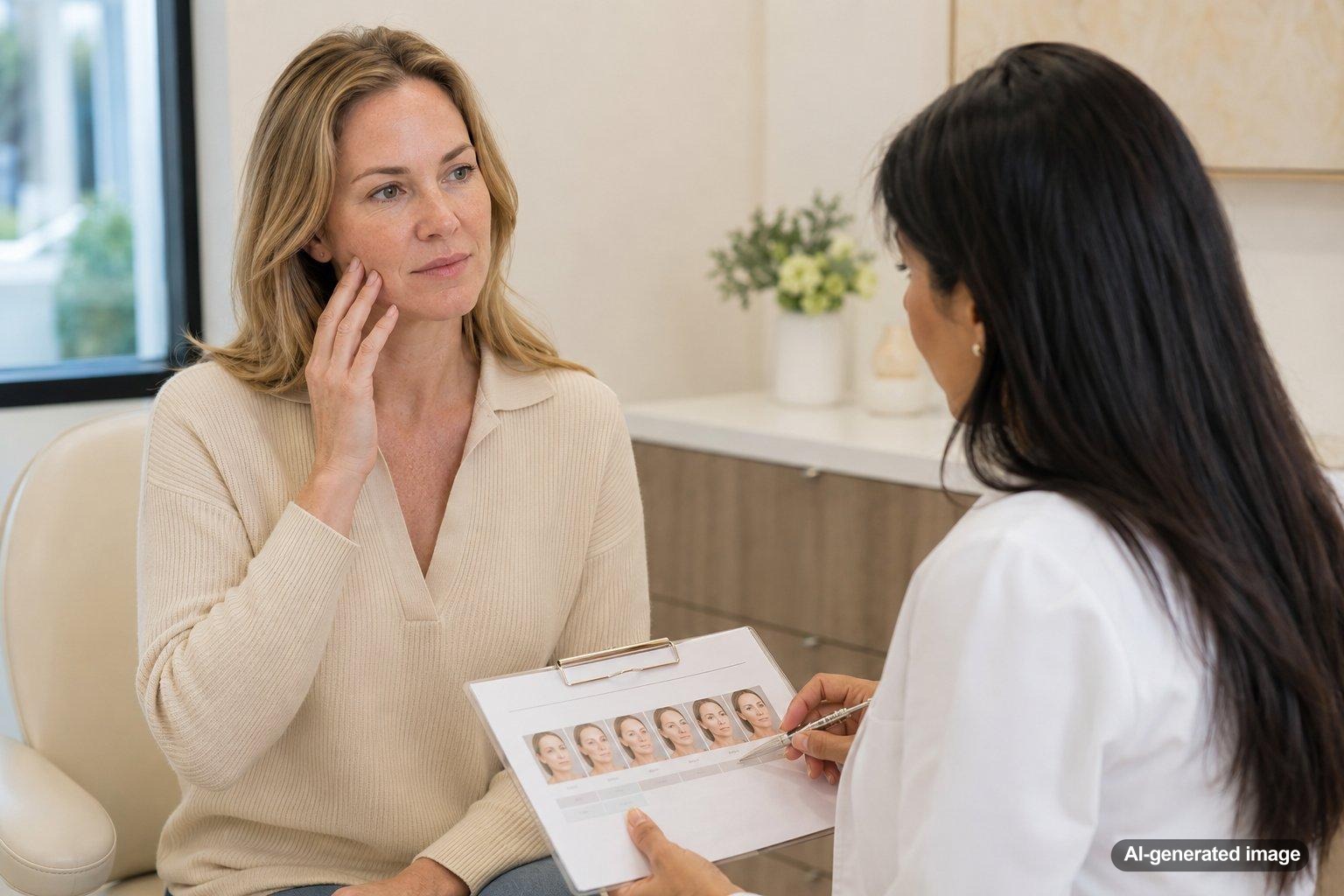
Swelling after a deep phenol peel is expected, and it can be substantial during the earliest part of recovery. It commonly becomes most noticeable within the first two to three days, then begins to ease gradually. However, the exact course varies, and some puffiness may remain for one to two weeks or longer while the skin continues healing.
A deep peel creates a controlled injury that reaches farther into the skin than a light or medium peel. That is why recovery must be supervised closely by the clinician who performed the procedure. Your personal instructions should always take priority over general timelines.
Quick answer
- Swelling may increase during the first 48 to 72 hours rather than improving immediately.
- The eyes and central face can look especially puffy during the early phase.
- Many people notice gradual improvement after the first several days.
- Residual swelling can continue for one to two weeks or longer, depending on the treatment and individual healing response.
- Worsening swelling, severe pain, fever, drainage, or other unexpected changes should be reported promptly.
Why does a deep phenol peel cause swelling?
Phenol is used for certain deep chemical peels. The treatment creates a carefully controlled injury that extends into deeper layers of the skin, prompting damaged surface tissue to shed as healing progresses. Inflammation and temporary fluid accumulation are natural parts of that response.
Because a deep peel affects more tissue than a superficial treatment, it can produce pronounced redness, swelling, crusting, and peeling. The treated skin is also unusually vulnerable during recovery. A deep phenol peel is a medical procedure that requires careful patient selection, monitoring, and a structured aftercare plan.
What the swelling timeline may look like
The first 24 hours
Swelling may begin soon after treatment. The skin can feel tight, hot, tender, or throbbing. Dressings or ointments may also make the face look or feel heavier than usual.
Days two through three
This is often when swelling is most prominent. Puffiness around the eyelids can be dramatic, and the eyes may become difficult to open fully. Swelling that peaks during this period can still be part of the expected recovery pattern, but patients should remain in contact with their treating clinician.
The remainder of the first week
Swelling should generally begin trending downward, although the skin may still look intensely red, crusted, or tight. Healing is not always linear, so the face may appear puffier at certain times of day.
Weeks two and three
Major swelling is often much improved, but mild puffiness can persist as new skin forms and the barrier recovers. Deep chemical peel healing commonly extends over approximately two to three weeks, while redness may remain much longer. A lingering pink or red appearance is not necessarily continued swelling.
What can influence how long swelling lasts?
- Treatment depth and area: A more extensive treatment can create a more noticeable inflammatory response.
- Location: Loose tissue around the eyes may swell more visibly than other areas.
- Individual healing: Age, skin characteristics, general health, and prior procedures can affect recovery.
- Aftercare: Following instructions for cleansing, soaking, ointments, dressings, medications, and sun avoidance can support orderly healing.
- Complications: Infection, an unexpected inflammatory reaction, or another problem may cause swelling to worsen or persist.
What can you do during recovery?
Use only the products and medications approved by the clinician who performed your peel. Deep-peel aftercare is highly specific, so this is not the time to add active skincare ingredients or improvise with home remedies.
- Keep your head elevated as directed, including while sleeping.
- Use prescribed or recommended soaks, ointments, dressings, and medications exactly as instructed.
- Avoid picking, rubbing, peeling, or scratching the treated skin.
- Do not apply makeup until your clinician confirms that the skin has healed enough.
- Avoid heat, strenuous activity, and sun exposure for the period specified in your recovery plan.
- Attend every scheduled follow-up visit, even if recovery seems to be progressing normally.
Do not apply ice directly to newly treated skin unless your clinician has specifically told you how to use cooling safely. Direct cold exposure and excess pressure may injure the fragile surface.
Professional follow-up after a deep peel
Recovery from a deep phenol peel should include planned medical follow-up. Your dermatologist may assess swelling, wound healing, discomfort, skin color changes, and signs of infection. They can also clarify when to transition between dressings, ointments, moisturizer, sunscreen, and makeup.
If swelling remains significant beyond the expected window, the next step is an examination rather than adding an over-the-counter treatment independently. A dermatologist can determine whether the course reflects normal healing or requires additional care.
At Waverly DermSpa, we offer Chemical Peels and can help you understand whether they may be appropriate.
When should you contact a dermatologist?
Call the clinician who performed the peel if swelling suddenly increases after it had started improving or if anything feels different from the recovery plan you were given. Seek prompt medical guidance for:
- Severe or escalating pain
- Fever, chills, or feeling unwell
- Pus, foul odor, or increasing drainage
- Spreading warmth or redness beyond the treated area
- New blisters or sores that were not expected
- Markedly uneven swelling
- Difficulty breathing, throat tightness, or swelling outside the treated region
- Any symptom your post-procedure instructions identify as urgent
Difficulty breathing or throat swelling can be an emergency. Call 911 or seek emergency care rather than waiting for a routine office response.
Frequently asked questions
Is it normal for swelling to look worse on the second day?
Yes, swelling may increase during the first two to three days before it begins to settle. Your treating clinician should still be informed if the change is severe, one-sided, painful, or otherwise unexpected.
How long does the full recovery from a deep peel take?
Initial skin healing commonly takes about 14 to 21 days, but redness and sensitivity can last considerably longer. Recovery varies, and normal-looking skin does not mean the barrier has fully regained its usual resilience.
Can I take an anti-inflammatory medication for swelling?
Ask your treating clinician before taking any medication after a deep peel. Some medicines may be unsuitable because of your health history, prescriptions, bleeding risk, or procedure plan.
When can I wear makeup again?
Makeup generally needs to wait until sufficient skin healing has occurred. Deep-peel guidance often places this at approximately two weeks, but only your clinician can clear you based on an examination.
Is redness the same as swelling?
No. Swelling refers to puffiness or fluid accumulation, while redness reflects vascular and inflammatory changes in the healing skin. Swelling may improve well before redness fades.
Can I travel soon after a phenol peel?
Discuss travel before scheduling the procedure. Early follow-up is important, and travel can complicate access to the clinician if a concern develops. Sun exposure is another major consideration, particularly in South Florida and other sunny destinations.
Ready to get help?
Schedule an appointment or send a message and our team will get back to you.
Prefer to call? 954-666-3736
This article is for educational purposes and is not medical advice. For diagnosis and personalized treatment, please book an appointment with a board-certified dermatologist.
Sources & further reading
- Cleveland Clinic – Chemical Peels: Types of Peels, Conditions Treated, What to Expect
- Mayo Clinic – Chemical peel
