

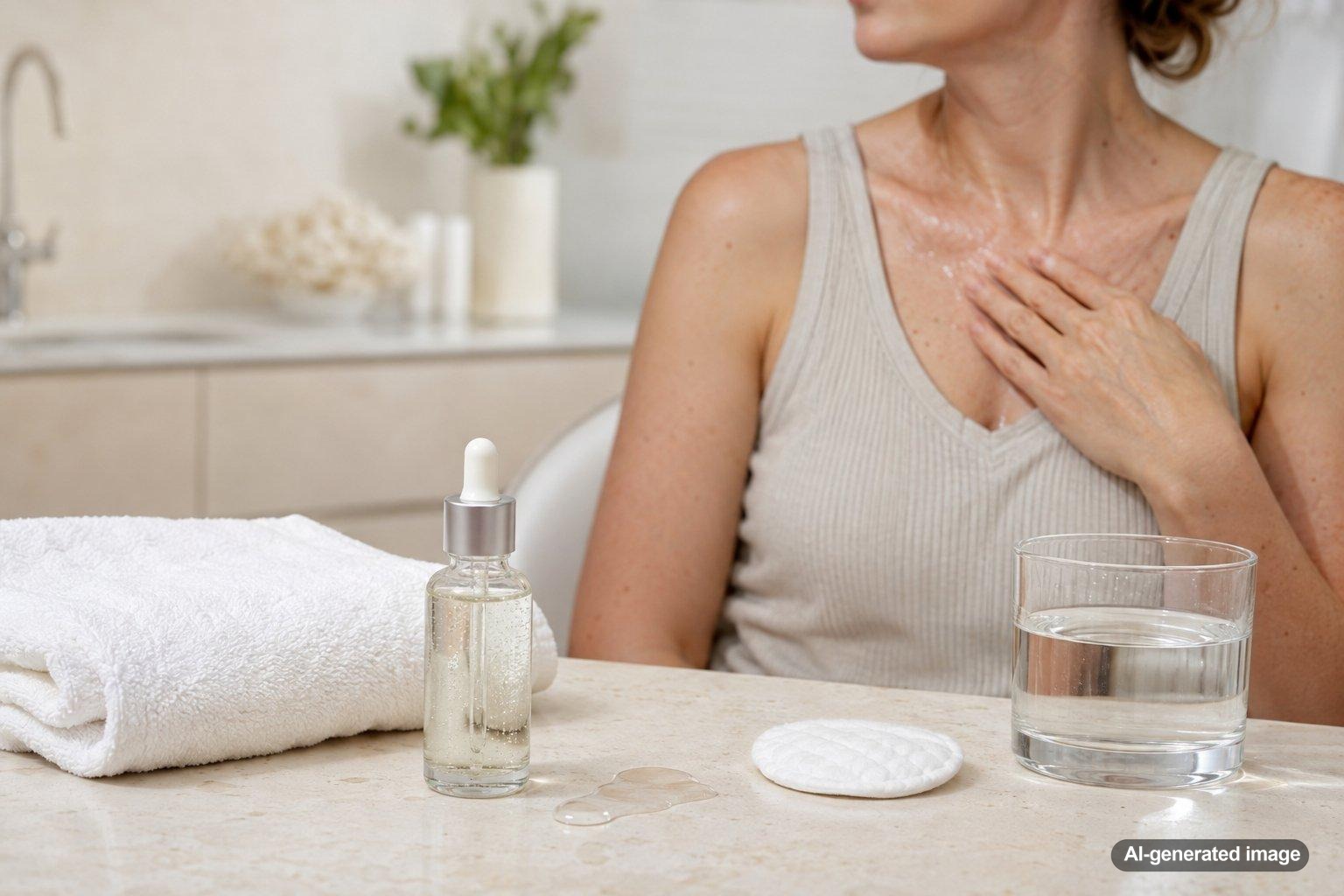
If your chest itches only when you sweat, the most likely explanation is that heat, moisture, salt, and friction are temporarily irritating the skin. A sweat-related itch can also be associated with blocked sweat ducts, sensitive or eczema-prone skin, contact with clothing or laundry products, or a form of heat-triggered hives.
The timing, appearance, and duration of the symptoms offer useful clues. Tiny bumps under clothing suggest something different from raised welts that appear within minutes of exercise. Because several conditions can look similar, recurring or unexplained symptoms are worth discussing with a dermatologist.
Quick answer
- Sweat can leave salt on the skin, while damp clothing adds friction and heat.
- Tiny prickly bumps may be consistent with heat rash caused by blocked sweat ducts.
- Small, raised, itchy welts that begin after the body warms may be associated with cholinergic urticaria.
- Eczema, sensitive skin, fragrances, and fabric treatments can become more irritating when the skin is hot and damp.
- Breathing trouble, throat tightness, faintness, or widespread swelling requires urgent medical care.
What is causing the itch?
Sweating changes the environment at the skin’s surface. Moisture softens the outer skin layer, salt remains behind as sweat evaporates, and a damp shirt or sports bra repeatedly rubs the chest. Heat also increases blood flow near the skin and can intensify an existing tendency toward itching.
The chest is especially vulnerable because it is commonly covered by close-fitting clothing and may remain damp after a workout. Sunscreen, fragrance, body wash, detergent residue, or fabric dye can add another source of irritation. The fact that itching occurs during sweating does not, by itself, identify one specific condition.
Common causes and triggers
- Heat, salt, and friction: Sweat residue and damp fabric can irritate otherwise normal skin, especially during prolonged exercise or humid weather.
- Heat rash: Blocked sweat ducts can produce small, prickly, itchy bumps in areas where heat and moisture become trapped.
- Cholinergic urticaria: This type of inducible hives can begin when body temperature rises because of exercise, hot weather, emotional stress, spicy food, or a hot shower. It often causes small, raised welts that itch or burn and then fade after the trigger stops.
- Eczema or a weakened skin barrier: Sweat, heat, and dried salt can aggravate skin that is already dry, inflamed, or sensitive.
- Contact irritation or allergy: Fragrance, preservatives, sunscreen, detergent, elastic, fabric finishes, or topical products may become more irritating with moisture and friction.
- Inflamed follicles or infection: Persistent bumps, tenderness, crusting, drainage, or symptoms that remain after the skin cools may point to a different process that needs evaluation.
Clues worth noticing
Pay attention to whether the skin looks normal, develops tiny bumps, or forms raised welts. Note how quickly the itching starts, how long it lasts after cooling down, and whether it occurs with exercise, hot showers, stress, or spicy foods. Also consider recent changes in detergent, body products, sunscreen, clothing, medications, or workout intensity.
If the eruption disappears quickly, take a clear photograph while it is visible. A brief symptom diary and photos can help a dermatologist distinguish hives from heat rash, dermatitis, or another condition.
What you can do at home
- Move to a cooler setting and allow the skin to cool gradually.
- Rinse sweat away with cool or lukewarm water soon after exercising.
- Pat the chest dry instead of rubbing it.
- Change promptly out of damp shirts, bras, or compression garments.
- Choose loose, breathable clothing and reduce repeated friction over the itchy area.
- Use a gentle, fragrance-free cleanser and avoid scrubs or strongly scented products on irritated skin.
- If the skin feels dry, apply a simple fragrance-free moisturizer after rinsing while the skin is slightly damp.
- Wash workout clothing thoroughly with a fragrance-free detergent and avoid using more detergent than needed.
- Try not to scratch, since scratching can further damage the skin barrier.
Avoid starting several new products at once. Changing one variable at a time makes it easier to identify a trigger. If you are considering an over-the-counter antihistamine or medicated cream, ask a clinician or pharmacist whether it is appropriate for you, particularly if you take other medications or have an ongoing medical condition.
Professional options
A dermatologist can examine the pattern and decide whether testing is useful. Evaluation may include a review of heat and exercise triggers, skin-care products, clothing exposures, medications, and photographs of short-lived symptoms. Patch testing may sometimes be considered when allergic contact dermatitis is suspected.
Treatment depends on the cause. Common categories may include skin-barrier care, trigger reduction, topical medication for dermatitis, or antihistamine-based management for certain forms of hives. Prescription therapies should be selected after an appropriate medical evaluation.
When to see a dermatologist
Schedule an evaluation when the problem keeps returning, interferes with exercise or sleep, spreads beyond the chest, leaves lasting marks, or does not improve with cooling and gentle skin care. It is also worth getting checked if there is significant pain, scaling, broken skin, drainage, crusting, fever, or a rash that continues when you are no longer sweating.
Seek urgent medical care for trouble breathing, wheezing, throat tightness, faintness, facial or tongue swelling, rapidly spreading hives, or gastrointestinal symptoms accompanying an exercise-related reaction. Stop the activity and do not try to exercise through those symptoms.
FAQ
Can sweat itself irritate my chest?
Yes. Moisture, salt left behind as sweat dries, heat, and friction from clothing can combine to irritate the skin. This does not necessarily mean that you are allergic to your sweat.
Why does the itching stop after I cool down?
Cooling reduces sweating, heat, and friction. Heat-triggered hives can also fade after the body cools, although the timing varies. A dermatologist can evaluate recurring episodes and the appearance of the skin.
How can I tell heat rash from hives?
Heat rash often causes clusters of small prickly bumps in covered, sweaty areas. Hives are usually raised welts that can appear quickly and change or fade over a shorter period. Photographs taken during an episode may help with evaluation.
Could my workout shirt be responsible?
Possibly. Tight fabric, seams, trapped moisture, detergent residue, dyes, or fabric treatments can contribute. Try clean, loose, breathable clothing and change soon after exercising.
Should I stop exercising?
Mild irritation may improve with cooling, clothing changes, and prompt rinsing. Stop exercising and seek urgent help if itching occurs with breathing difficulty, faintness, swelling, or widespread hives. Repeated symptoms should be evaluated before you continue testing the trigger on your own.
Ready to get help?
Schedule an appointment or send a message and our team will get back to you.
Prefer to call? 954-666-3736
This article is for educational purposes and is not medical advice. For diagnosis and personalized treatment, please book an appointment with a board-certified dermatologist.
Sources & further reading
- DermNet – Cholinergic Urticaria: Causes, Treatment, and Images
- Cleveland Clinic – Heat Rash Prickly Heat (Sweat Rash) Symptoms & Treatment
- American Academy of Dermatology (AAD) – Managing eczema in summertime
