

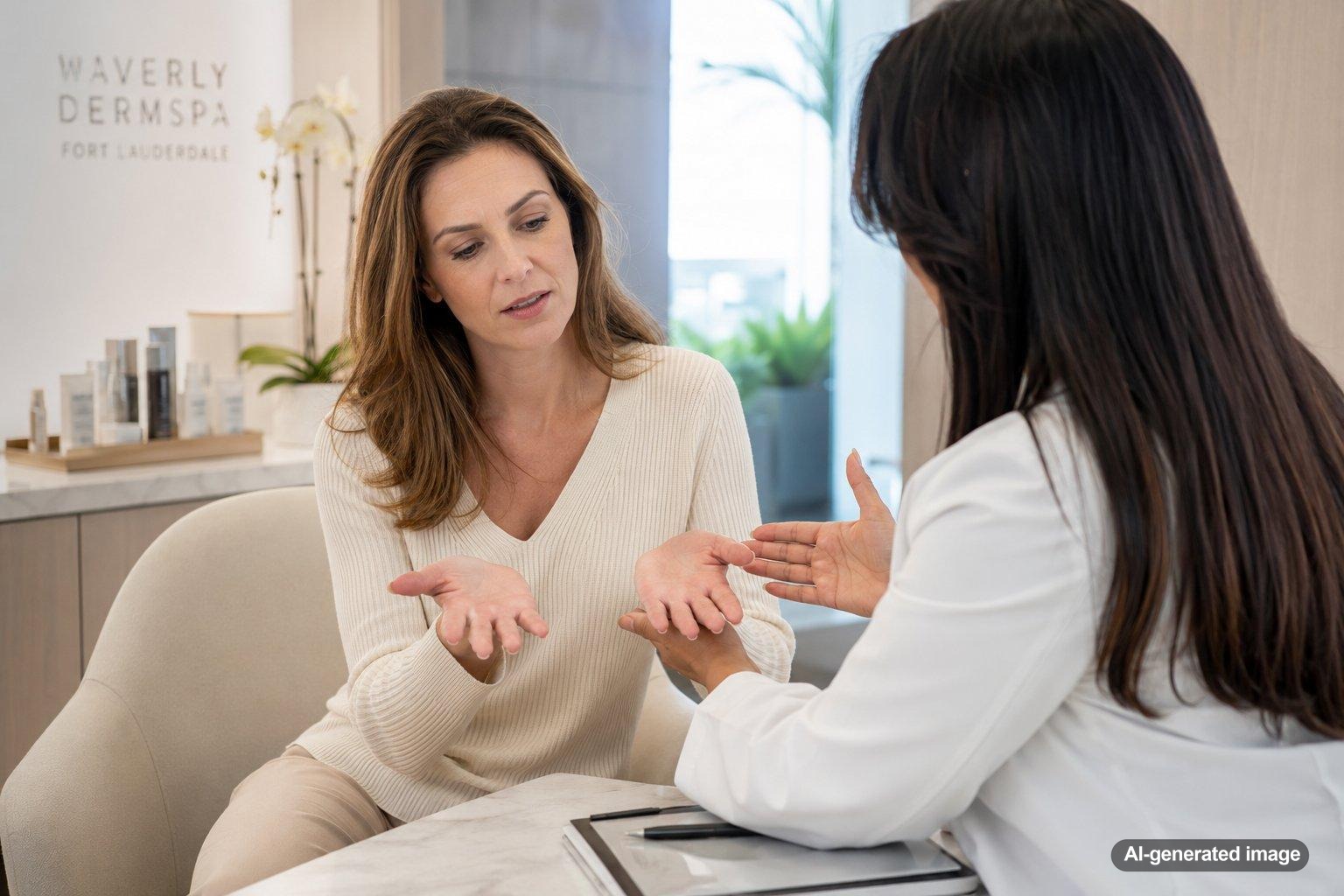
Palms can feel clammy and look wrinkled when the skin stays damp for long periods, when the sweat glands are especially active, or when the skin barrier becomes irritated. Frequent handwashing, humid weather, gloves, stress, exercise, and certain health factors may all contribute.
Occasional moisture-related wrinkling is often temporary. However, palms that are persistently sweaty, unusually wrinkled without water exposure, painful, peeling, itchy, or interfering with daily activities are worth discussing with a dermatologist.
Quick answer
- Excessive palm sweating can keep the skin damp and create a pale, wrinkled, or softened appearance.
- Frequent contact with water, soap, sanitizer, cleaning products, or occlusive gloves may weaken the skin barrier.
- Heat, humidity, stress, exercise, and nervous system responses can temporarily increase sweating.
- Persistent symptoms may need a dermatologic evaluation to identify contributing factors and appropriate options.
Why moisture makes your palms wrinkle
The outer layer of the skin absorbs water and changes when it remains wet. This is why fingertips and palms commonly wrinkle after swimming, bathing, or washing dishes. A similar effect can occur when sweat is trapped against the skin for an extended period.
Moist palms may also appear lighter, softer, or slightly swollen. Repeated wet-and-dry cycles can leave the skin feeling tight, rough, tender, or more reactive than usual. Although the wrinkles themselves may not be harmful, ongoing moisture can make the skin more vulnerable to friction and irritation.
Common reasons palms feel clammy and look wrinkled
Increased palm sweating
Some people naturally sweat more from their palms than others. Sweating may occur during warm weather, exercise, stress, public speaking, driving, or tasks that require concentration. When palm sweating is frequent, noticeable, and disproportionate to the situation, a dermatologist may evaluate for palmar hyperhidrosis or another contributing issue.
Frequent water exposure
Repeated handwashing, bathing children, washing dishes, swimming, or working with wet materials can keep the outer skin layer waterlogged. Hands may remain wrinkled for a while after the exposure ends, especially when the skin barrier is already dry or irritated.
Soap, sanitizer, and cleaning products
Strong soaps, alcohol-based products, detergents, and household cleaners can remove protective oils from the skin. The combination of irritation and repeated moisture exposure may lead to wrinkling, scaling, redness, burning, or small cracks.
Gloves and trapped moisture
Rubber, vinyl, or other non-breathable gloves can trap heat and sweat. This is common during cleaning, food preparation, health care work, beauty services, or outdoor tasks. Wearing gloves for long periods may leave the palms pale, clammy, and deeply creased.
Heat, humidity, and travel
Warm, humid climates can make sweat evaporate more slowly. In a location such as Fort Lauderdale, palms may stay damp longer during outdoor activity or seasonal heat. Travelers may also notice changes when moving between humid outdoor conditions and heavily air-conditioned indoor spaces.
Skin irritation or inflammation
Hand irritation may change the way the skin looks and feels. Depending on the cause, symptoms can include itching, redness, peeling, small bumps, tenderness, or rough patches. A dermatologist can examine the pattern and determine whether irritation, an inflammatory skin condition, or another issue may be involved.
Medication or health-related factors
Sweating patterns can sometimes be influenced by medications, hormonal changes, fever, blood sugar changes, thyroid concerns, pain, or other health factors. This does not mean that clammy palms point to a specific diagnosis. A clinician can review the timing of your symptoms, medications, and overall health when appropriate.
What you can do at home
Simple changes may help reduce moisture and protect the skin while you arrange an evaluation if symptoms continue.
- Dry your hands gently: Pat rather than rub, especially between the fingers and along irritated areas.
- Use lukewarm water: Very hot water may worsen dryness and irritation.
- Choose a mild cleanser: Fragrance-free products are often better tolerated by sensitive or frequently washed hands.
- Moisturize after washing: Apply a simple, fragrance-free hand cream while the skin is slightly damp.
- Change damp gloves: Do not leave sweaty or wet gloves against the skin longer than necessary.
- Use protective gloves carefully: For wet work, consider a soft cotton liner beneath protective gloves when practical.
- Track possible triggers: Note whether symptoms increase with stress, caffeine, heat, exercise, specific products, or particular medications.
Avoid aggressive scrubbing, harsh exfoliants, and heavily fragranced products while the skin is irritated. These can make burning, dryness, and sensitivity more noticeable.
Professional options for persistently sweaty palms
A dermatologist can first determine whether the main issue is excessive sweating, moisture-related skin damage, contact irritation, or another concern. The evaluation may include questions about when the sweating began, whether it affects both hands, what triggers it, and whether it occurs during sleep or alongside other symptoms.
Depending on the findings, common management categories may include topical products, prescription therapies, office-based procedures, or strategies to reduce irritation and restore the skin barrier. Each approach has different considerations, and your clinician can help you decide what may be appropriate for your symptoms, medical history, and daily routine.
When to see a dermatologist
Consider scheduling an evaluation when clammy or wrinkled palms are persistent, worsening, or difficult to manage. It is especially helpful to seek care when symptoms:
- Interfere with writing, using electronics, driving, work, handshakes, or exercise equipment
- Occur without an obvious heat, stress, or water-related trigger
- Are accompanied by itching, pain, cracks, blisters, peeling, odor, or drainage
- Develop suddenly after a medication change or alongside other new symptoms
- Affect only one hand or appear significantly different from side to side
- Continue despite gentle skincare and moisture-control measures
Prompt medical attention may be appropriate if sudden sweating occurs with chest discomfort, difficulty breathing, faintness, confusion, severe weakness, or another acute symptom.
Frequently asked questions
Why are my hands wrinkled when I have not been in water?
Sweat can remain against the palms and affect the outer skin layer in a way that resembles water-related wrinkling. Irritation, repeated handwashing, glove use, and other factors may also contribute. A dermatologist can evaluate persistent or unexplained changes.
Can anxiety make my palms clammy?
Stress and anxiety can activate the body’s sweating response, particularly on the palms. The moisture may become more noticeable during meetings, social situations, driving, or other stressful moments. Frequent sweating can also occur without anxiety, so ongoing symptoms should not automatically be attributed to stress.
Why do my palms feel sticky after washing them?
Residual cleanser, incomplete drying, sweat, or a disrupted skin barrier may create a sticky or tacky sensation. Rinsing thoroughly, drying gently, and using a simple moisturizer may help. Stop using a product if it repeatedly causes burning, redness, or worsening irritation.
Is constant palm sweating normal?
Some variation in sweating is normal, but constant or disruptive palm sweating deserves attention. A dermatologist can help determine whether the pattern may be consistent with excessive sweating or whether another factor should be considered.
Can sweaty palms damage the skin?
Persistent moisture may soften the outer skin layer and increase sensitivity to friction, soaps, and chemicals. Over time, some people notice peeling, tenderness, or irritation. Keeping the hands dry when possible and supporting the skin barrier may help reduce these effects.
Should I use antiperspirant on my palms?
Some antiperspirant products are formulated for excessive sweating, but palm skin can become irritated. A dermatologist can recommend an appropriate type, explain how to use it, and discuss alternatives if your skin is sensitive.
Ready to get help?
Schedule an appointment or send a message and our team will get back to you.
Prefer to call? 954-666-3736
This article is for educational purposes and is not medical advice. For diagnosis and personalized treatment, please book an appointment with a board-certified dermatologist.
