

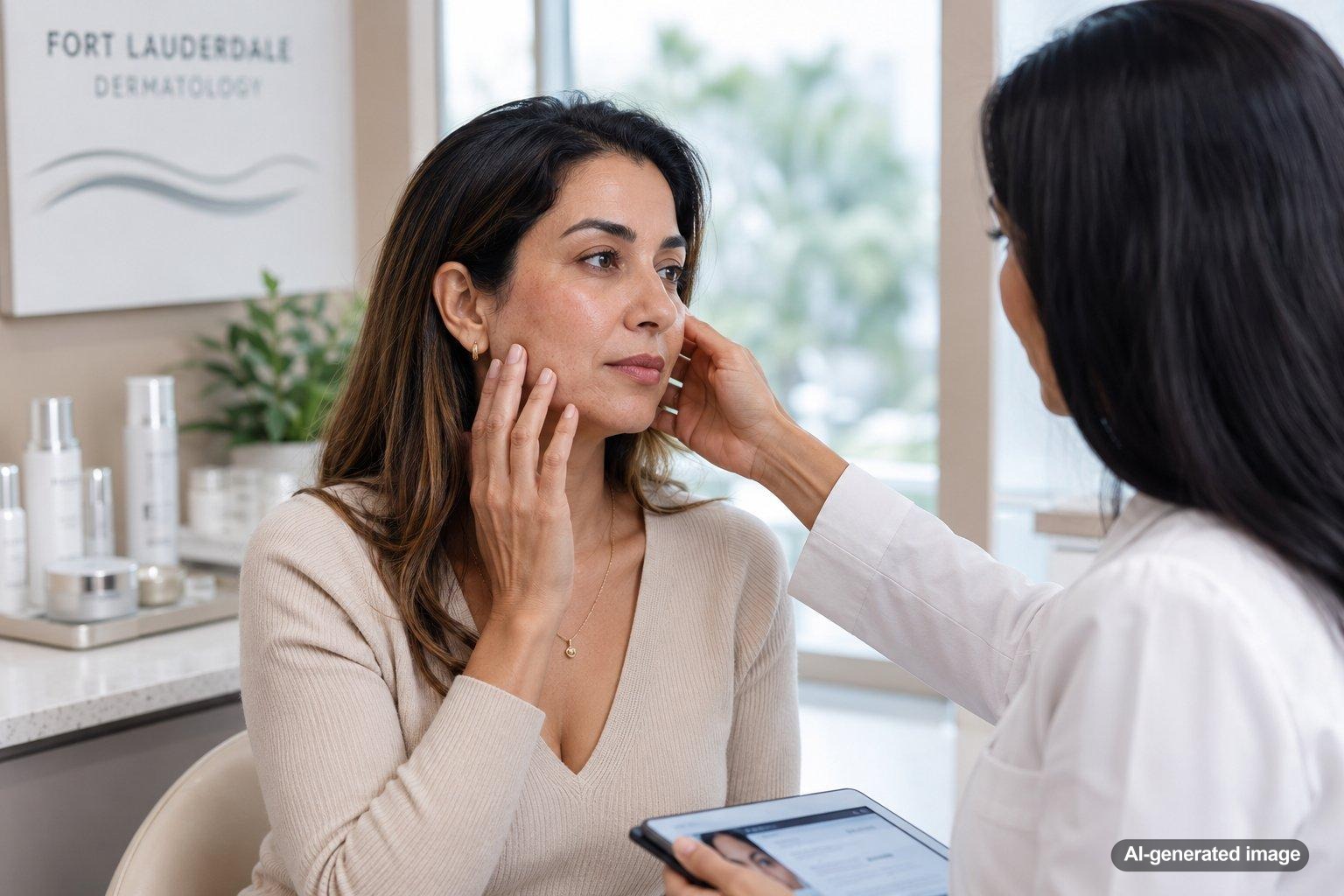
Facial skin can develop a thin, finely wrinkled texture that resembles crepe paper or tissue paper. One possible contributor is solar elastosis, a form of long-term change associated with repeated ultraviolet exposure. Sun exposure can gradually affect collagen, elastin, moisture retention, and the skin’s ability to remain smooth and resilient.
This texture does not automatically point to one specific condition. Natural aging, dryness, genetics, smoking, weight changes, medications, and certain health concerns may also influence how the skin looks and feels. A dermatologist can evaluate the pattern and help determine which factors may be involved.
Quick answer
- Long-term ultraviolet exposure can weaken the skin’s supportive structure and contribute to a thin, crinkled appearance.
- The face, neck, upper chest, and forearms are commonly affected because they receive frequent sun exposure.
- Dryness may make fine lines and crepey texture appear more noticeable.
- Daily sun protection and gentle moisturizing can help protect the skin from additional damage.
- Professional options vary and should be selected after an examination of your skin, health history, and goals.
What is solar elastosis?
Solar elastosis describes changes that may develop in skin after years of ultraviolet exposure. Healthy skin contains an organized network of collagen and elastin that provides firmness, flexibility, and support. Repeated exposure to sunlight can disrupt this network and contribute to uneven texture, fine wrinkles, laxity, yellowing, roughness, or a leathery appearance.
On thinner areas of the face, these changes may look more delicate and crinkled rather than thick or leathery. The skin beneath the eyes, along the cheeks, around the mouth, and near the temples may appear especially fragile because these areas naturally have less structural support.
Why can facial skin look thin and crepey?
The appearance usually reflects a combination of factors rather than a single cause. Common contributors may include:
- Cumulative sun exposure: Daily incidental exposure can add up over time, especially in sunny climates such as South Florida.
- Natural aging: Collagen production, oil production, and skin renewal tend to slow with age.
- Dryness and dehydration: A lack of moisture can make fine surface lines look deeper and more numerous.
- Genetics: Some people naturally have thinner skin or develop visible texture changes earlier than others.
- Smoking: Tobacco exposure can affect circulation and accelerate visible skin aging.
- Repeated facial movement: Expression lines can become more noticeable as the skin loses elasticity.
- Weight or volume changes: Loss of facial fullness may make loose or crepey skin more apparent.
- Harsh skincare habits: Over-exfoliation, aggressive scrubbing, and irritating products can temporarily worsen dryness and sensitivity.
What can you do at home?
Home care cannot reverse every structural change, but consistent habits may help the skin look smoother, feel more comfortable, and avoid additional ultraviolet damage.
Use broad-spectrum sunscreen every day
Apply a broad-spectrum sunscreen to the face, ears, neck, and other exposed areas. Reapply as directed when spending time outdoors, swimming, sweating, or traveling in a sunny environment. Hats, sunglasses, shade, and protective clothing provide additional support.
Choose a gentle moisturizer
Look for a fragrance-free moisturizer with ingredients that support hydration and the skin barrier. Applying moisturizer while the skin is slightly damp may help reduce moisture loss and temporarily soften the look of fine surface lines.
Avoid aggressive exfoliation
Scrubs, strong acids, cleansing brushes, and frequent peels can make thin or sensitive skin feel irritated. Introduce active ingredients slowly and stop using products that cause persistent burning, redness, peeling, or discomfort.
Keep your routine simple
A mild cleanser, moisturizer, and daily sunscreen may be a better foundation than layering many strong products. Depending on your skin, a dermatologist may discuss ingredients such as retinoids, antioxidants, or other topical options. Prescription products should be used under appropriate clinical guidance.
Support overall skin health
A balanced diet, adequate hydration, consistent sleep, and avoiding tobacco can support general skin health. These habits do not replace dermatologic care, but they can complement a thoughtful skincare plan.
Which professional options may help?
Professional care depends on whether the main concern is surface dryness, pigment changes, fine lines, deeper texture changes, volume loss, or a combination of these issues. Common categories may include:
- Medical-grade topical care: A dermatologist may recommend a personalized regimen based on skin sensitivity and the degree of sun damage.
- Chemical peels: Carefully selected peels may improve surface texture and uneven tone in appropriate candidates.
- Microneedling: This approach creates controlled microchannels that may support gradual collagen remodeling.
- Energy-based treatments: Certain laser, radiofrequency, or resurfacing procedures may address texture, discoloration, or laxity.
- Injectable options: When volume loss contributes to the appearance, a clinician may discuss options intended to restore support or stimulate collagen.
- Combination plans: Some people benefit from staged treatment that addresses hydration, texture, pigmentation, and structural support separately.
Results, recovery needs, risks, and suitability vary. Thin, sun-damaged, or sensitive skin may require a conservative approach, and a dermatologist can help determine which options are reasonable.
At Waverly DermSpa, we offer Tetra CoolPeel CO2 and can help you understand whether it may be appropriate.
When should you see a dermatologist?
Schedule an evaluation when the texture change is new, progressing quickly, limited to an unusual area, or accompanied by persistent redness, itching, pain, bruising, scaling, or skin breakdown. It is also worth getting checked if you notice a spot that changes in size, shape, color, texture, or behavior.
A professional examination is especially helpful when over-the-counter products cause irritation, when the skin seems unusually fragile, or when you are considering a procedure. Your clinician can distinguish cosmetic texture changes from concerns that may need medical attention.
Frequently asked questions
Is crepey facial skin always caused by sun damage?
No. Sun exposure is a common contributor, but aging, dryness, genetics, smoking, volume loss, skincare irritation, medications, and health factors may also play a role. An examination can provide more context.
Can moisturizer make crepey skin disappear?
Moisturizer can temporarily plump the outer layer of the skin and make fine lines look softer. It does not rebuild all lost collagen or correct every deeper structural change.
Can solar elastosis be prevented?
Not every age-related change can be prevented, but consistent sun protection may reduce additional ultraviolet damage. Daily sunscreen, shade, hats, and protective clothing are valuable at every age.
Are retinoids helpful for thin, crepey skin?
Retinoids may support skin renewal and collagen over time, but they can also cause dryness and irritation. A dermatologist can help determine the appropriate type, strength, frequency, and supporting moisturizer for your skin.
Will one procedure correct the texture?
Many people need a gradual or combined approach. The most appropriate plan depends on the depth of the texture changes, pigmentation, sensitivity, facial volume, medical history, and tolerance for recovery time.
Can international visitors or snowbirds begin treatment while in Fort Lauderdale?
They may be able to begin an evaluation or treatment plan, but timing matters. Some procedures require follow-up visits, sun avoidance, or a staged series. Share your travel schedule with the clinician so the plan can account for continuity of care.
Ready to get help?
Schedule an appointment or send a message and our team will get back to you.
Prefer to call? 954-666-3736
This article is for educational purposes and is not medical advice. For diagnosis and personalized treatment, please book an appointment with a board-certified dermatologist.
