

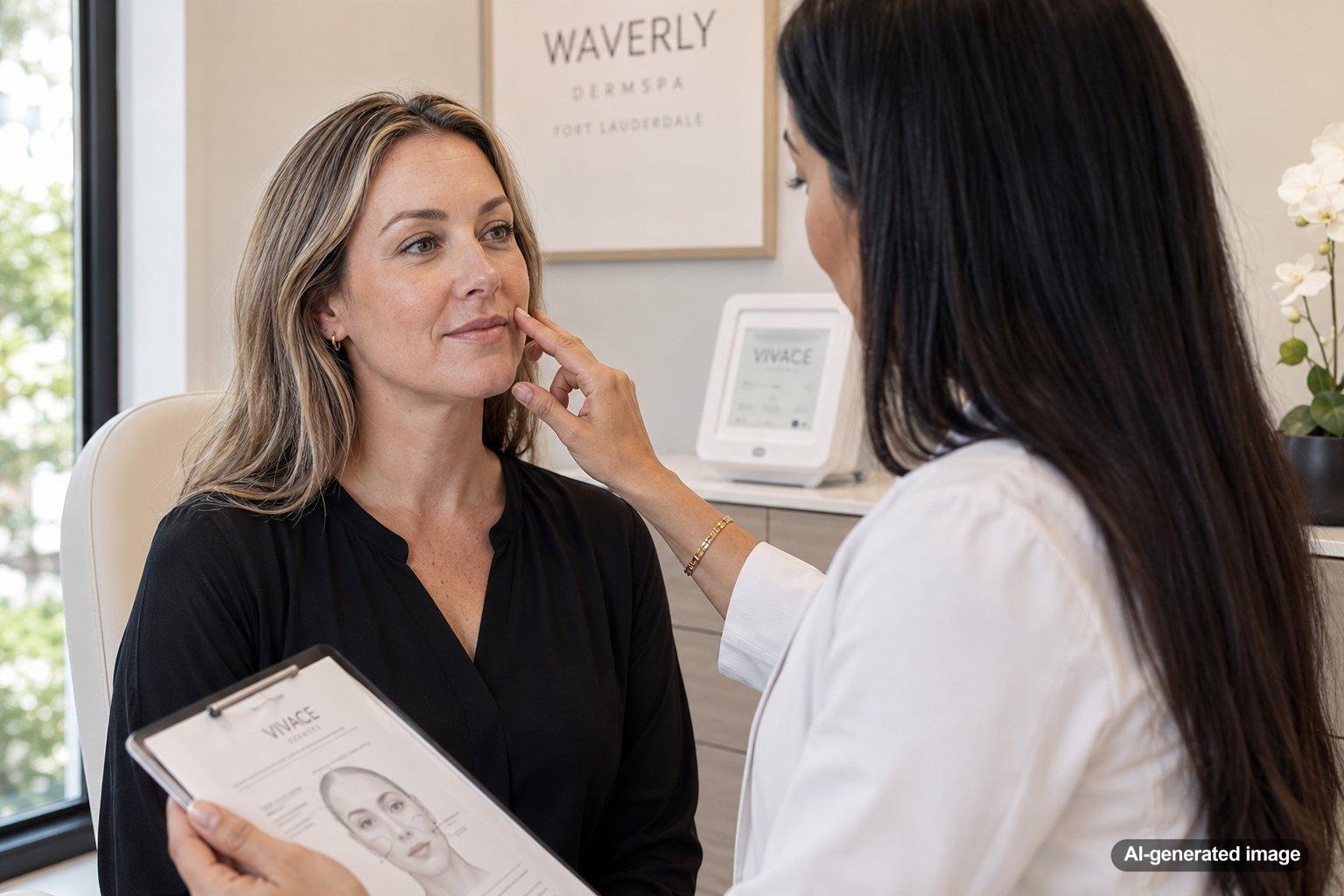
Fine lines around the mouth can become more noticeable when lipstick settles into them, makeup no longer applies as smoothly, or the skin begins to look lightly creased even when your face is relaxed. Vivace is a professional radiofrequency microneedling treatment that may help improve the appearance of these lines by creating controlled microchannels while delivering radiofrequency energy beneath the skin.
The mouth is a highly expressive and anatomically delicate area, so treatment should be customized rather than approached with a standard setting or one-size-fits-all plan. A dermatologist can evaluate the depth of the lines, skin tone, sun exposure, facial movement, medical history, and other factors before recommending an appropriate option.
Quick answer
- Vivace combines microneedling with controlled radiofrequency energy.
- It may help soften fine lines and improve skin texture around the mouth.
- Changes generally develop gradually as the skin responds to treatment.
- Temporary redness, swelling, sensitivity, or pinpoint bleeding may occur.
- A consultation is important because not every type of mouth line responds the same way.
What is Vivace?
Vivace is a radiofrequency microneedling device. During treatment, very small needles enter the skin at controlled depths and deliver radiofrequency energy to targeted tissue. This creates a controlled response that may support collagen remodeling and gradual improvements in texture, firmness, and the appearance of fine lines.
Unlike topical products, professional microneedling reaches living layers of the skin. For that reason, it should be treated as a medical procedure performed by a properly trained provider using sterile, single-use needle cartridges and settings selected for the treatment area.
Why fine lines develop around the mouth
Lines around the mouth are often called perioral lines or lip lines. They can develop from a combination of normal facial movement and gradual changes within the skin rather than from one single cause.
- Repeated movement: Talking, smiling, sipping, and pursing the lips repeatedly fold the surrounding skin.
- Collagen changes: The skin may become thinner and less resilient over time.
- Sun exposure: Ultraviolet exposure can contribute to uneven texture and premature skin aging.
- Dryness: Dehydrated skin can make shallow lines look more prominent.
- Volume and structural changes: Changes in the lips, teeth, jaw, and surrounding facial tissues may affect how the skin folds.
- Smoking history: Tobacco exposure and repeated lip movement can contribute to lines in this area.
How Vivace may help mouth lines
Vivace may be considered when fine lines are related to textural changes, mild laxity, or gradual collagen loss. The treatment is intended to improve the quality of the skin rather than freeze facial movement or add volume to the lips.
The response is progressive. Some people notice that the treated area feels smoother or looks more refreshed as redness settles, while collagen-related changes may continue developing over time. The degree of improvement varies with the depth and cause of the lines, the treatment settings, the number of sessions, aftercare, and the individual’s healing response.
Deep folds, substantial volume loss, or strongly movement-related lines may require a different approach or a carefully planned combination of treatments. A dermatologist can explain which component of the concern each option is intended to address.
What happens during a Vivace appointment?
Your visit should begin with a review of your goals, medical history, medications, previous procedures, tendency to develop cold sores or raised scars, and current skin condition. The provider may also examine how the area looks while your face is relaxed and moving.
A topical numbing medication is commonly applied before RF microneedling. The handpiece is then placed methodically over the selected treatment area. You may feel pressure, warmth, vibration, or brief prickling sensations. Comfort levels vary, especially near the upper lip, where the skin can be sensitive.
The procedure should not be performed directly over active infections, open sores, irritated skin, or an active cold sore outbreak. Your provider may postpone treatment or recommend additional precautions based on your history.
Preparing for treatment
Follow the specific instructions provided by your clinician. General preparation may include keeping the area protected from excessive sun, avoiding intentional tanning, and temporarily pausing irritating skin care products if directed.
- Tell your provider about prescription medications, supplements, blood thinners, allergies, and numbing medication reactions.
- Discuss any history of cold sores around the lips.
- Report recent cosmetic injections, peels, laser procedures, or other energy-based treatments.
- Arrive with clean skin unless your provider gives different instructions.
- Avoid trying at-home microneedling before or between professional sessions.
Do not stop a prescribed medication without first speaking with the clinician who manages it.
Recovery and aftercare
Temporary redness, warmth, tightness, swelling, tenderness, dryness, peeling, bruising, or pinpoint bleeding can occur after professional microneedling. The intensity and duration vary among patients and may be more noticeable around the mouth because the area moves frequently.
Use only the products recommended by your provider while the skin barrier is recovering. Cosmetics, moisturizers, sunscreen, retinoids, exfoliating acids, fragranced products, or other active ingredients may sting or irritate recently treated skin. Your clinician will explain when each product can be resumed.
- Keep the area clean and avoid picking, rubbing, or exfoliating it.
- Use gentle skin care and sun protection as directed.
- Postpone strenuous exercise, heat exposure, swimming, and other activities for the period recommended by your provider.
- Contact the office if discomfort is worsening instead of improving.
Who may not be a candidate?
RF microneedling is not appropriate for everyone. A dermatologist may recommend postponing or avoiding treatment when there is an active infection, cold sore outbreak, open wound, uncontrolled inflammatory skin condition, recent significant sun exposure, impaired healing, a history of certain scars, or another medical concern affecting treatment safety.
Pregnancy, nursing, blood-thinning medications, bleeding conditions, implanted medical devices, immune suppression, allergies, and previous reactions to cosmetic procedures should be discussed during the consultation. The decision depends on the individual’s medical history and the specific device being considered.
Other professional options for mouth lines
Vivace is one of several approaches that may be discussed for lines around the mouth. The most suitable option depends on whether the primary issue is texture, movement, volume loss, pigmentation, laxity, or a combination of concerns.
- Prescription or professional skin care: May support gradual improvements in texture and sun-related changes.
- Chemical peels: May be considered for selected superficial texture or pigmentation concerns.
- Laser resurfacing: Can address certain textural changes but involves different benefits, risks, and recovery considerations.
- Injectable treatments: May be considered when movement or volume changes are significant, although the mouth requires conservative planning.
- Other microneedling approaches: Standard microneedling and other RF microneedling devices differ in their design and settings.
A personalized plan may use one treatment or a staged combination. More treatment is not automatically better, particularly in a small, expressive area.
When to see a dermatologist
Schedule a professional evaluation before treatment if you have persistent irritation, an unexplained sore, a changing lesion, recurrent cold sores, a rash, or another skin concern near the mouth. Cosmetic treatment should not be used to cover or delay evaluation of a spot that has not been diagnosed.
After RF microneedling, contact your treating clinician promptly for increasing pain, blistering, drainage, spreading redness, significant swelling, fever, a cold sore outbreak, or an unexpected change in skin color. Seek urgent medical care for severe symptoms or signs of a serious allergic reaction.
Frequently asked questions
Does Vivace erase lip lines?
No procedure can promise to erase every line. Vivace may soften the appearance of selected fine lines and improve texture, but results vary. Deeper creases or lines caused by several factors may require other options.
Can Vivace be used directly on the lips?
Treatment plans generally focus on appropriate skin surrounding the mouth rather than the moist pink tissue of the lips. The exact boundaries should be determined by a trained provider according to the device instructions and your anatomy.
How many treatments are needed?
The number and spacing of sessions vary. Your clinician can recommend a plan after evaluating the lines, skin condition, previous treatments, response to the first session, and desired level of improvement.
Will I need downtime?
Some people resume routine activities relatively quickly, but temporary redness, swelling, sensitivity, or peeling may be visible. Plan around important events and follow the recovery guidance given during your consultation.
Can Vivace be combined with fillers or wrinkle-relaxing injections?
Combination treatment may be appropriate for selected patients because different procedures address different causes of lines. Timing and sequencing matter, so these treatments should be coordinated by a qualified clinician rather than scheduled independently.
Is RF microneedling safe for darker skin tones?
Microneedling is often considered across a broad range of skin tones, but pigment changes and other complications remain possible. Your provider should evaluate your skin type, treatment history, tendency toward discoloration, and the specific device settings being considered.
At Waverly DermSpa, we offer Vivace and can help you understand whether it may be appropriate.
Ready to get help?
Schedule an appointment or send a message and our team will get back to you.
Prefer to call? 954-666-3736
This article is for educational purposes and is not medical advice. For diagnosis and personalized treatment, please book an appointment with a board-certified dermatologist.
Sources & further reading
- U.S. Food and Drug Administration (FDA) – Microneedling Devices: Getting to the Point on Benefits, Risks and Safety
- American Academy of Dermatology (AAD) – Microneedling Can Fade Scars, Uneven Skin Tone, and More
