

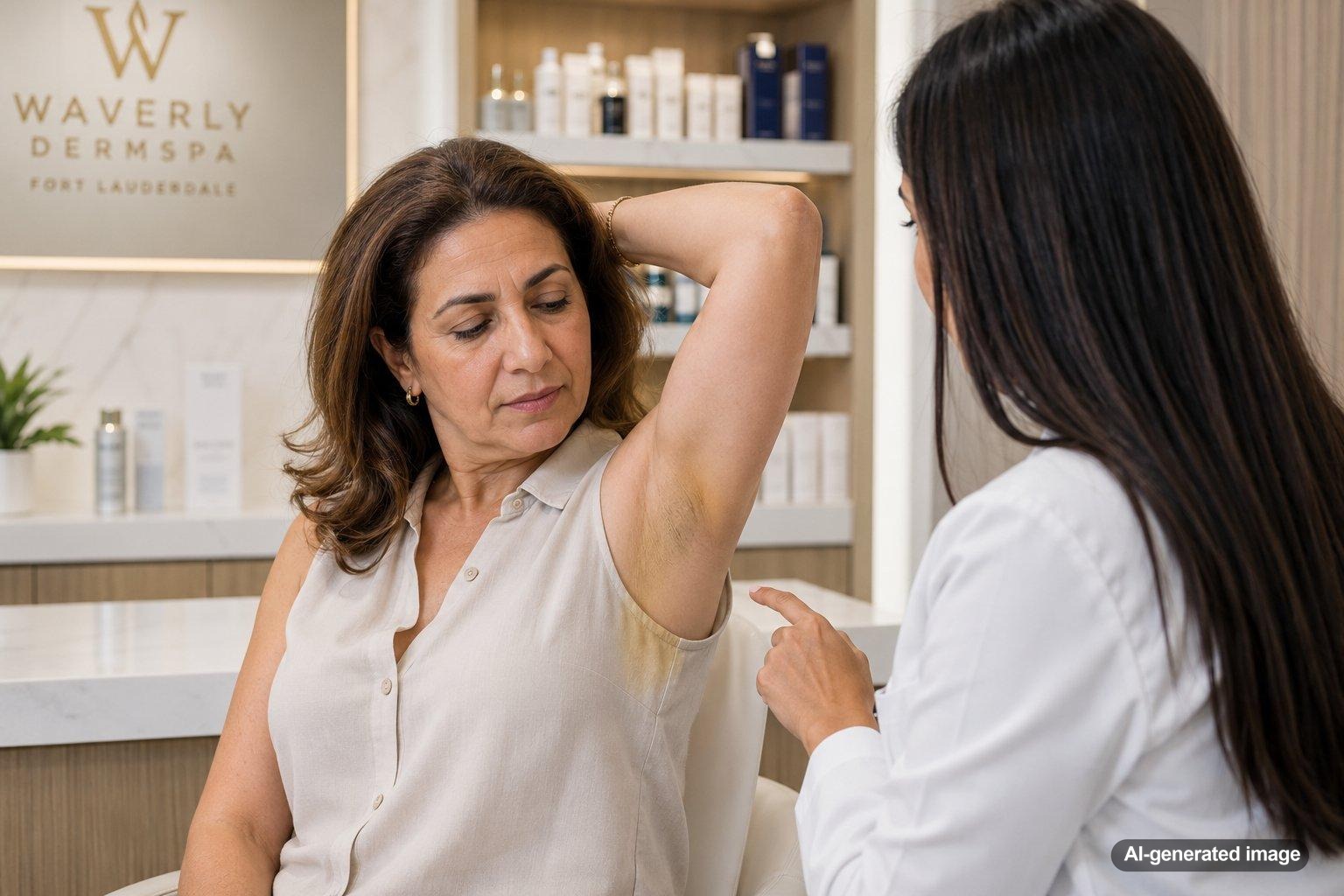
Yellow armpit stains can appear even when you do not use deodorant because deodorant is only one possible contributor. Sweat itself is usually colorless, but it can pick up color after mixing with natural skin oils, bacteria, laundry residue, fabric dyes, skincare products, or compounds already present in clothing. Less commonly, the sweat itself may appear yellow because of a condition involving colored perspiration.
The most useful clue is whether the yellow color appears only on clothing or is also visible on freshly cleaned skin. Persistent staining, unusual odor, irritation, or clearly colored moisture deserves a closer look from a dermatologist.
Quick answer
- Old sweat, body oils, detergent residue, and fabric buildup can create yellow staining without deodorant.
- Skin products such as lotions, self-tanners, soaps, or topical medications may transfer color to clothing.
- Microorganisms on the skin can sometimes change the color of otherwise clear sweat.
- Rarely, yellow perspiration can be related to chromhidrosis, a condition in which sweat appears colored.
- A dermatologist can help distinguish a clothing issue from a skin or sweat-gland condition.
Why sweat can leave yellow stains
Fresh sweat is mostly water and is generally clear. However, underarm moisture also mixes with salt, proteins, skin oils, dead skin cells, and microorganisms. Once that mixture dries and is exposed to air, heat, detergent, or repeated washing, it may leave a yellow or brownish mark.
This is especially noticeable on white and light-colored clothing. A shirt can also retain invisible residue from previous wear, including antiperspirant that was used weeks or months earlier. Repeated heat from a dryer may set that buildup more firmly into the fibers.
Common causes of yellow armpit stains without deodorant
- Sweat and body oil buildup: Proteins, oils, and salts can accumulate in fabric and gradually oxidize or darken.
- Laundry product residue: Detergent, fabric softener, scent boosters, bleach, or incomplete rinsing may react with sweat or discolor certain materials.
- Skin and body-care products: Moisturizers, sunscreen, self-tanner, body wash, shaving products, or topical medications may transfer to clothing.
- Fabric dyes or finishes: Color from a garment may bleed, or a textile treatment may change when exposed to moisture and heat.
- Microbial activity: Bacteria or fungi living on the skin can sometimes interact with perspiration and create discoloration. This is known as pseudochromhidrosis when normal sweat becomes colored after reaching the skin surface.
- Colored sweat: Apocrine chromhidrosis is a rare condition in which sweat produced in areas such as the armpits may appear yellow, green, blue, brown, or black.
- Heavy sweating: More moisture means more opportunity for residue to build up, although excessive sweating does not automatically mean that a medical condition is present.
Is the color coming from your skin or your shirt?
Try to observe the underarm before getting dressed. After gently washing and drying the area, place a clean white tissue or cotton pad against the skin when you begin to sweat. Do not scrub or repeatedly test irritated skin.
If the tissue remains clear but the shirt turns yellow later, fabric buildup or a product reaction is more likely. If fresh moisture looks yellow directly on the skin or transfers color immediately, a dermatologist may consider chromhidrosis, pseudochromhidrosis, medication effects, environmental exposure, or other less common explanations.
What you can do at home
- Wash the underarms gently with a mild, fragrance-free cleanser and dry them thoroughly.
- Temporarily simplify your routine by pausing nonessential lotions, self-tanners, fragranced products, and heavily colored skincare products in the area.
- Wear a new or thoroughly cleaned light-colored cotton shirt to see whether staining continues.
- Rinse clothing well and avoid using more detergent than the manufacturer recommends.
- Air-dry a test garment rather than placing it in a hot dryer, since heat can set stains.
- Keep track of when staining occurs, which shirts are affected, and whether heat, stress, exercise, foods, supplements, or medications seem related.
- Avoid harsh scrubbing, undiluted acids, bleach, or aggressive home remedies on the skin, particularly if it is irritated.
Do not stop a prescribed medication because you suspect it may be contributing. Instead, discuss the timing and symptoms with the prescribing clinician.
How a dermatologist may evaluate yellow perspiration
A dermatologist may ask whether the color appears on the skin, clothing, or both; whether it wipes away; when it began; and whether you have itching, tenderness, odor, rash, or increased sweating. Your skincare products, medications, supplements, occupation, travel, and clothing habits may also be relevant.
Depending on the findings, an evaluation may include examining the skin under regular or specialized light, testing material from the skin surface, or considering other causes of discolored sweat. Professional care depends on the suspected source and may focus on reducing surface microorganisms, addressing inflammation, modifying a contributing product, or managing excessive sweating. There is no single approach that is appropriate for every person.
When to see a dermatologist
Schedule an evaluation if the yellow discoloration repeatedly appears on freshly washed skin, affects several new garments, or does not improve after simplifying your products and laundry routine. It is also worth getting checked when the change begins suddenly or follows a new medication, supplement, occupational exposure, or illness.
Seek prompt medical attention if you notice pain, warmth, swelling, pus, draining bumps, rapidly spreading discoloration, fever, open sores, a strong new odor, or significant skin breakdown. These findings may indicate an infection or another condition that should be assessed rather than managed with home remedies.
Frequently asked questions
Can sweat be naturally yellow?
Sweat is usually clear. Rare forms of chromhidrosis can produce colored perspiration, including yellow sweat, but residue on the skin or clothing is a more common explanation.
Can bacteria cause yellow underarm stains?
Microorganisms can sometimes alter the color of sweat after it reaches the skin. A dermatologist can determine whether the discoloration may be related to surface bacteria, fungi, a product, or another cause.
Why do only some shirts turn yellow?
Different fabrics, dyes, finishes, detergents, and drying temperatures react differently with sweat and body oils. An older shirt may also contain residue from products used in the past.
Does yellow staining mean I have excessive sweating?
Not necessarily. Even an ordinary amount of perspiration can stain fabric. Excessive sweating is more likely when moisture is frequent, difficult to control, soaks through clothing, or interferes with daily activities.
Should I switch deodorants?
If you are not using deodorant, switching products will not address the underlying question. It may be more helpful to simplify all underarm products, test a clean garment, and observe whether the moisture itself is colored.
Can I bleach the skin to remove the color?
No. Household bleach and harsh stain removers can injure underarm skin. If the skin itself looks yellow or discolored, have it evaluated rather than trying to lighten it at home.
Ready to get help?
Schedule an appointment or send a message and our team will get back to you.
Prefer to call? 954-666-3736
This article is for educational purposes and is not medical advice. For diagnosis and personalized treatment, please book an appointment with a board-certified dermatologist.
Sources & further reading
- DermNet – Pseudochromhidrosis
- DermNet – Apocrine chromhidrosis
- American Academy of Dermatology (AAD) – Hyperhidrosis: Signs and symptoms
