

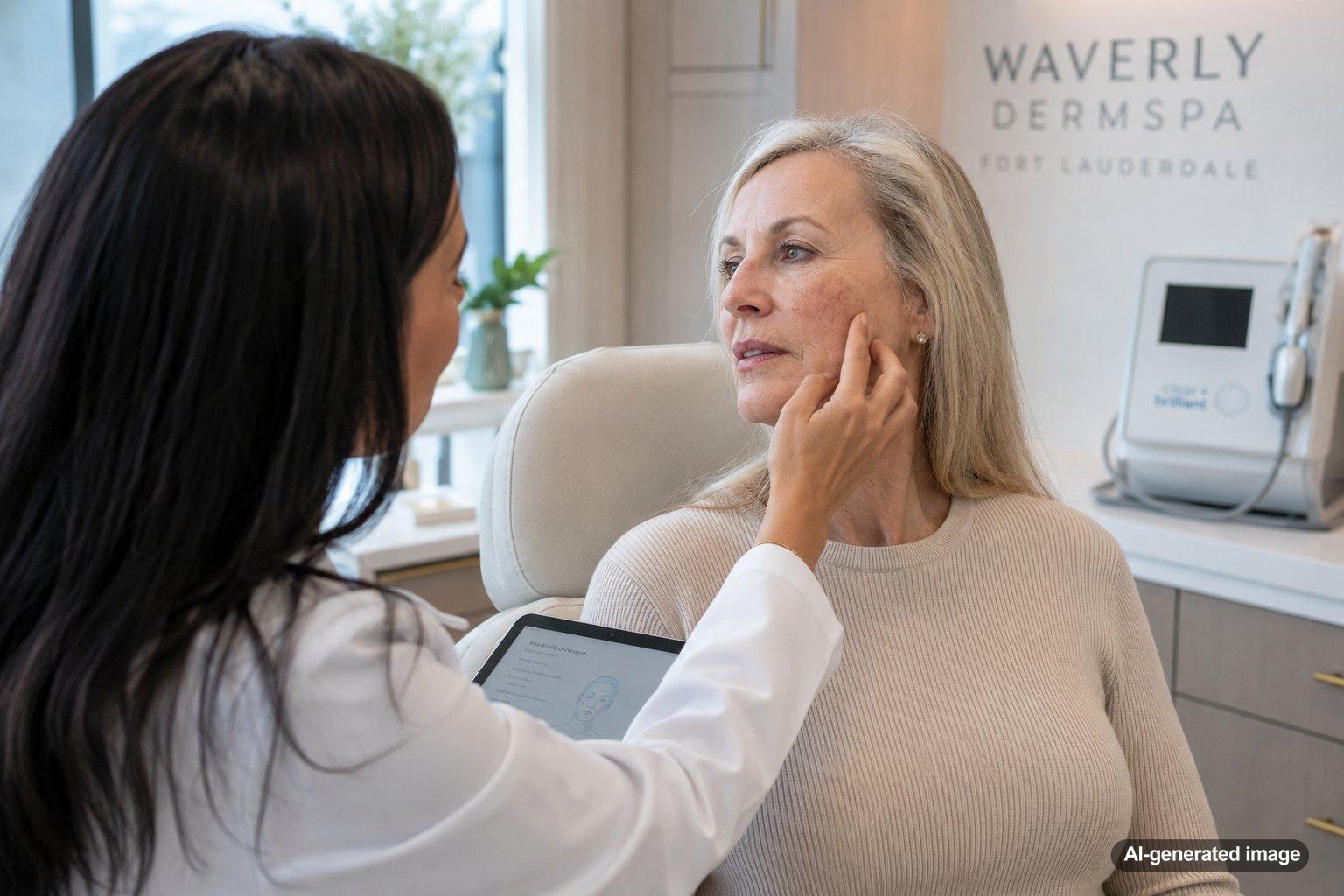
Flat brown, gray, pink, or red marks can remain after an acne blemish has healed. These areas of uneven pigment are often more noticeable than the original breakout, especially in bright South Florida light. Clear + Brilliant Touch is a fractional laser treatment that may help improve the appearance of uneven tone while supporting a smoother, more refreshed complexion.
It is important to distinguish lingering discoloration from true acne scarring before choosing a treatment. A dermatologist can examine your skin, identify active acne or other pigment concerns, and determine whether Clear + Brilliant Touch may fit into a personalized plan.
Quick answer
- Clear + Brilliant Touch uses controlled fractional laser energy to create microscopic treatment zones in the skin.
- It may help gradually improve uneven pigment, dullness, and mild textural irregularities after acne.
- It does not replace treatment for active acne, and suitability depends on your skin tone, current routine, and medical history.
- Sun protection and gentle skincare are essential before and after treatment, particularly in Fort Lauderdale.
- A consultation is the best way to distinguish flat pigment from indented or raised acne scars.
What uneven pigment after acne means
Acne inflammation can leave a flat area of discoloration after the blemish resolves. This is commonly called post-inflammatory hyperpigmentation, or PIH, when excess pigment creates a brown, gray, or bluish mark. Lighter skin tones may develop persistent pink or red areas instead.
These marks are different from acne scars that change the skin’s physical contour. A true scar may appear indented, pitted, thickened, or raised. Pigment and scarring can occur together, which is one reason an in-person evaluation matters before beginning a laser treatment.
How Clear + Brilliant Touch works
Clear + Brilliant Touch is a fractional laser device. Rather than treating the entire skin surface uniformly, it creates many microscopic treatment zones while leaving surrounding areas intact. The treatment is designed to encourage a gradual renewal response within the skin.
For someone with uneven pigment after acne, a series of appropriately selected treatments may help the complexion look more even and refined. The degree of improvement varies, and treatment settings must be chosen carefully based on skin tone, pigment pattern, sensitivity, recent sun exposure, and other factors.
Who may be considered for treatment
Clear + Brilliant Touch may be considered when discoloration is flat, acne is reasonably controlled, and the skin barrier is healthy enough for treatment. A consultation is especially important for people who tan easily or develop dark marks after minor irritation because overly aggressive treatment can worsen discoloration in susceptible skin.
Your dermatologist may also review medications, recent procedures, cold sore history, pregnancy or nursing status, active rashes, and the products you use at home. Some ingredients may need to be paused around treatment, but you should follow individualized instructions rather than stopping prescribed products on your own.
What can contribute to lingering acne marks
- Deep or inflamed acne blemishes
- Picking, squeezing, or scratching the skin
- Ongoing breakouts that repeatedly trigger inflammation
- Unprotected ultraviolet exposure
- Heat and visible light exposure in pigment-prone skin
- Harsh scrubs, strong acids, or an overloaded skincare routine
- Using treatments that are not appropriate for your skin tone or condition
What you can do at home
A conservative routine can support more even-looking skin and reduce unnecessary irritation. Use a gentle cleanser, a non-comedogenic moisturizer, and broad-spectrum sunscreen every morning. In Fort Lauderdale, sunscreen should be paired with practical shade, hats, and thoughtful timing of outdoor activities.
Avoid picking active blemishes and do not scrub dark marks in an attempt to remove them. Pigment sits within the skin and cannot be safely polished away. Introducing several brightening or exfoliating products at once may cause inflammation that makes discoloration appear more pronounced.
If you use retinoids, exfoliating acids, benzoyl peroxide, or prescription acne products, ask your clinician how to manage them before and after a procedure. Instructions may differ according to the product, treatment intensity, and your skin’s sensitivity.
What to expect from a professional plan
A personalized plan may begin with controlling active acne, strengthening the skin barrier, and improving daily sun protection. Clear + Brilliant Touch may then be used alone or as part of a broader strategy that includes topical skincare, chemical peels, microneedling, or other professionally selected options.
During treatment, protective eyewear is used and the device is passed across the planned areas. Temporary warmth, redness, swelling, dryness, or a rough texture may occur afterward. The exact experience and recovery pattern vary by treatment settings and individual skin response.
Because pigment changes gradually, your clinician may recommend assessing the skin over time rather than judging the outcome immediately. Additional sessions may be discussed, but there is no single schedule that is appropriate for everyone.
When to see a dermatologist
Schedule an evaluation if discoloration continues to develop because acne remains active, if marks are accompanied by pitting or raised tissue, or if a spot is changing in a way that does not follow the pattern of a healing blemish. You should also seek guidance if home products repeatedly cause burning, swelling, crusting, or worsening pigment.
A dermatologist can determine whether the concern is post-inflammatory pigment, redness, acne scarring, melasma, sun-related discoloration, or another condition. That distinction helps reduce trial-and-error treatment and supports a plan appropriate for your skin.
Frequently asked questions
Is post-acne pigment the same as an acne scar?
No. Post-acne pigment is typically flat and changes the skin’s color. A scar changes its texture or contour. Some people have both, so a professional examination can clarify which features are present.
Can Clear + Brilliant Touch treat active acne?
The treatment may be part of a broader skincare strategy, but it is not a substitute for evaluating and managing active acne. Controlling new inflammation is important because each breakout can create additional discoloration.
Is Clear + Brilliant Touch appropriate for every skin tone?
Suitability and settings vary. People with deeper or pigment-prone skin tones may require a particularly cautious approach. A dermatologist can assess your skin and discuss whether the potential benefits and risks align with your goals.
How many treatments will I need?
There is no universal number. Recommendations may depend on the depth and extent of discoloration, your response to treatment, sun exposure, active acne, and the other parts of your skincare plan.
Can I have treatment after a beach vacation?
Recent tanning or significant sun exposure may affect treatment timing. Tell your clinician about recent travel, outdoor activities, sunburn, or tanning so the skin can be evaluated before proceeding.
Will the pigment return?
Previously improved areas may remain more even, but new acne, inflammation, irritation, and sun exposure can create new discoloration. Ongoing acne management and consistent sun protection remain important.
At Waverly DermSpa, we offer Clear + Brilliant Touch and can help you understand whether it may be appropriate.
Ready to get help?
Schedule an appointment or send a message and our team will get back to you.
Prefer to call? 954-666-3736
This article is for educational purposes and is not medical advice. For diagnosis and personalized treatment, please book an appointment with a board-certified dermatologist.
Sources & further reading
- American Academy of Dermatology (AAD) – Acne scars: Signs and symptoms
- U.S. Food and Drug Administration (FDA) – Medical Lasers
