

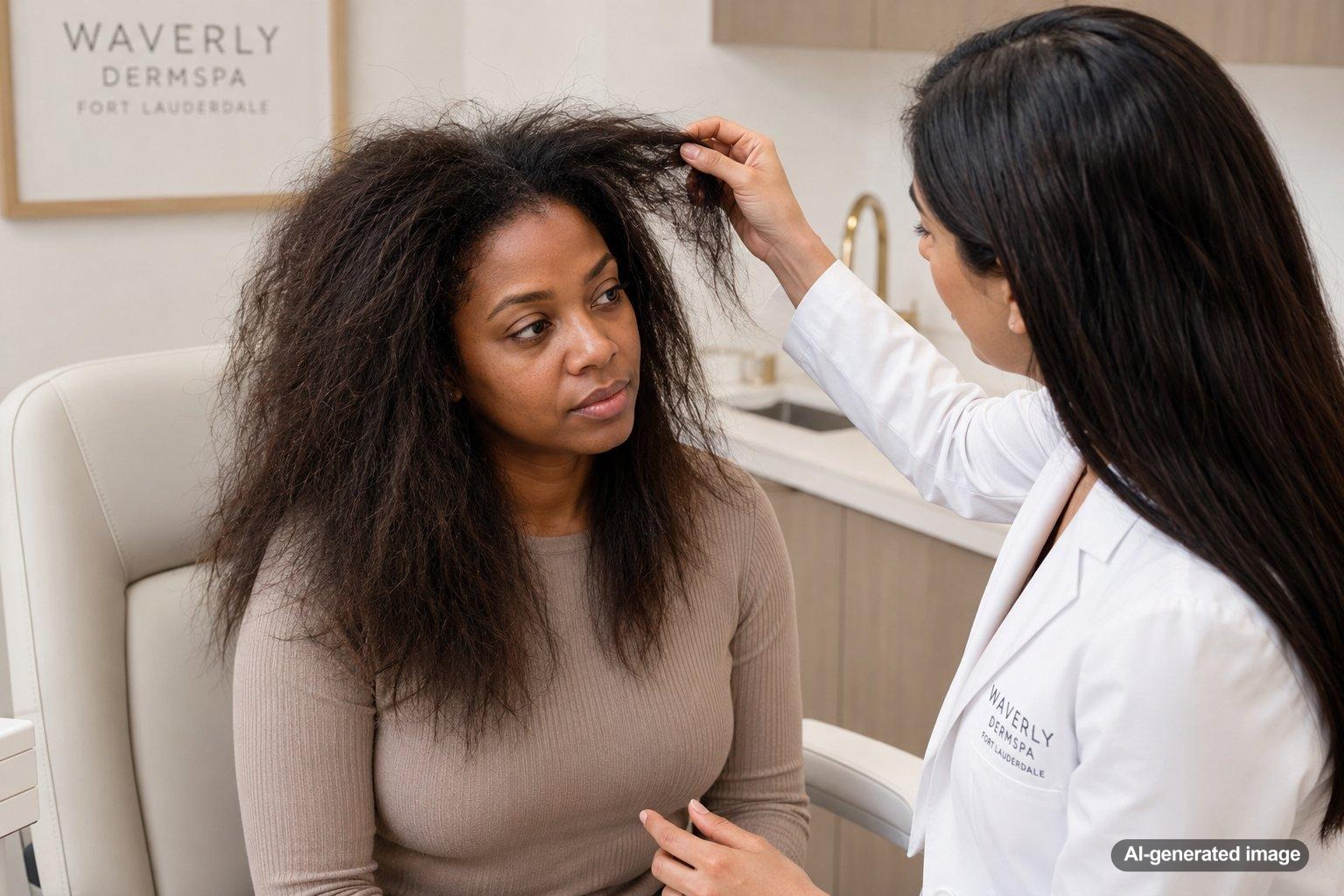
Hair that feels rough, looks frizzy, and refuses to lie flat can be frustrating, especially when conditioners, masks, and careful brushing do not seem to make a difference. In many people, a straw-like texture is related to dryness, heat styling, chemical processing, weather exposure, or breakage. However, a rare genetic hair shaft condition called uncombable hair syndrome can produce hair that grows outward in different directions and cannot be combed smooth.
Uncombable hair syndrome usually begins in childhood, so a sudden texture change in an adult is more likely to have another explanation. A dermatologist can examine the hair and scalp, review the timing of the change, and help distinguish a structural hair condition from routine damage or a health-related concern.
Quick answer
- Rough, straw-like hair does not automatically mean uncombable hair syndrome.
- Uncombable hair syndrome is a rare hair shaft condition that usually appears during childhood.
- Affected scalp hair often looks dry, shiny, frizzy, or silvery and grows in several directions instead of lying flat.
- Adult-onset texture changes are more commonly associated with damage, weathering, scalp conditions, medications, hormones, or nutritional and medical factors.
- Persistent changes, breakage, shedding, scalp symptoms, or patchy hair loss are worth discussing with a dermatologist.
What is uncombable hair syndrome?
Uncombable hair syndrome, sometimes called spun glass hair or pili trianguli et canaliculi, is a rare condition affecting the structure of scalp hair. Instead of having a consistently rounded shape, many affected strands have an angular or grooved shape. This altered structure can make the hair stand away from the scalp, reflect light differently, and resist being brushed into a smooth style.
The condition most often becomes noticeable between infancy and early childhood, although it may appear later in childhood. Hair may be blond, light brown, silvery, or another natural color. Color alone does not determine whether someone has the condition. Uncombable hair syndrome generally affects scalp hair rather than eyebrows, eyelashes, or body hair.
Several genes involved in hair shaft formation have been associated with the condition. In some people, no specific genetic change is identified. The appearance frequently becomes less noticeable with age, and many affected children develop hair that lies flatter by adolescence or early adulthood. The timing and degree of improvement can vary.
Why else can hair feel rough and straw-like?
Many common factors can create an unmanageable texture without causing true uncombable hair syndrome. Possibilities include:
- Heat exposure: Frequent use of flat irons, curling tools, or high-temperature blow-drying can weaken the outer layer of the hair shaft.
- Chemical processing: Bleaching, coloring, relaxing, perming, and repeated keratin treatments may increase dryness, porosity, and breakage.
- Mechanical friction: Aggressive brushing, tight hairstyles, rough towel-drying, and friction during sleep can contribute to weathering.
- Sun, salt, and chlorine: South Florida sun, swimming pools, and ocean water can leave hair feeling dry or stiff, particularly when exposure is frequent.
- Product buildup: Styling products, mineral deposits, and residue may make the hair feel coated, tangled, or dull.
- Scalp inflammation: Itching, flaking, redness, or scale may accompany a scalp condition that affects comfort and hair care.
- Internal factors: Hormonal changes, certain medications, nutritional deficiencies, illness, and other medical issues can sometimes alter hair quality or growth.
- Other hair shaft disorders: Structural conditions may cause unusual texture, fragility, breakage, or difficulty managing the hair.
How is uncombable hair syndrome different from ordinary hair damage?
The history of the texture change is an important clue. Uncombable hair syndrome typically appears early in life and produces a consistent growth pattern in which the hair projects away from the scalp. Ordinary damage may begin after a new styling habit, chemical service, medication, illness, or environmental exposure. Damaged strands are also more likely to show split ends, snapping, uneven length, or worsening in heavily processed areas.
A dermatologist may examine the scalp and strands closely. In selected cases, microscopic examination can reveal characteristic shapes or grooves in the hair shaft. Genetic testing is not necessary for every person, but it may be discussed when the findings and family history suggest an inherited condition.
What can you do at home?
Gentle care cannot change a genetically determined hair shaft shape, but it may reduce additional weathering and make many types of rough hair easier to manage.
- Use a mild shampoo and apply conditioner mainly to the mid-lengths and ends.
- Detangle slowly with fingers or a wide-tooth comb, starting near the ends.
- Reduce high-temperature styling and avoid repeatedly passing a hot tool over the same section.
- Pause bleaching, relaxing, perming, or other strong chemical services if the hair is breaking.
- Pat the hair gently with a soft towel rather than rubbing it vigorously.
- Rinse promptly after swimming and consider protecting the hair before prolonged pool or ocean exposure.
- Choose simple styles that do not require heavy tension or repeated brushing.
- Avoid starting high-dose supplements solely for hair texture without discussing them with a clinician.
Expensive masks and oils may temporarily improve softness or slip, but they cannot correct every cause of roughness. Trying many products at once can also make it harder to identify irritation or buildup.
Professional evaluation and options
A dermatologist can assess whether the primary issue is hair shaft structure, breakage, shedding, scalp inflammation, or a combination of factors. The evaluation may include a review of hair care practices, recent health changes, medications, family history, and the age when the texture first appeared.
Professional recommendations depend on the suspected cause. Common approaches may include simplifying the hair care routine, reducing chemical or thermal stress, treating an underlying scalp condition, reviewing possible medication effects, or considering laboratory testing when the history suggests an internal contributor. When an inherited hair shaft condition is suspected, microscopic examination or referral for genetic counseling may be appropriate.
When should you see a dermatologist?
Consider scheduling an evaluation when rough or unmanageable hair persists despite gentle care, particularly if the change is new or accompanied by other symptoms. Seek professional guidance for:
- Sudden or rapidly worsening texture changes
- Excessive shedding or visible thinning
- Patchy hair loss
- Frequent snapping or unusually fragile strands
- Scalp pain, redness, sores, crusting, or significant itching
- Changes involving the eyebrows, eyelashes, nails, teeth, or skin
- Hair changes following an illness, new medication, major hormonal shift, or restrictive diet
- A child whose hair has been unusually stiff, shiny, and difficult to flatten since early childhood
An evaluation is especially useful before pursuing stronger chemicals, supplements, or corrective salon procedures that could add more damage.
Frequently asked questions
Can adults develop uncombable hair syndrome suddenly?
Classic uncombable hair syndrome generally begins during childhood. A new straw-like texture in adulthood is more likely to be related to weathering, chemical processing, hormonal changes, medications, scalp disease, or another cause. A dermatologist can help evaluate an unexplained change.
Is uncombable hair syndrome the same as dry hair?
No. Dry hair can often be influenced by styling habits, chemical exposure, climate, and hair care practices. Uncombable hair syndrome involves an unusual hair shaft structure that changes how strands grow, reflect light, and lie against the scalp.
Does uncombable hair syndrome cause hair loss?
The condition primarily affects texture and direction of growth. It does not typically cause major scalp hair loss. Noticeable thinning, bald patches, or substantial shedding may point to a separate issue that deserves evaluation.
Can conditioner make the hair lie flat?
Conditioner may improve softness and reduce tangling, but it may not make hair affected by uncombable hair syndrome lie completely flat. Heavy products can sometimes create buildup without changing the underlying shaft structure.
Should I take biotin for rough or uncombable hair?
Biotin is not automatically appropriate for every hair concern, and evidence for routine use in uncombable hair syndrome is limited. High-dose supplements may interfere with certain laboratory tests. Discuss supplementation with a qualified clinician before starting it.
Will a child outgrow uncombable hair syndrome?
Many affected children notice that their hair becomes flatter and closer to a typical texture during adolescence or early adulthood. Improvement is common, but the timing and degree can differ from person to person.
Ready to get help?
Schedule an appointment or send a message and our team will get back to you.
Prefer to call? 954-666-3736
This article is for educational purposes and is not medical advice. For diagnosis and personalized treatment, please book an appointment with a board-certified dermatologist.
