

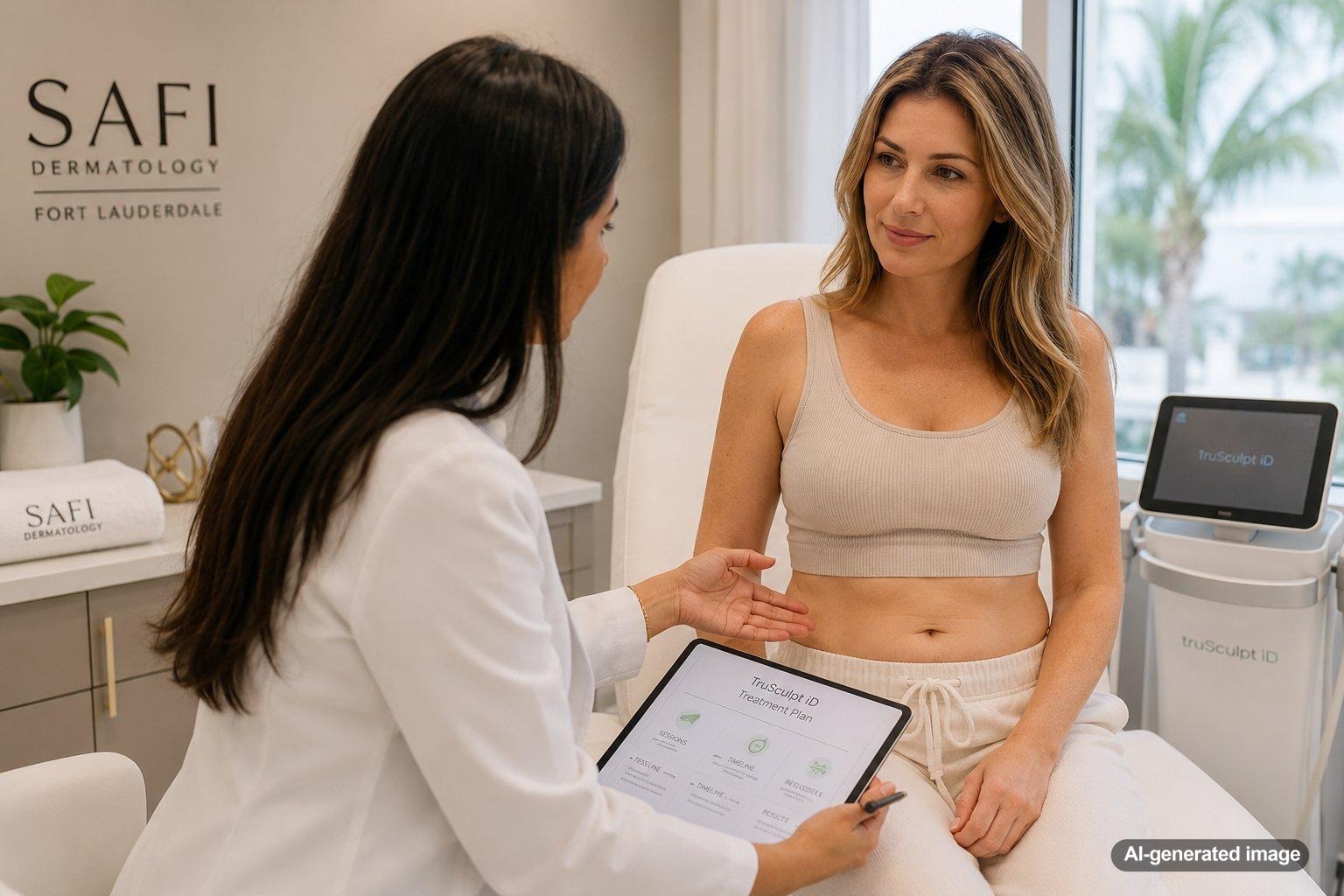
Stubborn belly fat can feel frustrating when your routine is consistent, your weight is stable, and the area still does not respond the way you hoped. TruSculpt iD is a noninvasive body contouring option that uses radiofrequency energy to heat targeted tissue on the abdomen.
The right plan depends on your anatomy, goals, skin quality, medical history, and expectations. A consultation helps determine whether TruSculpt iD may be appropriate, how many sessions may make sense, and what kind of timeline is realistic for you.
Quick answer
- TruSculpt iD is designed for targeted, noninvasive body contouring on areas such as the abdomen.
- It is not a weight-loss treatment and is generally considered for people with localized fullness rather than a need for overall weight reduction.
- Session count varies based on the treatment area, baseline fullness, goals, and clinician recommendation.
- Results are gradual and variable because the body needs time to respond after treatment.
- A qualified clinician should review your medical history, skin, and comfort with possible risks before treatment.
What TruSculpt iD is
TruSculpt iD is a radiofrequency-based body contouring device used to deliver controlled heat to targeted tissue. For the abdomen, FDA materials describe indications that include reduction in circumference and noninvasive lipolysis, which means the breakdown of fat cells without surgery.
In everyday terms, the treatment is meant to address localized fullness in a specific area. It does not replace healthy eating, exercise, weight management, or medical evaluation when abdominal changes are sudden, painful, or unexplained.
Who may be a good candidate
Many people ask about TruSculpt iD when they are near a comfortable, stable weight but notice a pocket of belly fat that does not seem to change much with routine lifestyle habits. A good consultation usually looks at more than the size of the area. Your clinician may consider skin laxity, the thickness and location of the fullness, recent weight changes, prior procedures, sensitivity, implanted devices, and overall health history.
TruSculpt iD may not be the right fit for everyone. Some people may benefit from a different body contouring approach, a dermatology evaluation, or a broader wellness discussion before deciding on treatment.
How many sessions are usually discussed
There is no single session number that applies to every abdomen. Some patients may be evaluated for one treatment area at a time, while others may discuss a series or a staged plan depending on their baseline and goals. The number of sessions may depend on:
- The amount and distribution of abdominal fullness
- The size of the treatment area
- Whether the focus is upper abdomen, lower abdomen, flanks, or a broader contouring pattern
- Skin quality and tissue firmness
- Your goals and tolerance for gradual change
- How your clinician prefers to assess progress between visits
During a consultation, it is reasonable to ask what the first session is expected to accomplish, when progress will be reassessed, and whether additional treatment could be considered later.
What the timeline can look like
TruSculpt iD results are not meant to be instant. Because the treatment relies on the body’s gradual response after radiofrequency heating, changes are typically assessed over time rather than judged immediately after the appointment.
Some people notice early changes before their final result, while others need more time or may see subtler improvement. Your timeline can vary based on treatment settings, anatomy, metabolism, lifestyle, and whether more than one session is performed. The most helpful expectation is gradual refinement, not a same-day transformation.
What results may look like
Results are usually discussed in terms of contour, circumference, fit of clothing, and how the treated area blends with nearby areas. A good outcome should still look like you. It should not be framed as a substitute for weight loss or as a way to change your body overnight.
Before treatment, ask whether photos, measurements, or both will be used to track progress. Standardized photos can be especially helpful because day-to-day bloating, lighting, posture, hydration, and clothing can make the abdomen look different.
Why belly fat can feel stubborn
Localized abdominal fullness can be influenced by several factors. Some are cosmetic, while others are medical or lifestyle-related. Common contributors can include:
- Genetics and natural fat distribution
- Hormonal and age-related body changes
- Weight fluctuations over time
- Posture, bloating, or abdominal wall changes
- Skin laxity after weight change or pregnancy
- Differences between deeper internal fat and pinchable fat under the skin
Body contouring treatments generally target localized tissue under the skin. They do not address deeper internal abdominal fat, digestive bloating, muscle separation, or medical causes of abdominal enlargement.
What you can do at home
At-home habits can support your overall result, but they should be realistic and sustainable. Before and after treatment, many patients are encouraged to maintain stable routines rather than make extreme changes.
- Keep weight as stable as possible before starting a body contouring plan.
- Prioritize protein, fiber, hydration, and regular movement in a way that fits your health needs.
- Avoid judging progress from one mirror check or one photo angle.
- Follow your clinician’s post-treatment instructions closely.
- Contact the office if you notice unexpected pain, blistering, burns, open skin, or symptoms that concern you.
Professional options
Professional body contouring options may include radiofrequency treatments, muscle stimulation treatments, cryolipolysis, laser-based body contouring, surgical procedures, or combinations of approaches. The best option depends on whether the concern is fat, skin laxity, muscle tone, or a combination.
At Waverly DermSpa, we offer truSculpt iD and can help you understand whether it may be appropriate.
When to see a dermatologist
Schedule a dermatology evaluation before body contouring if you have active skin irritation, open areas, a recent infection, unexplained abdominal swelling, a new or changing lump, a history of healing problems, implanted electronic devices, or a medical condition that may affect treatment safety. It is also worth being checked if you are unsure whether the concern is fat, swelling, skin laxity, or another issue.
A dermatologist can evaluate your skin and help you decide whether cosmetic treatment should proceed, be delayed, or be approached differently.
FAQ
Is TruSculpt iD a weight-loss treatment?
No. TruSculpt iD is best understood as a body contouring treatment for localized areas, not a substitute for weight loss, nutrition changes, exercise, or medical weight management.
How soon can I see changes?
Changes are gradual and vary from person to person. Your clinician can explain when they typically reassess progress and how they recommend tracking changes after your session.
Will I need more than one session?
Some people discuss one session, while others may consider additional sessions depending on goals, response, and the treatment plan. This should be individualized during consultation.
Does TruSculpt iD tighten loose skin?
Radiofrequency heat can interact with tissue in ways that may affect contour, but loose skin and fat are different concerns. If skin laxity is the main issue, your clinician may discuss whether a different treatment category is more appropriate.
Can TruSculpt iD treat the lower belly?
The lower abdomen is a common area people ask about, but candidacy depends on anatomy, tissue contact, comfort, and safety considerations. An in-person evaluation is the best way to determine whether treatment makes sense.
What should I ask at my consultation?
Ask what area would be treated, how many sessions may be recommended, how results will be measured, what side effects are possible, when to call the office, and whether another option may better match your goals.
Ready to get help?
Schedule an appointment or send a message and our team will get back to you.
Prefer to call? 954-666-3736
Disclaimer
This article is for educational purposes and is not medical advice. For diagnosis and personalized treatment, please book an appointment with a board-certified dermatologist.
Sources & further reading
- U.S. Food and Drug Administration (FDA) – 510(k) Premarket Notification K221407
- U.S. Food and Drug Administration (FDA) – 510(k) Summary K180709
