

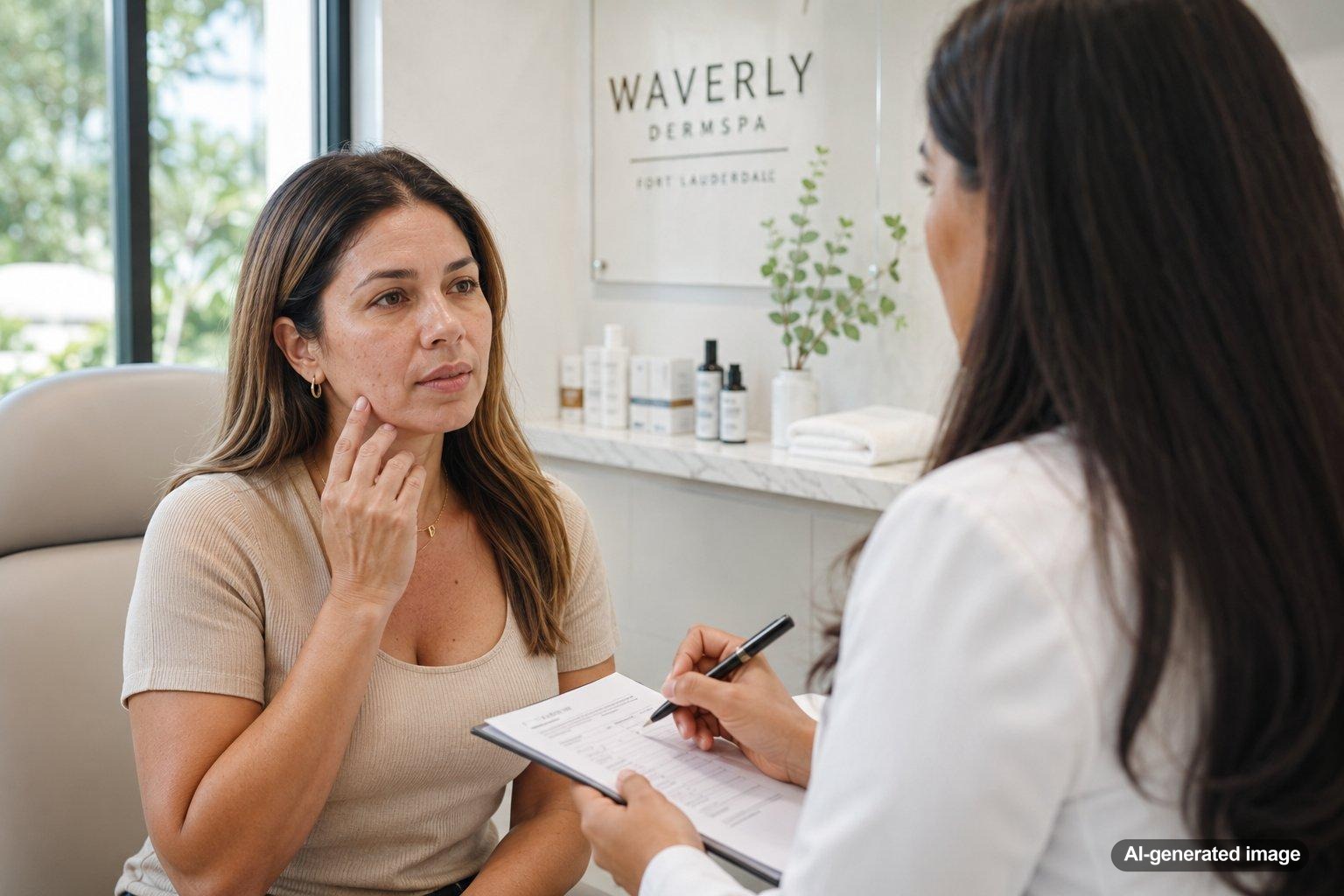
Acne can sometimes itch, especially when a blemish is inflamed or the surrounding skin is dry and irritated. The itching may come from the breakout itself, but it can also be a reaction to acne products, sweat, friction, or a damaged skin barrier.
Persistent or intense itching deserves attention because some acne-like conditions are naturally itchier than typical acne. A dermatologist can examine the pattern, location, and type of bumps to determine what may be contributing to the discomfort.
Quick answer
- Inflamed pimples can create mild itching as the immune system responds in the skin.
- Benzoyl peroxide, retinoids, salicylic acid, and other acne products may cause dryness, peeling, or irritation.
- Sweat, heat, tight clothing, helmets, masks, and hair products may aggravate itchy breakouts.
- Clusters of very similar itchy bumps may be caused by folliculitis or another condition that resembles acne.
- Severe itching, spreading redness, crusting, swelling, or drainage should be evaluated by a dermatologist.
Why acne can feel itchy
Acne develops when hair follicles become clogged with oil and dead skin cells. When a clogged follicle becomes inflamed, the area may feel tender, warm, sensitive, or mildly itchy. This sensation can be more noticeable around red papules, pustules, or blemishes that are beginning to heal.
Itching is not usually the main symptom of ordinary acne. When itching is strong, constant, or present across many small bumps, irritation or a different skin condition may be involved.
Common causes and triggers
- Inflammation: Red, swollen blemishes can stimulate nearby nerve endings and create an itchy or prickly feeling.
- Dryness from acne products: Retinoids, benzoyl peroxide, salicylic acid, and exfoliating acids may dry or irritate the skin, particularly when introduced too quickly or combined.
- A weakened skin barrier: Over-cleansing, scrubbing, frequent exfoliation, and harsh toners can strip protective oils from the skin. The result may be tightness, flaking, burning, or itching.
- Contact irritation: Fragrance, essential oils, hair products, makeup, sunscreen, laundry products, or a newly introduced skincare ingredient may irritate the skin around a breakout.
- Sweat and friction: Heat, workouts, humid weather, masks, hats, helmets, straps, and tight clothing can trap moisture and rub against acne-prone areas.
- Healing skin: A blemish that has been picked, squeezed, or scratched may itch as the damaged surface begins to heal.
- An acne-like condition: Folliculitis, including yeast-related folliculitis, can produce clusters of small bumps that may look like acne but are often noticeably itchy.
Could it be something other than acne?
Not every pimple-like bump is acne. Folliculitis can develop when hair follicles become inflamed or infected. Certain forms may cause many small, similar-looking, itchy bumps on the forehead, hairline, chest, shoulders, or back.
Contact dermatitis can also resemble a breakout, especially when the skin develops itching, redness, roughness, or tiny bumps after exposure to a product. Other possibilities include heat rash, eczema, rosacea, or irritation around hair follicles. Because these conditions can overlap in appearance, self-treating persistent itchy bumps with increasingly strong acne products may make the irritation worse.
What you can do at home
Gentle care may help calm mild itching while protecting acne-prone skin:
- Wash with a mild, fragrance-free cleanser and lukewarm water.
- Avoid facial scrubs, cleansing brushes, picking, squeezing, and scratching.
- Apply a lightweight, fragrance-free moisturizer labeled non-comedogenic.
- Use a cool, clean compress for a few minutes when the skin feels uncomfortable.
- Introduce only one new acne product at a time so you can identify possible irritation.
- Follow product directions rather than applying extra medication or using it more often.
- Rinse sweat from the skin after exercise and change out of damp clothing promptly.
- Keep pillowcases, hats, helmet liners, makeup tools, and anything that touches the affected area clean.
If itching began after adding a new over-the-counter product, consider pausing that product while keeping the rest of the routine simple. If a prescription treatment appears to be causing irritation, contact the prescribing clinician before changing how you use it.
Professional options
A dermatologist can determine whether the bumps are acne, irritation, folliculitis, or another condition. The evaluation may include questions about when the itching began, where the bumps appear, which products you use, and whether heat, sweating, shaving, travel, or medication changes affect the skin.
Depending on the findings, common options may include adjusting the strength or frequency of acne products, simplifying the skincare routine, selecting a different topical medication, or treating another underlying condition. Prescription therapies and office procedures should be selected after an individual evaluation.
When to see a dermatologist
Schedule an evaluation when the itching is persistent, worsening, or interfering with sleep or daily activities. It is also worth getting checked when:
- The bumps are very itchy and all look nearly identical.
- The breakout spreads quickly or repeatedly returns in the same pattern.
- You notice significant swelling, warmth, pain, crusting, or drainage.
- Your skin burns, cracks, peels heavily, or becomes raw after using acne products.
- Deep, painful nodules or cysts are developing.
- The affected skin is near the eyes or causes facial swelling.
- Gentle skincare changes do not improve the irritation.
Seek urgent care for trouble breathing, swelling of the lips or tongue, widespread hives, or a rapidly developing reaction after applying or taking a product.
Frequently asked questions
Does itching mean acne is healing?
A healing blemish may itch mildly, particularly if its surface is dry or was previously picked. However, itching alone does not confirm that acne is healing. Persistent or intense itching may point to irritation or a different condition.
Can benzoyl peroxide make acne itch?
Benzoyl peroxide can cause dryness, peeling, burning, or irritation, especially when first introduced or used too frequently. A gentle moisturizer and less frequent application may help some people, but significant irritation should be discussed with a clinician.
Why are the bumps on my forehead so itchy?
Possible triggers include sweat, hats, hair products, skin irritation, or folliculitis. The appearance and distribution of the bumps can help a dermatologist distinguish among these possibilities.
Should I scratch an itchy pimple?
No. Scratching can damage the skin, increase inflammation, introduce bacteria, and raise the risk of discoloration or scarring. A cool compress is a gentler way to address temporary discomfort.
Can moisturizer make itchy acne worse?
A heavy or irritating formula may not suit every acne-prone complexion, but skipping moisturizer can also worsen dryness from acne treatments. Look for a fragrance-free, non-comedogenic product with a texture appropriate for your skin.
Is itchy acne contagious?
Acne itself is not contagious. Some conditions that resemble acne may have different causes, so a dermatologist should assess unexplained, spreading, or persistent itchy bumps.
Ready to get help?
Schedule an appointment or send a message and our team will get back to you.
Prefer to call? 954-666-3736
This article is for educational purposes and is not medical advice. For diagnosis and personalized treatment, please book an appointment with a board-certified dermatologist.
