

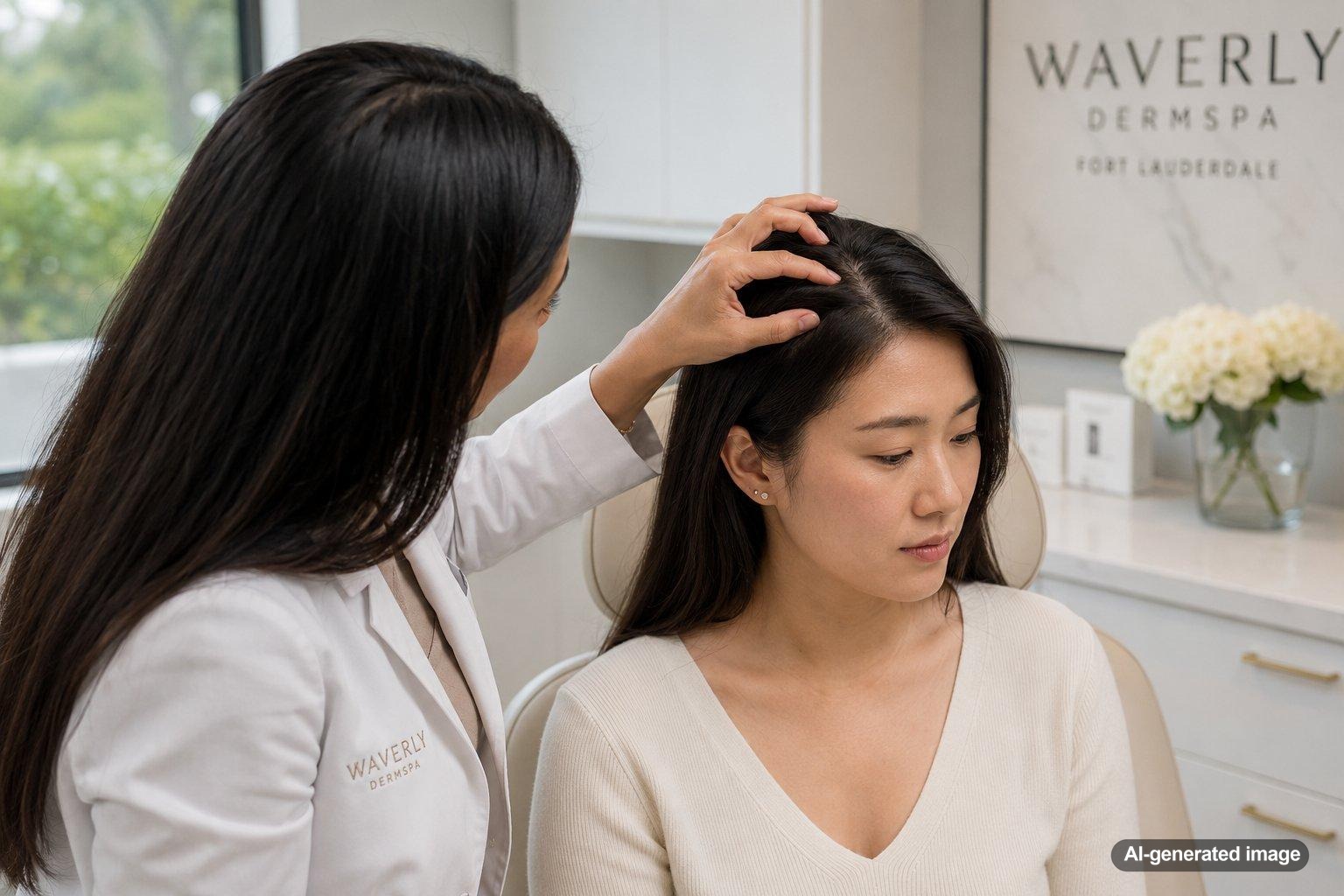
Small bumps on the scalp can feel confusing, especially when they are itchy, tender, crusted, or seem to come and go around the hairline. One possible explanation is folliculitis, which means inflammation around hair follicles. On the scalp, it can look like tiny pimples, pustules, or sore bumps near the base of the hair.
Folliculitis is not one single condition with one single cause. It can be associated with bacteria, yeast, irritation, friction, shaving, occlusive hair products, sweating, or other scalp conditions. Because several issues can look similar, a dermatologist can evaluate the pattern, check for warning signs, and help guide the next step.
Quick answer
- Scalp folliculitis means inflammation around hair follicles on the scalp.
- It may look like small red bumps, whiteheads, pustules, crusted spots, or tender areas.
- Common triggers can include sweat, friction, tight hats, shaving, oily hair products, bacteria, yeast, or irritation.
- Gentle scalp care and avoiding picking may help reduce irritation while you arrange evaluation if symptoms persist.
- A dermatologist should evaluate painful, spreading, recurrent, scarring, draining, or hair-loss-associated scalp bumps.
What scalp folliculitis is
Folliculitis happens when the opening around a hair follicle becomes inflamed. Since the scalp has many hair follicles, bumps can appear in small clusters or across a larger area. Some people notice itching first, while others feel tenderness when brushing, washing, or touching the scalp.
On the scalp, folliculitis may be mistaken for acne, dandruff-related irritation, ingrown hairs, allergic contact dermatitis, psoriasis, seborrheic dermatitis, or other hair and scalp conditions. That overlap is one reason it is best not to self-diagnose persistent scalp bumps.
Common causes or triggers
The exact cause can vary from person to person. Common contributors include:
- Bacteria: Some cases are associated with bacterial overgrowth or infection around the follicle.
- Yeast: Yeast-related folliculitis can create itchy, acne-like bumps that may not respond to typical acne routines.
- Friction or pressure: Helmets, tight hats, headbands, wigs, or repeated rubbing can irritate follicles.
- Sweat and heat: Warm, humid conditions can make the scalp more prone to irritation, especially after workouts or outdoor time.
- Hair removal or close shaving: Shaving the scalp or neckline can trigger irritation, ingrown hairs, or follicle inflammation.
- Heavy or occlusive products: Oils, pomades, styling creams, and buildup may aggravate some scalps.
- Picking or scratching: This can worsen inflammation and may increase the chance of crusting, tenderness, or marks.
What you can do at home
At-home care should be gentle and conservative. The goal is to reduce irritation, not to scrub the scalp into submission.
- Wash the scalp regularly, especially after heavy sweating.
- Avoid picking, squeezing, or aggressively scratching bumps.
- Pause heavy oils, pomades, or leave-in products if they seem to worsen bumps.
- Keep hats, helmets, pillowcases, and hair tools clean.
- Use a gentle shampoo and avoid harsh scalp scrubs on active bumps.
- Try not to shave too closely over irritated areas.
- Avoid sharing combs, brushes, razors, or hair clippers.
If bumps are painful, draining, spreading, or recurring, skip the trial-and-error routine and book a dermatology visit. Persistent scalp inflammation deserves a closer look.
Professional options
A dermatologist can examine the scalp and consider whether the bumps appear inflammatory, bacterial, yeast-related, acne-like, friction-related, or connected to another scalp condition. Depending on the exam, common options may include prescription shampoos, topical medications, oral medications, culture testing, or a closer evaluation for conditions that can affect hair growth or cause scarring.
The right approach depends on what is driving the bumps. For example, a routine aimed at yeast-related folliculitis may differ from one used for bacterial folliculitis, ingrown hairs, seborrheic dermatitis, acne keloidalis nuchae, or scarring scalp conditions. Your clinician can help you decide what is appropriate after evaluation.
When to see a dermatologist
It is worth booking an appointment if scalp bumps are:
- Persistent or frequently recurring
- Painful, swollen, warm, or worsening
- Draining pus or forming thick crusts
- Spreading beyond the original area
- Associated with patchy hair loss or thinning
- Leaving scars, dark marks, or raised bumps
- Not improving with gentle scalp care
- Happening along with fever or feeling unwell
People with diabetes, immune system concerns, or frequent skin infections should be especially cautious and seek medical guidance for recurrent or worsening follicle-related bumps.
FAQ
Is scalp folliculitis the same as acne?
Not always. It can look acne-like, but folliculitis centers around inflamed hair follicles and may have different triggers. A dermatologist can help distinguish it from acne, dandruff-related inflammation, ingrown hairs, and other scalp conditions.
Can scalp folliculitis cause hair loss?
Mild irritation does not always affect hair growth, but persistent, severe, or scarring scalp inflammation can be associated with hair changes. If you notice thinning, bald patches, scarring, or tenderness, it is best to be evaluated promptly.
Should I pop bumps on my scalp?
No. Picking or squeezing can worsen irritation, increase tenderness, and may contribute to crusting or marks. Gentle cleansing and professional evaluation are safer than trying to drain bumps at home.
Can hair products make bumps worse?
They can for some people. Heavy oils, pomades, leave-in products, and product buildup may aggravate certain scalps. If you notice a pattern, pausing the suspected product and discussing it with a dermatologist may help clarify the trigger.
Is scalp folliculitis contagious?
Some infectious causes can potentially spread through close contact or shared items, while other cases are more related to irritation, yeast overgrowth, or inflammatory triggers. Avoid sharing razors, brushes, hats, or clippers until you know what is causing the bumps.
Ready to get help?
Schedule an appointment or send a message and our team will get back to you.
Prefer to call? 954-666-3736
This article is for educational purposes and is not medical advice. For diagnosis and personalized treatment, please book an appointment with a board-certified dermatologist.
Sources & further reading
- DermNet – Scalp folliculitis
- American Academy of Dermatology (AAD) – Acne-like breakouts could be folliculitis
- Mayo Clinic – Folliculitis symptoms and causes
- Cleveland Clinic – Folliculitis: Appearance, Causes, Symptoms & Treatment
