

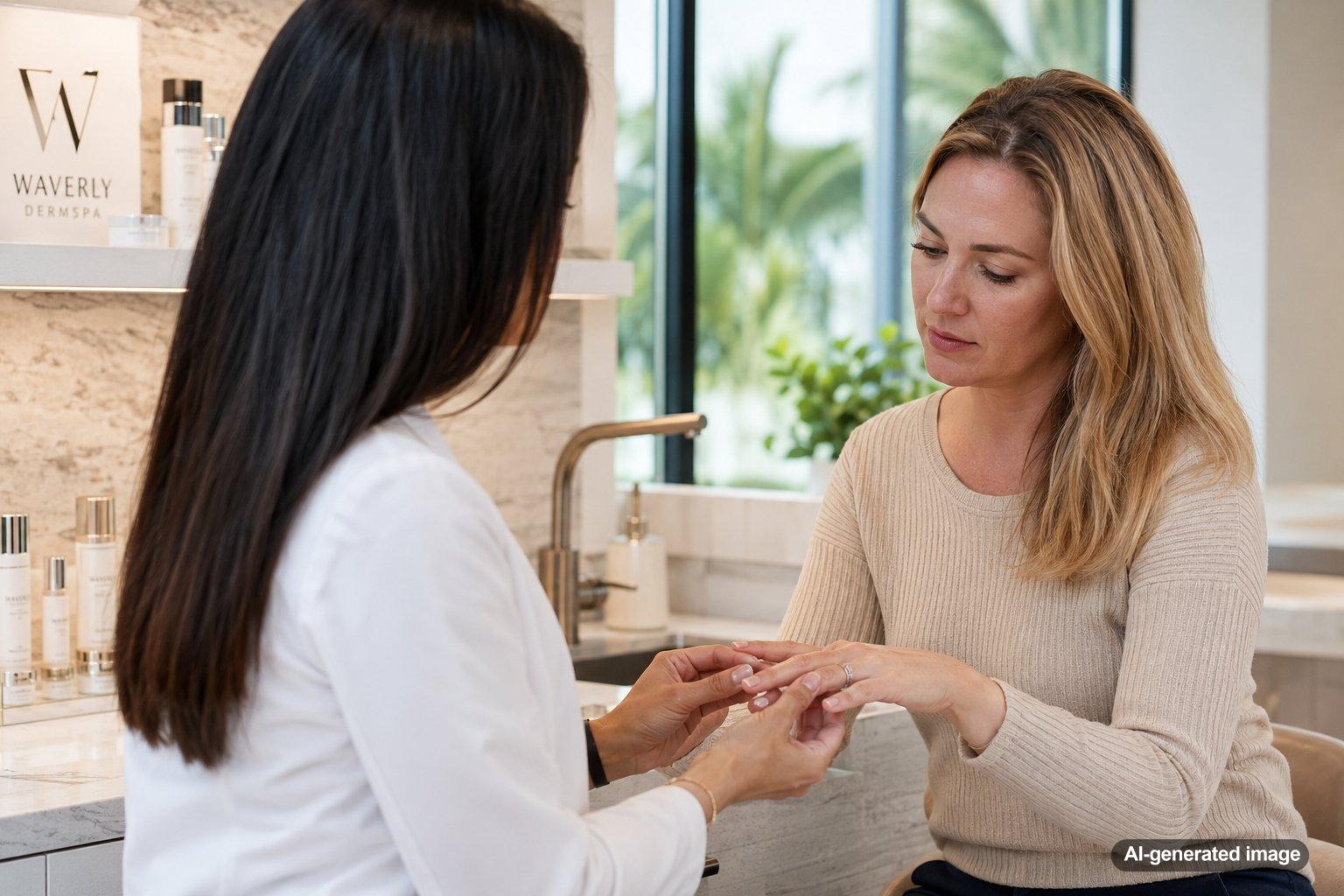
Acrylic nails can look polished and durable, but some people notice their natural nails feel softer, thinner, or more fragile after repeated sets or removal. This does not always mean something serious is happening, but it is a sign to treat the nail plate gently and look at how the acrylics are being applied, maintained, and removed.
The goal is not necessarily to avoid manicures forever. It is to reduce avoidable trauma, give the nail time to recover when needed, and know when a nail change deserves a dermatologist’s evaluation.
Quick answer
- Acrylics can contribute to nail thinning when the natural nail is over-filed, aggressively buffed, picked, peeled, or soaked repeatedly.
- Safe removal matters as much as application. Pulling off acrylics can strip layers of the nail plate.
- Breaks between sets may help if nails feel tender, bend easily, or keep splitting.
- Keep nails short, moisturized, and protected while they are fragile.
- See a dermatologist if there is pain, lifting, discoloration, swelling, drainage, or a nail change that does not improve.
What nail thinning after acrylics usually means
The visible nail is made of layers of keratin. When acrylics are placed, the nail surface is usually prepared so the product can adhere. If that preparation is too aggressive, or if acrylics are removed by force, the surface layers of the nail can become rough, thin, and flexible.
Many people describe this as nails that feel papery, bend at the tips, peel in sheets, or look ridged after the enhancement is removed. The nail plate grows slowly, so improvement is usually gradual and depends on nail growth, daily habits, and whether the nail keeps being exposed to the same stress.
Common causes or triggers
- Over-filing before application: Heavy drilling or repeated coarse filing can thin the natural nail plate.
- Prying or peeling acrylics off: This can pull away layers of natural nail along with the product.
- Frequent back-to-back sets: Nails may not get enough time to stabilize if they are already weak or tender.
- Improper fit or lifting: Gaps can trap moisture or debris and may increase irritation around the nail.
- Long extensions: Extra length can create leverage on the natural nail, especially if the nail is already flexible.
- Repeated wet work: Cleaning, dishwashing, and frequent handwashing can make fragile nails more prone to splitting.
- Underlying nail conditions: Some nail changes are not caused by acrylics alone, which is why persistent changes are worth checking.
What you can do at home
Start by reducing trauma. Keep nails short while they feel thin so the tips are less likely to catch, bend, or tear. Avoid peeling off leftover product, even if it has started to lift. If product remains, have it removed carefully by a trained nail professional or discuss safer removal options.
Moisture support can also help the nail and surrounding skin feel more comfortable. Apply a bland hand cream or cuticle oil to the nail folds and cuticle area regularly, especially after handwashing. When cleaning or washing dishes, wear gloves to reduce repeated exposure to water and detergents.
During a recovery period, choose gentle nail care. A clear protective polish may be reasonable for some people, but avoid layering on multiple hard products if the nails are tender or peeling. Try not to use the nails as tools for opening packages, scraping labels, or pressing hard surfaces.
Professional options
A dermatologist can evaluate whether the nail plate is simply fragile from repeated mechanical stress or whether another issue may be contributing. Depending on what the nail looks like, the visit may include a close exam of the nail plate, cuticle, surrounding skin, and pattern of change across one or several nails.
Professional guidance may include a nail-care reset, recommendations for protecting the nail unit, or further evaluation if there are signs of inflammation, lifting, infection, allergy, or another nail disorder. If you still want manicures, your clinician can help you understand what changes may be safer for your nails, such as shorter lengths, less aggressive prep, longer breaks, or alternatives that place less stress on the nail plate.
When to see a dermatologist
It is worth booking an appointment if thinning is accompanied by discomfort or visible change beyond simple brittleness. Seek evaluation if you notice nail lifting, green, yellow, brown, black, or white discoloration, swelling around the nail, drainage, bleeding, increasing pain, a foul odor, or a nail that separates from the nail bed.
You should also get checked if only one nail is changing, if the nail shape is becoming distorted, or if the problem continues despite taking a break from acrylics. A dermatologist can evaluate whether the change is related to trauma, irritation, allergy, infection, or another condition that needs a different plan.
FAQ
Do acrylics always make nails thin?
No. Some people tolerate acrylics well, especially when application and removal are gentle. Thinning is more likely when the natural nail is over-prepped, products are forced off, or the nails are already fragile.
How long should I take a break from acrylics?
There is no single timeline that fits everyone. If nails feel tender, bend easily, peel, or split, a break can give you time to protect the nail while new nail grows in. A dermatologist can offer more personalized guidance if the nail changes are significant or persistent.
Can I put acrylics back on if my nails are thin?
It may be better to wait if your nails are painful, very flexible, or separating from the nail bed. Covering a fragile nail can sometimes make it harder to notice worsening changes. Consider an evaluation if you are unsure.
Are gel manicures safer than acrylics?
Not necessarily for everyone. Gel, acrylic, dip, and other enhancement systems can all irritate or weaken nails if removal is harsh or the nail is over-filed. The technique, frequency, and your nail health matter.
Should I use a nail strengthener?
Some people like the temporary support of a strengthening product, but formulas vary and some can make nails feel too rigid or irritating. If your nails are peeling, painful, or inflamed around the cuticle, ask a dermatologist before adding more products.
What should I tell my nail technician?
Ask for minimal filing on the natural nail, gentle removal, shorter length, and no prying or forced lifting. Let them know if the nails feel tender or thin so they can adjust the service or recommend pausing enhancements.
Ready to get help?
Schedule an appointment or send a message and our team will get back to you.
Prefer to call? 954-666-3736
Disclaimer
This article is for educational purposes and is not medical advice. For diagnosis and personalized treatment, please book an appointment with a board-certified dermatologist.
