

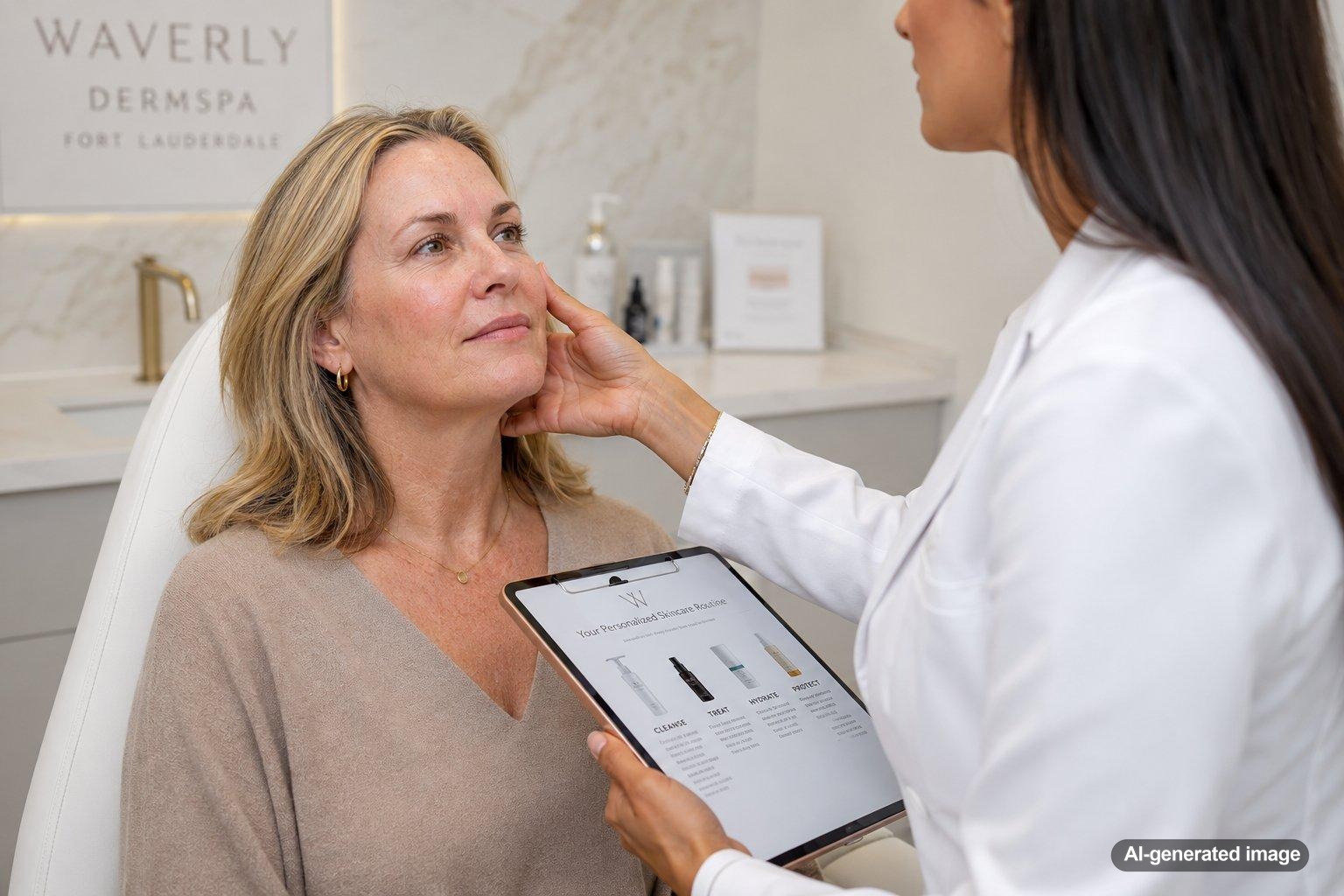
Your first professional facial should feel clear, comfortable, and personalized. A good facial is not about being pushed into a complicated routine. It is a guided skin appointment where your clinician learns about your skin, your goals, your sensitivities, and your current habits before choosing each step.
At Waverly DermSpa in Fort Lauderdale, the experience is designed to be calm and practical. You can expect a conversation first, then a thoughtful sequence of cleansing, skin assessment, treatment steps, and aftercare guidance that may help you understand your skin more clearly without feeling overwhelmed.
Quick answer
- Your first professional facial usually begins with a skin and routine review.
- Your clinician may ask about sensitivity, breakouts, dryness, sun exposure, recent procedures, and products you use at home.
- The treatment may include cleansing, exfoliation, gentle extractions when appropriate, hydration, calming steps, and sunscreen.
- You should leave with simple aftercare instructions and a better sense of what your skin may need next.
- If anything looks outside the scope of a cosmetic facial, a dermatologist can evaluate it.
What a professional facial is
A professional facial is a customized skincare treatment performed in an office or spa setting. It typically focuses on cleansing the skin, supporting a smoother texture, improving the look of dullness or congestion, and helping the skin feel balanced. It is also a chance to ask questions about your routine in a setting where the skin can be assessed in person.
Not every facial is the same. Some are very gentle and barrier-focused, while others may include exfoliation, steam, extractions, masks, or device-assisted steps. For a first appointment, the safest approach is usually measured and conservative, especially if your skin is reactive, dry, acne-prone, or recently treated.
What can affect your first facial experience
Your skin history helps guide the appointment. Before the treatment begins, your clinician may ask about factors that can influence comfort, product selection, and how active the facial should be.
- Current skincare products, especially retinoids, exfoliating acids, benzoyl peroxide, or prescription creams
- Recent waxing, laser treatments, peels, microneedling, or injections
- Skin sensitivity, redness, stinging, dryness, or barrier disruption
- Breakouts, clogged pores, texture concerns, or oiliness
- Sun exposure, travel, humidity, or seasonal changes
- Pregnancy, nursing, allergies, or medication considerations when relevant
- Upcoming events where you want to avoid unnecessary irritation
What happens step by step
Most first facials follow a calm sequence, but the details should be adjusted to your skin. You should never feel rushed through questions or pressured into steps that do not make sense for your comfort level.
Skin review and goals
Your clinician will usually begin by discussing what brought you in. You may be asked whether your main concern is dullness, dryness, breakouts, clogged pores, uneven texture, redness, or simply wanting a cleaner routine.
Cleansing
The skin is cleansed to remove sunscreen, makeup, oil, and surface debris. This helps your clinician see the skin more clearly and prepares the skin for the rest of the treatment.
Skin assessment
Your clinician may look closely at hydration, congestion, texture, visible redness, oil balance, and signs of sensitivity. This is not a diagnosis. It is a practical treatment assessment to help choose facial steps wisely.
Exfoliation or resurfacing support
Some facials include gentle exfoliation to lift dull surface buildup. The type and strength should depend on your skin. If your skin barrier is already stressed, your clinician may keep this step very mild or skip it.
Extractions when appropriate
Extractions may be offered for clogged pores or blackheads, but they should be done carefully. Not every bump should be extracted, and inflamed or painful lesions may need a different approach. If there is uncertainty, a dermatologist can evaluate.
Hydration and calming steps
Many first facials include hydrating serums, a mask, barrier-supportive products, or calming techniques to leave the skin comfortable. The goal is refreshed skin, not an irritated or over-treated feeling.
Finishing products and sunscreen
Your appointment will often end with moisturizer and sun protection. This is especially important in Fort Lauderdale, where strong sun and humidity can influence how skin feels after treatment.
What you can do before your appointment
A little preparation can help your first facial go more smoothly. Keep it simple and avoid experimenting with new products right before your visit.
- Bring or list the products you currently use, including prescription creams if applicable.
- Avoid aggressive exfoliation for a few days beforehand unless your clinician has told you otherwise.
- Tell your clinician about recent procedures, sunburn, waxing, or irritation.
- Arrive with realistic goals, especially if your concerns involve acne, pigmentation, or long-term texture changes.
- Share if you have a major event soon, so the treatment can be adjusted conservatively.
Professional options your clinician may discuss
For a first visit, your clinician may recommend a classic customized facial, a hydration-focused treatment, a sensitive-skin approach, or a treatment designed to support glow and texture. If your skin is a good fit, options may include gentle exfoliation, extractions, masks, or treatment steps that support hydration and radiance.
At Waverly DermSpa, we offer HydraFacial and can help you understand whether it may be appropriate.
If your goals involve persistent acne, changing pigmentation, painful lesions, suspicious spots, or a condition that may need prescription care, your visit may be better paired with a dermatologist evaluation. A facial can support skin maintenance, but it should not replace medical assessment when symptoms need diagnosis.
What to do after a facial
Aftercare is usually simple. Your clinician may suggest avoiding strong exfoliants, retinoids, picking, heavy sun exposure, or intense heat for a short period depending on what was done. Your skin may look refreshed right away, but sensitivity varies, and some mild pinkness can happen after certain steps.
Use gentle cleanser, moisturizer, and sunscreen as directed. If your skin feels tight, stings, or becomes more reactive than expected, contact the office for guidance instead of layering on multiple new products.
When to see a dermatologist
A professional facial is a skincare treatment, not a medical exam. Some concerns deserve evaluation by a board-certified dermatologist, especially if they are new, changing, painful, spreading, or not improving.
- A mole or spot that is changing in size, shape, color, or behavior
- A lesion that bleeds, crusts, does not heal, or keeps returning
- Painful, cystic, or scarring acne
- Rashes, swelling, or irritation that persists
- Skin symptoms that began after a medication, procedure, or new product
- Concerns involving infection, open skin, or significant inflammation
FAQ
Will my first facial hurt?
A facial should not feel intensely painful. Some steps, such as extractions or active exfoliation, may feel mildly uncomfortable, but your clinician should adjust the treatment if your skin feels too sensitive.
Should I stop using retinol before a facial?
Many clinicians recommend pausing retinoids or strong exfoliants before certain facial treatments, but the right timing depends on your skin and the treatment plan. Mention all active products when you book or arrive.
Can I get a facial if I have sensitive skin?
Often, yes, but the facial should be customized. A gentle, barrier-supportive approach may be more appropriate than aggressive exfoliation or extensive extractions.
Will one facial fix my skin concerns?
One facial may help your skin feel cleaner, smoother, or more hydrated, but ongoing concerns such as acne, pigmentation, redness, or texture usually need a longer plan and sometimes medical evaluation.
Can I wear makeup after a facial?
Your clinician may suggest keeping the skin clean and minimal afterward, especially if extractions or exfoliation were performed. Ask for specific guidance based on the steps used during your appointment.
How often should I schedule facials?
The right schedule varies. Some people prefer occasional facials before events or seasonal changes, while others benefit from a maintenance plan. Your clinician can help you choose a rhythm that fits your skin and goals.
Ready to get help?
Schedule an appointment or send a message and our team will get back to you.
Prefer to call? 954-666-3736
Disclaimer
This article is for educational purposes and is not medical advice. For diagnosis and personalized treatment, please book an appointment with a board-certified dermatologist.
