

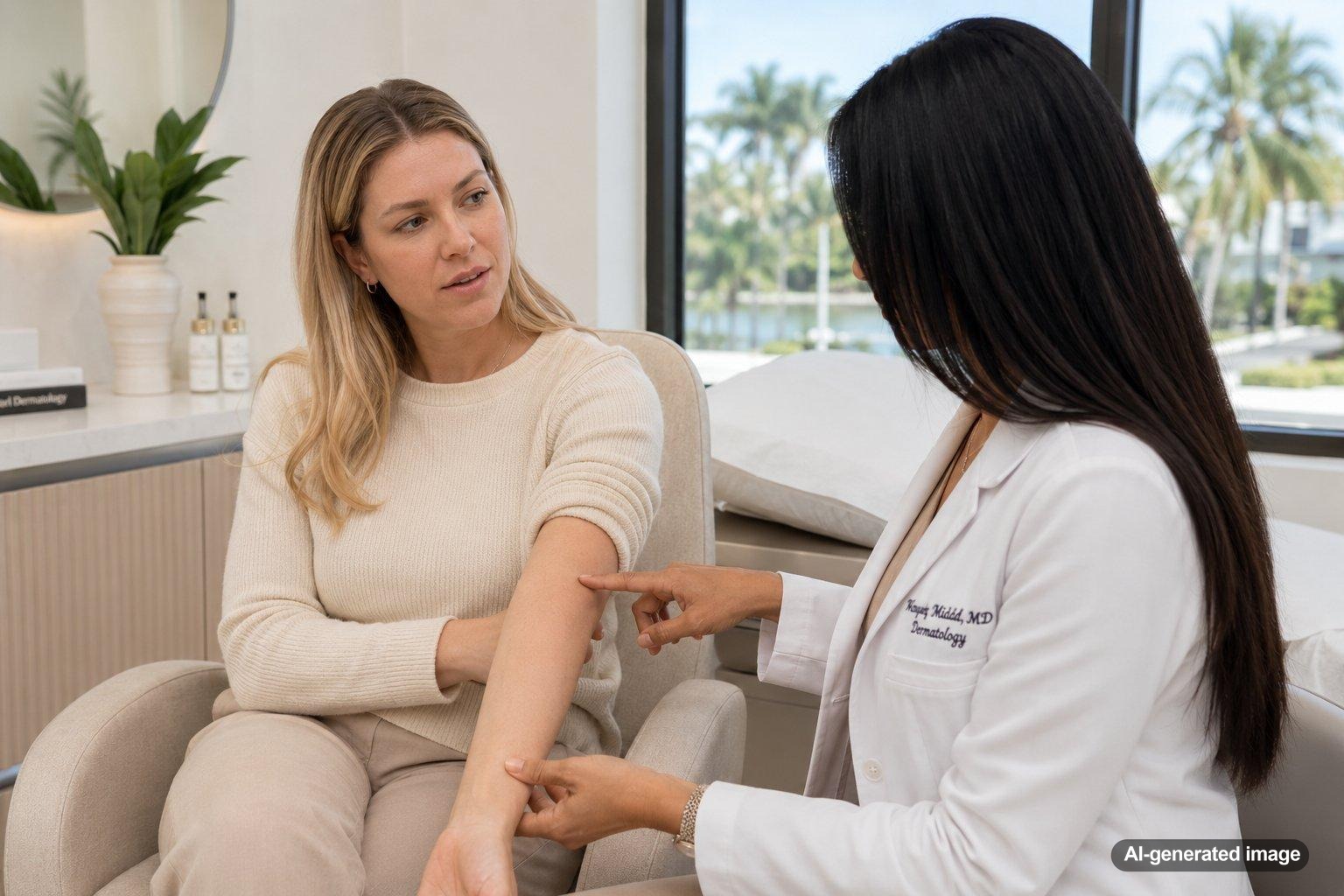
Getting goosebumps when you are cold, moved by music, or startled is familiar. But when tiny bumps rise on the skin seemingly out of nowhere, it can feel confusing. In many cases, occasional goosebumps without an obvious trigger are simply part of the body’s normal response system and are not a sign of a serious skin problem.
That said, if the bumps are frequent, uncomfortable, paired with itching or rash, or limited to one area, it is reasonable to have a dermatologist evaluate your skin. The goal is not to assume the worst, but to understand whether the texture is truly goosebumps or another skin condition that can look similar.
Quick answer
- Goosebumps happen when tiny muscles around hair follicles contract, making the hairs stand slightly upright.
- They may appear with cold, emotion, stress, sudden temperature shifts, or sometimes no clear trigger at all.
- Skin texture that looks like goosebumps may also be related to dryness, irritation, keratosis pilaris, or a rash.
- If the bumps are persistent, itchy, painful, spreading, or one-sided, a dermatologist can help clarify what is going on.
What goosebumps are
Goosebumps are small raised bumps that form around hair follicles. The medical term often used for this response is piloerection. It is controlled by the nervous system and can happen automatically, which is why you may notice it before you can identify a clear cause.
In everyday life, goosebumps are usually temporary. They may come and go quickly, especially after a chill, a strong feeling, a sudden sound, or a change in environment. In Fort Lauderdale, people may notice them when moving between outdoor heat and strong indoor air conditioning, after swimming, or while traveling between different climates.
Common causes or triggers
- Temperature changes: Cold air, air conditioning, wet skin, or a breeze after sweating can trigger the response.
- Emotional reactions: Music, memories, anxiety, surprise, or excitement can all activate the same automatic pathway.
- Stress or adrenaline: The body may create goosebumps during moments of heightened alertness.
- Skin dryness: Dry or dehydrated skin can make normal follicle texture more noticeable.
- Irritation: Friction, shaving, certain fabrics, or skincare products may create bumps that resemble goosebumps.
- Keratosis pilaris: This common texture concern can create tiny rough bumps, often on the upper arms, thighs, cheeks, or buttocks.
When it may not actually be goosebumps
Sometimes people describe any tiny, raised skin texture as goosebumps. A dermatologist may look for clues such as color, pattern, itch, tenderness, timing, and whether the bumps fade quickly or remain for days to weeks.
Bumps that stay in place, feel rough, become red, itch, scale, or appear around shaved areas may suggest something different from temporary goosebumps. Possibilities can include dryness, follicle irritation, keratosis pilaris, contact irritation, heat-related irritation, or another rash. A skin exam can help separate normal temporary piloerection from a texture or rash concern that may benefit from treatment.
What you can do at home
- Notice when the bumps happen, including temperature changes, stress, exercise, showers, skincare products, or clothing.
- Use a gentle, fragrance-free cleanser if your skin is easily irritated.
- Moisturize regularly, especially after bathing, swimming, or travel.
- Avoid aggressive scrubbing, which can make follicle texture and irritation more noticeable.
- Choose breathable fabrics if friction or sweating seems to be a trigger.
- Take photos if the bumps come and go before your appointment, since this can help your clinician understand the pattern.
Professional options
If the bumps are persistent or look more like a skin condition than temporary goosebumps, a dermatologist can evaluate the area and discuss options based on the exam. Common approaches may include adjusting skincare, using gentle exfoliating ingredients when appropriate, addressing dryness or irritation, or considering prescription options for certain rashes or inflammatory conditions.
The right approach depends on what the bumps actually are, your skin type, your symptoms, and your medical history. A dermatologist can help you decide whether simple skincare changes are enough or whether further evaluation would be helpful.
When to see a dermatologist
It is worth scheduling an appointment if your goosebump-like texture is new, persistent, worsening, uncomfortable, or different from your usual skin. You should also get checked if the bumps are associated with itching, pain, redness, swelling, scaling, drainage, fever, numbness, weakness, or a rash that is spreading.
For snowbird and international visitors, it can also be helpful to seek care if a skin change begins after travel, a new climate, a new medication, a hotel or spa product, or a change in laundry detergent. These details may help your clinician identify possible triggers.
FAQ
Can goosebumps happen without being cold?
Yes. Goosebumps can happen with emotion, stress, surprise, music, memories, or sometimes without a clear trigger you can identify.
Are random goosebumps dangerous?
Occasional goosebumps that appear briefly and go away are often harmless. If the bumps persist, itch, hurt, spread, or look like a rash, a dermatologist can evaluate your skin.
Why do my arms look like they always have goosebumps?
Persistent rough bumps on the arms may be something other than temporary goosebumps. Keratosis pilaris, dryness, irritation, or follicle-related texture can create a similar appearance.
Can anxiety cause goosebumps?
Stress and anxiety can activate the body’s automatic responses, which may include goosebumps for some people. If symptoms feel intense or are paired with other concerns, it is worth discussing them with a clinician.
Should I exfoliate goosebump-like bumps?
Gentle exfoliating ingredients may help certain types of rough follicle texture, but aggressive scrubbing can irritate skin. A dermatologist can help determine whether exfoliation is appropriate for your skin.
Ready to get help?
Schedule an appointment or send a message and our team will get back to you.
Prefer to call? 954-666-3736
Disclaimer: This article is for educational purposes and is not medical advice. For diagnosis and personalized treatment, please book an appointment with a board-certified dermatologist.
