

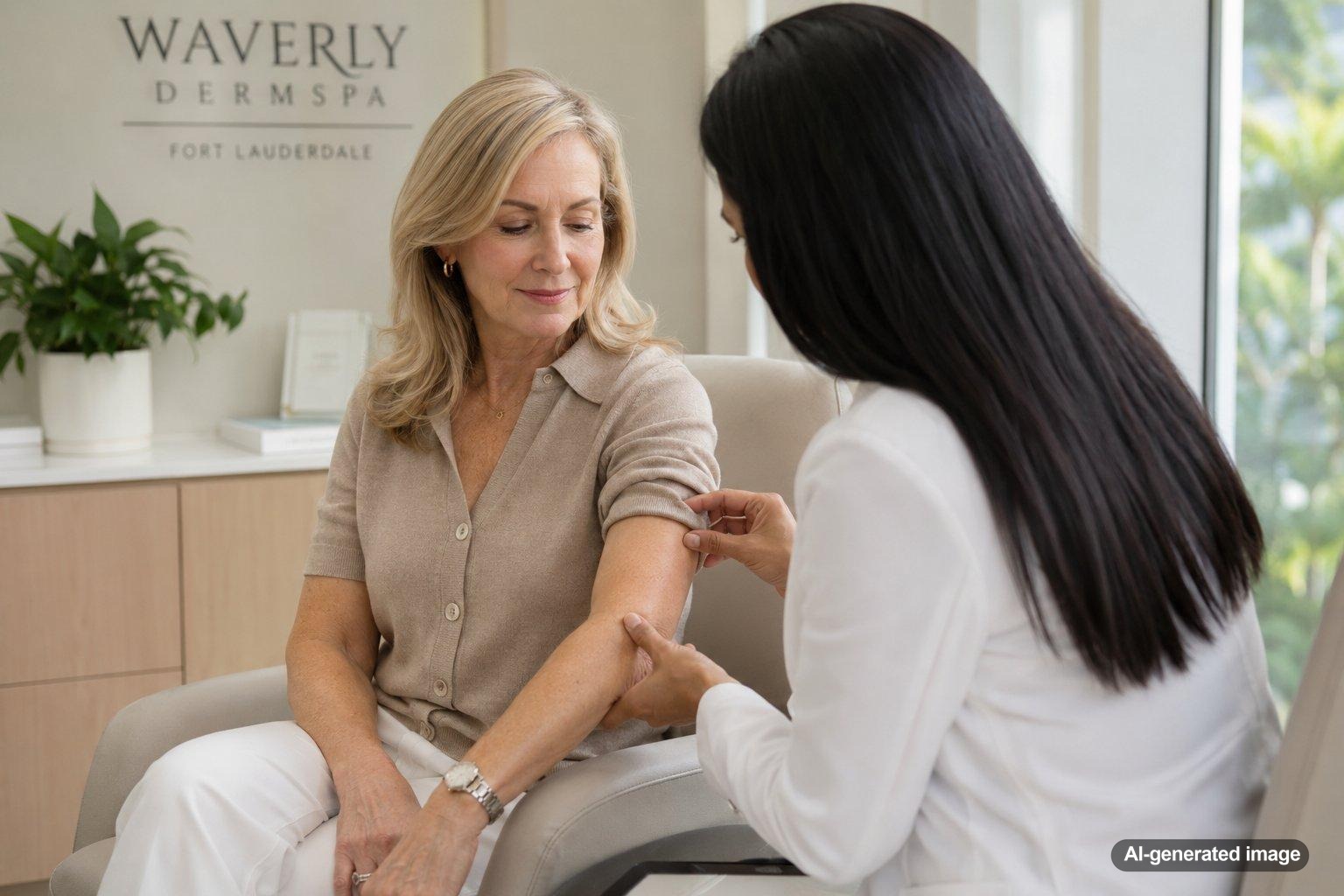
Moles are common, and many are harmless. Still, it can be unsettling to notice a spot that looks different from the others, especially in a sunny place like Fort Lauderdale where beach days, boating, golf, and travel can add up over time.
The simple answer is this: a normal mole is usually stable, fairly even in color, and similar to your other moles, while a concerning mole may be new, changing, uneven, symptomatic, or simply the one that stands out. A dermatologist can evaluate the spot with a careful skin exam and determine whether monitoring or biopsy is appropriate.
Quick answer
- Often normal: moles that are small, round or oval, evenly colored, and unchanged over time.
- More concerning: spots with asymmetry, irregular borders, several colors, growth, bleeding, itching, tenderness, or a new appearance in adulthood.
- Helpful rule: compare the spot with your other moles. A mole that looks like the “odd one out” deserves attention.
- Best next step: when you are unsure, schedule a dermatologist evaluation rather than trying to self-diagnose.
| Feature | Often normal | Worth checking |
|---|---|---|
| Shape | Round or oval, with both halves looking similar | Asymmetrical, uneven, or noticeably different from nearby spots |
| Border | Smooth and clear | Jagged, blurred, scalloped, or irregular |
| Color | One consistent shade of brown, tan, or skin tone | Multiple shades, black, blue, red, white, or a color pattern that is changing |
| Behavior | Stable in size, shape, and color | Growing, changing, itching, bleeding, crusting, or becoming tender |
What normal moles often look like
Many common moles are small, round or oval, and relatively even in color. They may be flat or slightly raised, and they often appear during childhood, teenage years, or early adulthood. Some people naturally have many moles, while others have only a few.
Normal does not mean every mole looks identical. Skin tone, sun exposure history, genetics, and age can all influence how moles appear. What matters most is whether a mole is stable and whether it fits your overall pattern.
What can make a mole more concerning
Dermatologists often teach the ABCDE guide as a practical way to notice changes that should be evaluated. It is not a diagnosis tool, but it can help you decide when a spot deserves professional attention.
- A for asymmetry: one half does not look like the other half.
- B for border: the edge looks uneven, notched, scalloped, or poorly defined.
- C for color: the mole has multiple colors or a color pattern that is changing.
- D for diameter or dark: a larger or unusually dark spot may be worth checking, although concerning spots can be small too.
- E for evolving: the mole is changing in size, shape, color, height, or symptoms.
The “normal vs concerning” difference is often about change
A mole that has looked the same for years is often less worrisome than one that is new or changing. For adults, a new mole or a meaningful change in an existing mole should be evaluated, especially if it appears different from the rest of your spots.
Symptoms matter too. Itching, bleeding, crusting, pain, or a sore that does not heal are not changes to ignore. These signs do not automatically mean skin cancer, but they are good reasons to schedule an exam.
What you can do at home
- Look over your skin regularly in good lighting, including the scalp, ears, lips, hands, nails, feet, and areas that do not get much sun.
- Use the ABCDE guide as a memory tool, but do not rely on it as a diagnosis.
- Notice the “ugly duckling” spot: the mole that looks unlike your other moles.
- Take dated photos of spots you are watching, especially if you are waiting for an appointment.
- Protect your skin with shade, sun-protective clothing, sunglasses, and broad-spectrum sunscreen when appropriate.
Professional evaluation and biopsy
During a mole check, a dermatologist may examine your skin visually and may use a dermatoscope, a handheld tool that helps evaluate patterns not easily seen with the naked eye. If a spot looks suspicious or unclear, your dermatologist may recommend a biopsy so tissue can be reviewed under a microscope.
Biopsy is a diagnostic step, not a cosmetic shortcut. Your clinician can explain why it may be recommended, what type of biopsy is appropriate, and what follow-up may be needed based on the results.
When to see a dermatologist
Schedule a dermatology visit if you notice a new mole in adulthood, a mole that is changing, a spot that looks different from your others, or any lesion that bleeds, crusts, itches, hurts, or does not heal. It is also reasonable to book a skin check if you have a personal or family history of skin cancer, many moles, a history of tanning bed use, or significant sun exposure.
At Waverly DermSpa, we offer skin cancer screening and can help you understand whether a mole or skin lesion may need monitoring, biopsy, or another next step.
FAQ
Can a normal-looking mole still be checked?
Yes. If a mole worries you, has changed, or simply looks different from your other spots, it is reasonable to have a dermatologist evaluate it.
Are all new moles concerning?
Not always, but new moles in adults deserve more attention than moles that have been stable for years. A dermatologist can assess the spot in context.
What if a mole is itchy?
Itching can happen for many reasons, including irritation, but a mole that itches persistently or changes along with itching should be checked.
Should I remove a mole at home?
No. Home removal can irritate the skin, cause scarring, and delay proper evaluation. If removal or biopsy is appropriate, it should be done by a qualified clinician.
How often should I get a skin check?
The right schedule varies based on your history, risk factors, and exam findings. Your dermatologist can recommend a personalized interval.
Ready to get help?
Schedule an appointment or send a message and our team will get back to you.
Prefer to call? 954-666-3736
Disclaimer
This article is for educational purposes and is not medical advice. For diagnosis and personalized treatment, please book an appointment with a board-certified dermatologist.
Sources & further reading
- American Academy of Dermatology (AAD) – What to look for: ABCDEs of melanoma
- The Skin Cancer Foundation – Melanoma Warning Signs and Images
- Mayo Clinic – Moles: Symptoms and causes
