

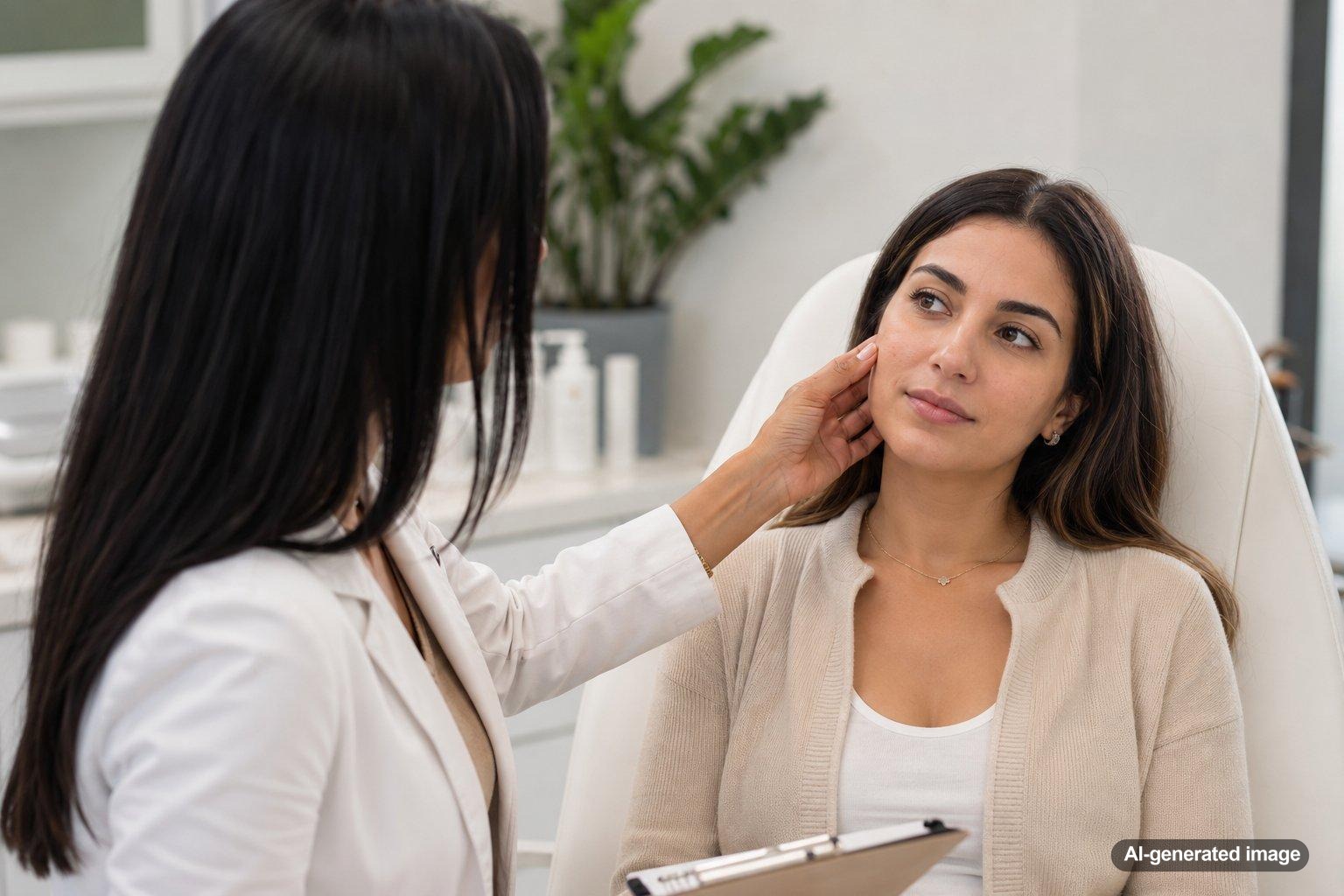
A facial can feel calming and restorative, but rosacea-prone skin needs a more thoughtful approach than a standard spa treatment. The goal is not to scrub, heat, or aggressively stimulate the skin. It is to support comfort, protect the skin barrier, and avoid common triggers that may leave the face looking more flushed or feeling irritated.
If you are prone to rosacea flares, the safest facial is usually gentle, simple, and customized. Before any treatment, share your history of flushing, burning, stinging, bumps, visible blood vessels, eye irritation, or product sensitivity so your provider can adjust the plan with care.
Quick answer
- Avoid harsh exfoliation, gritty scrubs, and aggressive extractions.
- Skip facial steaming, hot towels, high heat, and intense massage if they tend to trigger flushing.
- Be cautious with fragranced products, strong acids, alcohol-heavy toners, and active-heavy masks.
- Choose a calm, barrier-supportive facial with gentle cleansing, soothing hydration, and mineral sunscreen when appropriate.
- See a dermatologist if redness, bumps, burning, or eye symptoms are persistent, changing, or difficult to manage.
What rosacea-prone skin needs from a facial
Rosacea-prone skin is often more reactive than average skin. Many people notice that heat, sunlight, spicy foods, alcohol, stress, or certain skin care products can be associated with flushing or discomfort. A facial should respect that sensitivity rather than try to push the skin into a dramatic result.
In practical terms, that means your treatment should focus on gentle cleansing, moisture support, and calming steps. A good provider will avoid a one-size-fits-all protocol and will check in throughout the service if your skin begins to feel hot, prickly, tight, or uncomfortable.
What to avoid during a facial
- Steam and hot towels: Heat is a common rosacea trigger for many people. Warmth may feel relaxing at first, but too much heat can leave sensitive skin flushed or uncomfortable.
- Harsh scrubs: Gritty exfoliants can create friction, which may bother a fragile skin barrier and increase visible irritation.
- Strong chemical exfoliation: High-strength acids or layered active treatments may be too much for skin that already stings or flushes easily.
- Aggressive extractions: Pressure, squeezing, and repeated manipulation can add inflammation and tenderness. If extractions are considered, they should be minimal and gentle.
- Fragrance-heavy products: Fragrance can be irritating for some sensitive skin types, especially when the skin is already reactive.
- Alcohol-heavy toners or astringents: These may feel refreshing briefly, but they can be drying or stinging for rosacea-prone skin.
- Intense massage: Firm rubbing or prolonged facial massage can create friction and warmth, both of which may contribute to flushing in some people.
- Peel-like treatments without guidance: If you are considering stronger resurfacing, it is wise to have your skin evaluated first, especially if you have active redness, bumps, or burning.
Common facial triggers to mention before treatment
Your provider can only customize the facial well if they understand what tends to bother your skin. Before the treatment begins, mention any patterns you have noticed.
- Heat, steam, or exercise-related flushing
- Sun sensitivity
- Stinging from vitamin C, retinoids, acids, or benzoyl peroxide
- Redness after fragrance, essential oils, or botanical-heavy products
- Breakouts that look acne-like but feel hot, tender, or easily irritated
- Eye dryness, burning, redness, or lid irritation
- Recent prescription creams, oral medications, laser treatments, peels, or microneedling
What you can do at home after a gentle facial
After a facial, keep the routine simple for a few days unless your clinician gives you different instructions. Use a mild cleanser, a gentle moisturizer, and daily sun protection. Avoid introducing several new products at once, because it can make it harder to tell what your skin tolerates.
It may also help to pause strong exfoliants, retinoids, and active masks temporarily if your skin feels warm, dry, tight, or sensitive. If you are unsure whether to restart a product, ask your dermatologist or skin care provider for guidance based on your skin history.
Professional options to discuss
For rosacea-prone skin, professional care may include a gentle facial, barrier-supportive skin care guidance, prescription options, or light and laser-based approaches for visible redness, depending on your symptoms and goals. These options are not interchangeable, and they are not appropriate for everyone.
At Waverly DermSpa, we offer HydraFacial and can help you understand whether it may be appropriate.
When to see a dermatologist
Consider seeing a board-certified dermatologist if facial redness is persistent, worsening, painful, or associated with acne-like bumps, thickened skin, burning, stinging, or eye symptoms. A dermatologist can evaluate whether rosacea, another skin condition, or more than one factor may be contributing.
You should also seek professional guidance before stronger facials, peels, lasers, or active-heavy treatments if your skin is currently flaring. Getting the diagnosis and treatment plan right first can make maintenance facials more comfortable and better aligned with your skin.
FAQ
Can I get a facial if I have rosacea-prone skin?
Often, yes, but it should be gentle and customized. Avoiding heat, friction, harsh exfoliation, and irritating products is usually the priority.
Is steam bad for rosacea-prone skin?
Steam can be a trigger for many people because heat may contribute to flushing. If heat bothers your skin, ask for a no-steam facial.
Are extractions safe with rosacea-prone skin?
They should be approached carefully. Aggressive extractions can add pressure and irritation, so your provider may recommend skipping them or keeping them very limited.
Should I avoid all exfoliation?
Not always, but exfoliation should be conservative. Strong scrubs and intense acids are more likely to bother reactive skin, so ask for a gentle approach.
What should I tell my aesthetician before the facial?
Share your triggers, current medications, recent procedures, products that sting, and whether you have eye irritation or active bumps. This helps your provider tailor the treatment safely.
When is a facial not the right first step?
If your skin is actively burning, swollen, very tender, rapidly changing, or involving the eyes, a dermatologist visit is a better first step than a cosmetic facial.
Ready to get help?
Schedule an appointment or send a message and our team will get back to you.
Prefer to call? 954-666-3736
Disclaimer
This article is for educational purposes and is not medical advice. For diagnosis and personalized treatment, please book an appointment with a board-certified dermatologist.
Sources & further reading
- American Academy of Dermatology (AAD) – 7 rosacea skin care tips dermatologists recommend
- American Academy of Dermatology (AAD) – Triggers could be causing your rosacea flare-ups
- Mayo Clinic – Rosacea symptoms and causes
- Cleveland Clinic – Rosacea: Symptoms, Causes, Triggers & Treatment
