

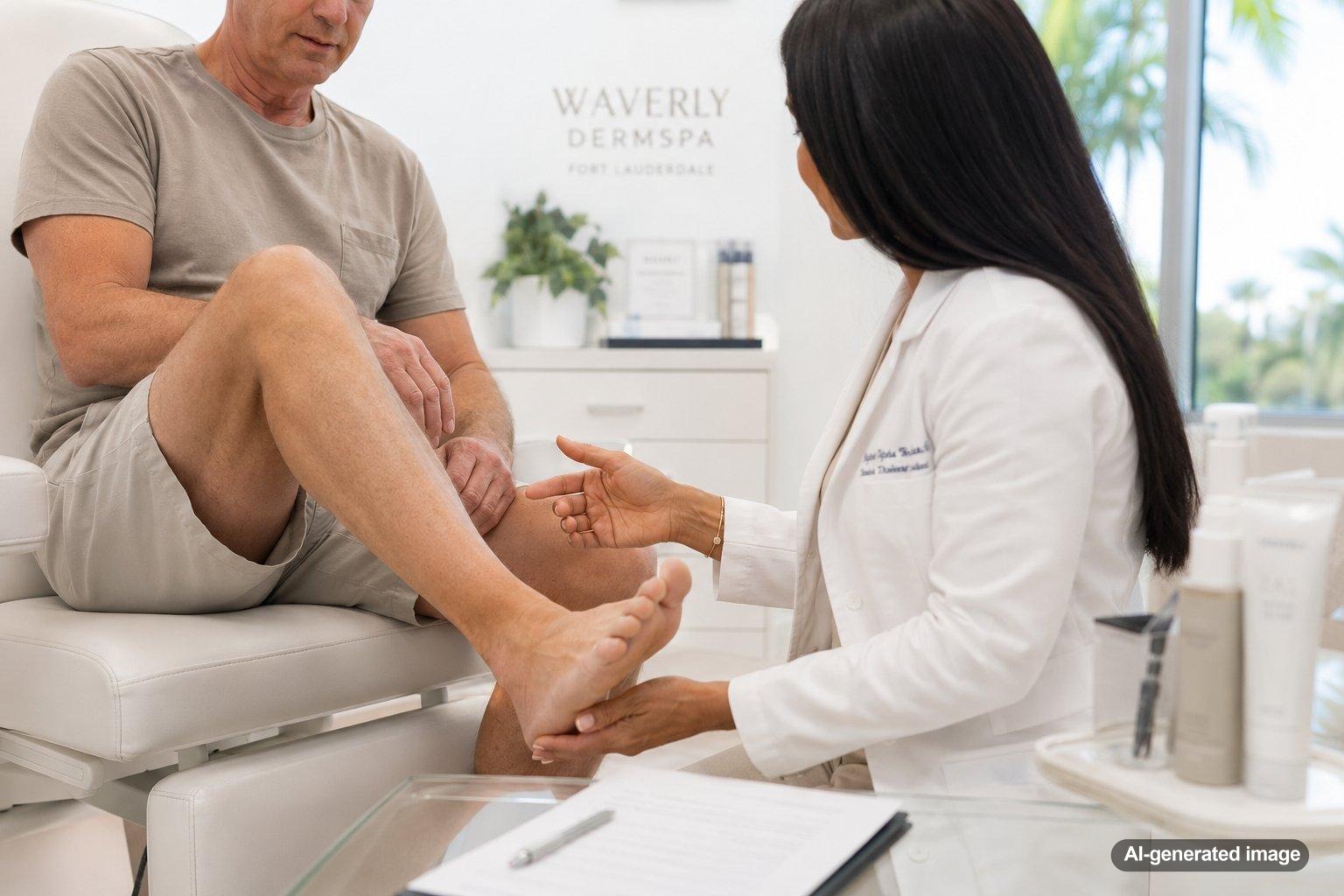
Itchy feet at night are common, and the reason is not always obvious. For some people, the skin becomes drier and more noticeable when the day slows down. For others, warmth under blankets, sweat inside socks, irritation from footwear, eczema, or a fungal infection can make the feet feel intensely itchy right when they are trying to sleep.
The most helpful first step is to look for patterns: where the itch is located, whether there is scaling or redness, whether the skin between the toes is cracked, and whether a new shoe, sock, product, or activity started around the same time. A dermatologist can evaluate persistent or uncomfortable itching and help determine whether it is dryness, dermatitis, infection, or another cause.
Quick answer
- Feet may itch more at night because warmth, sweating, dry skin, and reduced daytime distraction can make irritation feel more noticeable.
- Dryness, eczema, contact irritation, athlete’s foot, and friction are common possibilities.
- Itching between the toes with scaling, cracking, burning, or peeling can be associated with athlete’s foot.
- Simple steps like drying the feet well, changing socks, using a bland moisturizer, and avoiding fragranced products may help some people.
- If itching is persistent, spreading, painful, or paired with open skin, swelling, drainage, nail changes, or diabetes, it is worth being evaluated.
What nighttime foot itching can feel like
Nighttime foot itching may affect the soles, heels, arches, tops of the feet, or the skin between the toes. Some people notice a crawling, prickly, burning, or tight sensation. Others see visible changes such as dry scale, redness, small bumps, peeling, cracks, or thickened skin from rubbing and scratching.
The timing can feel mysterious because the trigger may have been building all day. Closed shoes, heat, sweat, friction, pool decks, shared showers, or a new skincare product can irritate the skin before symptoms become most noticeable at bedtime.
Common causes or triggers
- Dry skin: Heels and soles can become rough, tight, and itchy, especially after hot showers, frequent washing, low humidity, or aging skin changes.
- Eczema or dermatitis: Sensitive skin, fragrance, preservatives, shoe materials, adhesives, dyes, or detergents can contribute to itchy inflamed patches.
- Athlete’s foot: A fungal infection can cause itching, burning, scaling, cracking, or peeling, often between the toes or on the soles.
- Sweat and heat: Warm feet under blankets or in socks can make itching more noticeable, especially if the skin is already irritated.
- Friction: Tight shoes, seams, sandals, or long walking days can roughen the skin and create itch or tenderness.
- Nail or surrounding skin changes: Thickened, discolored, or crumbly nails with itchy skin around the feet may need evaluation because nail and skin concerns can overlap.
- Less common medical causes: Some whole-body conditions and medications can be associated with itching, so ongoing itch without a clear rash should not be ignored.
What you can do at home
Gentle, consistent care can calm many mild cases while you decide whether the pattern is improving. Keep the routine simple so you can tell what is helping and what may be irritating the skin.
- Wash with a gentle cleanser and lukewarm water rather than hot water.
- Dry carefully, especially between the toes.
- Apply a bland, fragrance-free moisturizer to dry areas, avoiding heavy moisturizer between the toes if that area is moist or peeling.
- Change socks daily, or more often after sweating.
- Choose breathable shoes when possible and rotate pairs so they can dry fully.
- Avoid scratching when you can. A cool compress may help settle the urge.
- Pause new fragranced lotions, foot peels, essential oils, or harsh scrubs if symptoms started after using them.
- Use shower shoes in public locker rooms, pool areas, and shared showers.
If the itch is mainly between the toes with peeling, cracking, or burning, over-the-counter antifungal options are commonly used for mild athlete’s foot. If symptoms are severe, recurrent, spreading, or not improving, a dermatologist can confirm the cause and discuss appropriate next steps.
Professional options
In the office, a dermatologist may examine the skin, review exposures, look at the nails, and consider whether testing is needed. Depending on the findings, common options may include guidance for barrier repair, treatment for dermatitis, antifungal therapy, or prescription medication when appropriate.
The right approach depends on the cause. For example, a moisturizer may help dry skin but may not be enough for a fungal infection. A steroid cream may calm certain inflammatory rashes, but it should be used thoughtfully because some infections can look like rashes and may worsen with the wrong treatment. Your clinician can help you decide what is safest for your skin.
When to see a dermatologist
Book a dermatology visit if the itching keeps you awake, lasts more than a short period, keeps coming back, or affects your daily comfort. Evaluation is also important if you notice:
- Cracks, bleeding, open sores, drainage, warmth, or increasing pain
- Redness or swelling that is spreading
- Thick, yellow, crumbly, lifting, or painful toenails
- Itching with numbness, tingling, or burning that feels nerve-like
- A rash that is spreading to the hands, groin, or other areas
- Symptoms in the setting of diabetes, circulation problems, immune suppression, pregnancy, or complex medical history
FAQ
Why do my feet itch more when I get into bed?
Warmth under blankets, sweating, dry skin, and fewer distractions can make itching feel stronger at night. The trigger may have started earlier in the day from shoes, friction, moisture, or irritation.
Does itchy skin between the toes mean athlete’s foot?
It can be associated with athlete’s foot, especially when there is peeling, scaling, cracking, burning, or moisture between the toes. Other conditions can look similar, so persistent symptoms are worth checking.
Can dry skin make the soles itch?
Yes. Dry, thick, or cracked skin on the soles and heels can itch, especially after hot showers or long days in shoes. A fragrance-free moisturizer may help if dryness is the main issue.
Should I sleep with socks on if my feet itch?
Clean, breathable socks may help if they keep moisturizer in place and prevent scratching. If your feet sweat or the skin between the toes feels moist, sleeping without socks may be more comfortable.
When is itchy feet at night more concerning?
It is more concerning when itching is persistent, worsening, painful, spreading, or paired with open skin, drainage, swelling, fever, nail changes, numbness, or a medical condition that affects healing.
Ready to get help?
Schedule an appointment or send a message and our team will get back to you.
Prefer to call? 954-666-3736
Disclaimer
This article is for educational purposes and is not medical advice. For diagnosis and personalized treatment, please book an appointment with a board-certified dermatologist.
Sources & further reading
- MedlinePlus (NIH) – Athlete’s Foot
- DermNet – Tinea pedis
- American Academy of Dermatology (AAD) – How to prevent athlete’s foot
- Mayo Clinic – Itchy skin (pruritus)
