

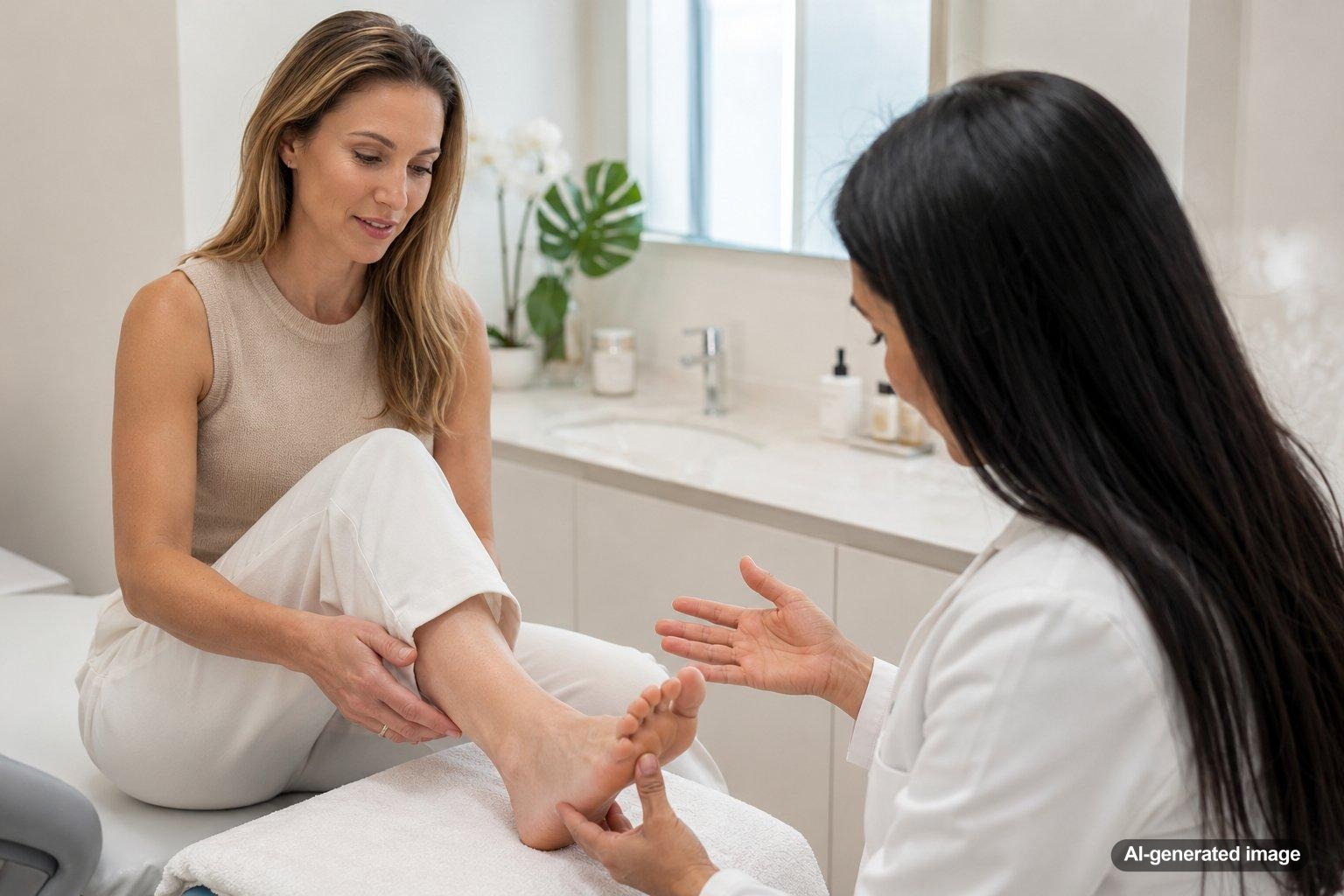
If your feet seem to sweat more than expected, you are not alone. Feet have many sweat glands, and sweating can increase with warm weather, closed shoes, stress, activity, certain fabrics, and individual body patterns. For some people, foot sweating feels more frequent, more intense, or harder to manage than ordinary perspiration.
In some cases, very sweaty feet may be related to hyperhidrosis, a condition where sweating is more noticeable than the body needs for temperature control. A dermatologist can help you understand whether your symptoms fit that pattern and what options may be appropriate for your skin, lifestyle, and comfort.
Quick answer
- Sweaty feet can be a normal response to heat, exercise, stress, or tight footwear.
- Some people naturally sweat more from the soles, even without an obvious trigger.
- Footwear, socks, humidity, and long hours in enclosed shoes can make sweating feel worse.
- If sweating is frequent, disruptive, or causing skin irritation, a dermatologist can evaluate whether hyperhidrosis may be involved.
- At-home habits may help, but persistent or uncomfortable symptoms deserve professional guidance.
What is foot sweating?
Foot sweating is perspiration from the soles and surrounding skin. It helps the body regulate temperature, but the feet can feel damp quickly because they are often covered by socks and shoes. When moisture is trapped, the skin may feel slippery, uncomfortable, or more prone to rubbing.
When sweating is excessive, it may happen even in cool settings, during calm moments, or in a way that interferes with shoes, work, exercise, or daily confidence. That does not automatically mean something serious is happening, but it can be worth discussing with a dermatologist if it affects your quality of life.
Common causes and triggers
- Warm weather and humidity: Heat can naturally increase perspiration, especially in a climate like South Florida.
- Closed or non-breathable shoes: Tight shoes and synthetic materials can trap moisture close to the skin.
- Socks that hold moisture: Some fabrics stay damp longer and may make the feet feel sweatier.
- Stress or nervous system response: Emotional stress can trigger sweating in the hands, feet, and underarms.
- Exercise and long days on your feet: Activity and friction may increase moisture inside shoes.
- Individual sweating patterns: Some people simply have more active sweat glands in certain areas.
- Possible hyperhidrosis: If sweating is frequent, difficult to control, or out of proportion to temperature or activity, a dermatologist can evaluate whether hyperhidrosis may be a factor.
What you can try at home
Simple changes can sometimes make sweaty feet more manageable. These steps are conservative and may be helpful for comfort, but they are not a substitute for a medical evaluation if symptoms are persistent or concerning.
- Rotate shoes so each pair has time to dry fully between wears.
- Choose breathable footwear when possible, especially during hot or humid days.
- Wear moisture-wicking socks and change them during the day if they become damp.
- Wash and dry feet carefully, including between the toes.
- Consider a foot powder or absorbent product if it agrees with your skin.
- Avoid wearing the same enclosed shoes for long stretches when you have a practical alternative.
- Notice patterns, such as certain shoes, workouts, stressful situations, or travel days that seem to trigger more sweating.
Professional options
If foot sweating is interfering with daily life, a dermatologist can help sort out possible causes and discuss options. Common categories may include stronger antiperspirants, prescription approaches, in-office treatments, and lifestyle adjustments tailored to your symptoms. The right choice depends on your medical history, skin sensitivity, goals, and how much sweating is affecting your routine.
For some people, professional guidance is especially helpful because the feet are prone to friction and moisture buildup. Your clinician can also check for signs of irritation or other skin changes that may need separate attention.
When to see a dermatologist
It is worth scheduling an appointment if sweaty feet are frequent, uncomfortable, or affecting your confidence, shoes, work, travel, or exercise. You should also get checked if moisture is accompanied by persistent odor, peeling, cracking, itching, pain, blisters, color changes, drainage, or a rash that does not settle with gentle care.
For Fort Lauderdale residents, seasonal visitors, and international travelers, heat, humidity, long flights, and closed shoes can all make foot sweating feel more noticeable. A dermatologist can evaluate your skin and help you decide what next step is reasonable.
FAQ
Are sweaty feet always a sign of a medical condition?
No. Sweaty feet can happen with heat, exercise, stress, or enclosed shoes. If sweating is excessive, disruptive, or happening without clear triggers, a dermatologist can evaluate whether hyperhidrosis or another factor may be involved.
Can shoes make foot sweating worse?
Yes. Shoes that are tight, heavily insulated, or not breathable can trap moisture. Rotating shoes and choosing breathable materials may help reduce dampness.
What kind of socks are better for sweaty feet?
Moisture-wicking socks are often more comfortable than socks that stay wet. Changing socks during the day may also help if your feet become damp.
Can stress cause sweaty feet?
Stress can trigger sweating in areas such as the feet, hands, and underarms. If this happens often or feels difficult to manage, it may be helpful to discuss it with a dermatologist.
Should I use antiperspirant on my feet?
Some people use antiperspirant products on the feet, but the skin can be sensitive and irritation is possible. If over-the-counter options are not enough or your skin becomes irritated, a dermatologist can guide you toward safer next steps.
Ready to get help?
Schedule an appointment or send a message and our team will get back to you.
Prefer to call? 954-666-3736
Disclaimer
This article is for educational purposes and is not medical advice. For diagnosis and personalized treatment, please book an appointment with a board-certified dermatologist.
