

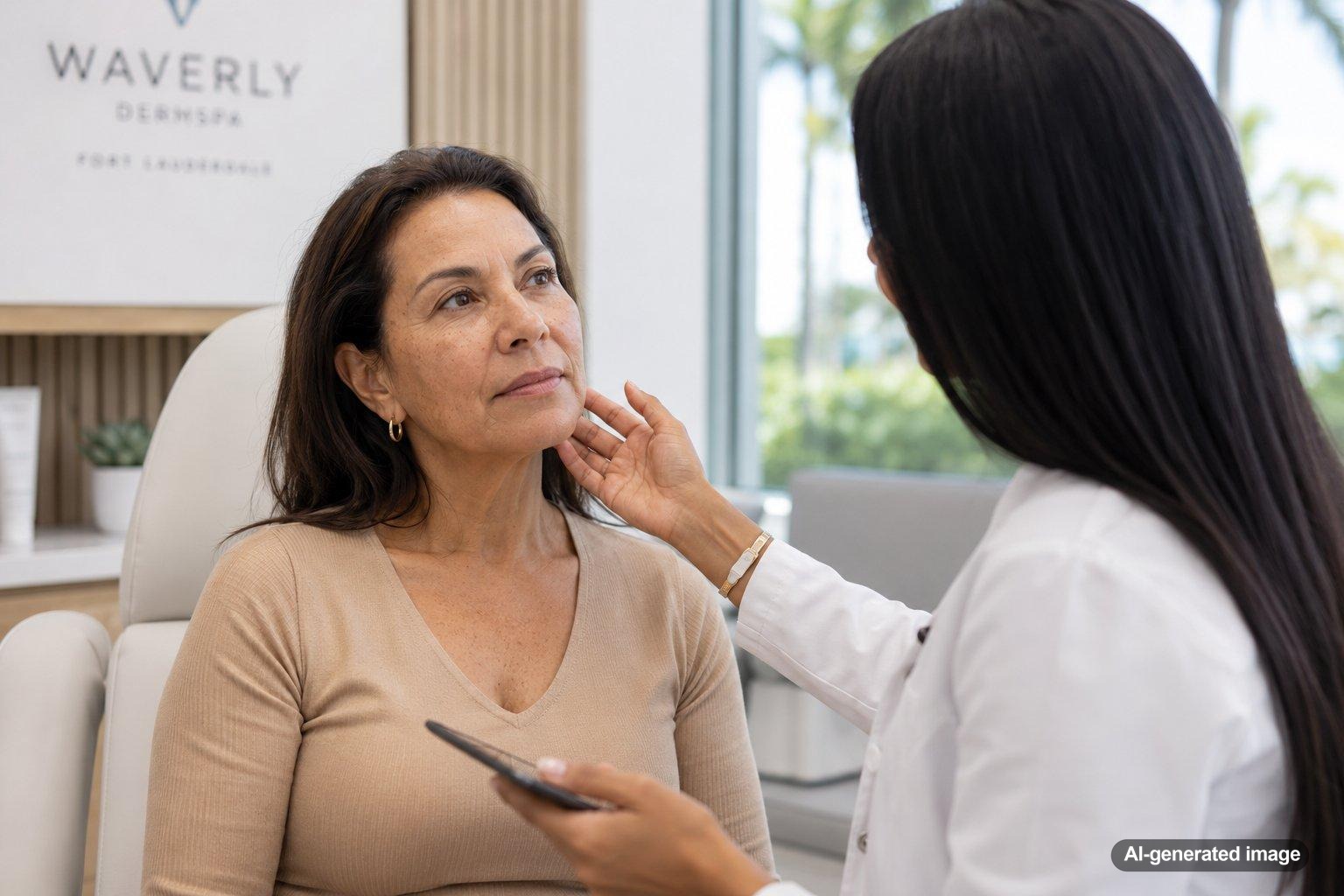
Large pores and uneven texture can be especially frustrating in South Florida, where heat, humidity, sunscreen, sweat, and sun exposure often become part of daily skin care planning. Two common professional options people ask about are Tetra CoolPeel CO2 and microneedling, but they are not the same experience and they are not always used for the same concerns.
In simple terms, CoolPeel CO2 is a laser-based resurfacing option that may be considered when texture, dullness, and visible roughness are the main concerns. Microneedling creates controlled micro-injuries in the skin and may be considered for texture, the look of some scars, and overall smoothness. The right choice depends on your skin tone, history of pigmentation, downtime preferences, lifestyle, and what your clinician sees in person.
Quick answer
- CoolPeel CO2 may be a stronger resurfacing-style option when uneven texture and sun-related roughness are key concerns.
- Microneedling may be a more gradual option for texture refinement, the look of certain acne scars, and overall skin quality.
- Large pores cannot usually be erased, but their appearance may soften when oil balance, texture, and skin quality are addressed.
- South Florida skin needs extra attention to sun protection and pigmentation risk before and after procedures.
- An in-person evaluation is the best way to compare safety, downtime, and expected variability for your skin.
| Comparison point | Tetra CoolPeel CO2 | Microneedling |
|---|---|---|
| Main idea | Laser resurfacing approach that targets the skin surface in a controlled way. | Tiny controlled channels are created in the skin to support natural remodeling. |
| Texture focus | Often discussed for roughness, dullness, and visible uneven texture. | Often discussed for gradual refinement, acne-scar texture, and overall smoothness. |
| Downtime | Varies by settings, skin type, and treatment plan. | Varies by depth, device, skin response, and aftercare. |
| South Florida considerations | Sun avoidance and pigmentation planning are especially important. | Sun protection and careful aftercare still matter, especially for pigment-prone skin. |
How CoolPeel CO2 and microneedling differ
CoolPeel CO2 and microneedling both aim to improve the look and feel of the skin, but they work differently. A CO2 laser uses controlled energy to resurface targeted layers of skin. Microneedling uses fine needles to create controlled micro-channels, which can support the skin’s repair process over time.
That difference matters because treatment planning is not just about the concern. It is also about how your skin heals, how easily you develop dark marks, whether you can avoid sun exposure, and how much visible recovery you are comfortable with.
Which may make more sense for large pores?
Pores are normal skin structures, and their size is influenced by genetics, oil production, skin laxity, acne history, sun exposure, and the way light reflects off uneven texture. No procedure can remove pores, but improving surrounding texture and skin quality may make pores look less noticeable.
CoolPeel CO2 may be discussed when the pore concern is part of broader surface roughness or sun-related texture. Microneedling may be discussed when the goal is gradual texture support with a different type of recovery profile. For many patients, the best plan also includes consistent sunscreen, gentle exfoliation when appropriate, and products that support the skin barrier.
Which may make more sense for uneven texture?
If uneven texture feels rough, crepey, sun-weathered, or dull, a laser resurfacing approach may be considered. If the texture is related to acne scars, enlarged-looking pores, or overall skin quality, microneedling may be part of the conversation. Some people are better candidates for one approach than the other, and some may benefit from a staged plan rather than trying to do everything at once.
Skin tone and pigmentation history are especially important in South Florida. A treatment that is appropriate for one person may not be the right starting point for someone with melasma tendency, recent tanning, frequent outdoor exposure, or a history of post-inflammatory hyperpigmentation.
South Florida factors to consider before choosing
- Sun exposure: Beach days, boating, golf, tennis, and outdoor dining can make aftercare harder.
- Humidity and sweating: Heat may affect comfort and skin care routines after treatment.
- Travel schedules: Snowbirds and international visitors may need a plan that fits flights, events, and follow-up timing.
- Melasma or pigment history: A dermatologist can help weigh pigment risk before choosing an energy-based procedure.
- Current products: Retinoids, exfoliating acids, and certain active ingredients may need adjustment around procedures under clinician guidance.
What you can do at home
At-home care cannot replace professional resurfacing, but it can help support smoother-looking skin and reduce irritation that makes texture appear more obvious. Keep the routine simple: a gentle cleanser, a moisturizer that supports the skin barrier, and daily broad-spectrum sunscreen are often the foundation.
A dermatologist or licensed skin care professional may also suggest ingredients such as retinoids, exfoliating acids, or pigment-supportive products when appropriate. These should be personalized, especially if your skin is sensitive, acne-prone, pigment-prone, or recently treated.
Professional options
Professional choices for large pores and uneven texture may include laser resurfacing, microneedling, chemical peels, medical-grade skin care planning, or combination approaches over time. The safest option depends on skin type, medical history, pigmentation risk, acne activity, recent sun exposure, and treatment goals.
At Waverly DermSpa, we offer Tetra CoolPeel CO2 and can help you understand whether it may be appropriate.
When to see a dermatologist
Consider a dermatology visit if texture changes are sudden, associated with acne flares, scarring, irritation, discoloration, or a rash, or if you are unsure whether a laser or microneedling procedure is appropriate for your skin. It is also wise to be evaluated before resurfacing if you have a history of keloids, cold sores, melasma, poor wound healing, recent isotretinoin use, or frequent unprotected sun exposure.
FAQ
Is CoolPeel CO2 better than microneedling for large pores?
Not automatically. CoolPeel CO2 and microneedling work differently, and the better option depends on your skin type, texture pattern, pigmentation risk, downtime preferences, and exam findings.
Can microneedling help uneven texture?
Microneedling may help improve the look of certain texture concerns over time, including some acne-scar texture and general roughness. Results and treatment plans vary, so evaluation matters.
Can either treatment remove pores?
No. Pores are normal and cannot be removed. The goal is usually to improve surrounding skin quality so pores may look less prominent.
Is South Florida sun exposure a problem after treatment?
It can be. After resurfacing or microneedling, careful sun protection is important, especially for people prone to dark marks or melasma. Your clinician can give specific aftercare instructions for your procedure.
How do I choose between the two?
Start with a consultation. A dermatologist or trained clinician can evaluate your skin, discuss realistic goals, and help you compare recovery, risks, and maintenance.
Ready to get help?
Schedule an appointment or send a message and our team will get back to you.
Prefer to call? 954-666-3736
Disclaimer: This article is for educational purposes and is not medical advice. For diagnosis and personalized treatment, please book an appointment with a board-certified dermatologist.
Sources & further reading
- American Academy of Dermatology (AAD) – Microneedling can fade scars, uneven skin tone, and more
- U.S. Food and Drug Administration (FDA) – Microneedling Devices
- American Academy of Dermatology (AAD) – Your safety
