

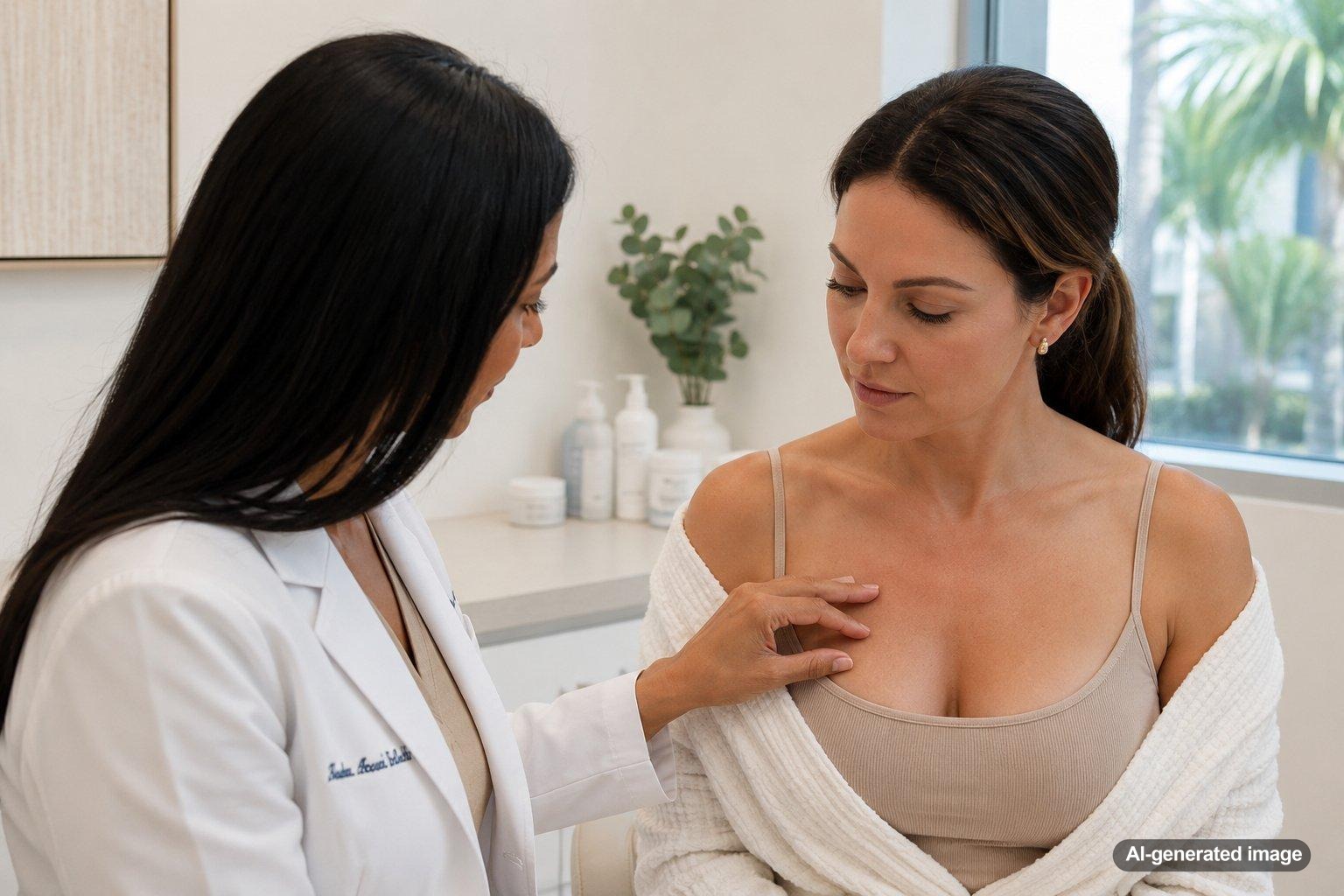
Chest acne is common, and it often develops for the same broad reason facial acne does: pores can become clogged with oil, dead skin cells, sweat, and residue from products. On the chest, breakouts may also be influenced by friction from clothing, workouts, heat, hair products, body lotions, or changes in hormones.
The key is not to scrub harder or try every strong product at once. A calm, consistent routine and a dermatologist’s evaluation can help you understand what may be contributing to your breakouts and which options are appropriate for your skin.
Quick answer
- Chest acne may be linked to clogged pores, sweat, oil, friction, or pore-clogging body products.
- Tight workout clothes, sports bras, backpacks, and humid weather can make breakouts more noticeable for some people.
- Gentle cleansing, showering after sweating, and choosing non-comedogenic products may help support clearer-looking skin.
- If bumps are painful, spreading, leaving marks, or not improving, a dermatologist can evaluate what is going on.
What chest acne is
Chest acne refers to breakouts that appear on the chest area. They may look like clogged pores, whiteheads, blackheads, red bumps, or deeper tender spots. Because the chest has oil glands and is often covered by clothing, it can be a place where sweat, friction, and product residue collect.
Not every bump on the chest is acne, and that distinction matters. Some rashes, irritation patterns, ingrown hairs, and other skin concerns can resemble acne. If you’re unsure, it’s worth getting checked rather than guessing.
Common causes and triggers
Chest breakouts can have more than one contributing factor. Common possibilities include:
- Sweat and heat: Perspiration that stays on the skin can mix with oil and residue.
- Friction: Tight clothing, athletic gear, sports bras, straps, and backpacks may irritate acne-prone areas.
- Body products: Heavy lotions, oils, sunscreens, or hair products that run onto the chest may clog pores for some people.
- Workout habits: Staying in sweaty clothing after exercise can make the skin feel congested.
- Hormonal patterns: Some people notice breakouts that shift with stress, cycles, or other internal changes.
- Over-cleansing: Scrubbing or using too many active ingredients can disrupt the skin barrier and make irritation more likely.
What you can do at home
Start with simple, consistent steps. Shower after heavy sweating when possible, change out of damp workout clothing, and wash exercise gear regularly. Use a gentle body cleanser and avoid harsh scrubs, which can aggravate inflamed skin.
It may also help to choose lightweight, non-comedogenic body products and keep hair conditioners, styling creams, and oils from sitting on the chest. If you use acne-focused ingredients, introduce them slowly and avoid layering too many strong products at once. Skin on the chest can become dry or irritated, especially when multiple active products are used together.
Professional options
If chest acne is persistent, tender, recurring, or leaving dark marks, a dermatologist can evaluate your skin and discuss options. Common categories may include topical acne medications, oral prescriptions when appropriate, skincare adjustments, or in-office treatments selected after an exam.
For patients who may benefit from in-office exfoliation support, a clinician can discuss whether options such as chemical peels are appropriate. At Waverly DermSpa, we offer Chemical Peels and can help you understand whether it may be appropriate.
When to see a dermatologist
Consider booking an evaluation if the bumps are painful, deep, spreading, recurring despite a steady routine, or leaving discoloration or scars. You should also be seen if the rash looks unusual, feels very itchy, appears suddenly, or does not behave like your typical acne.
A dermatologist can help determine whether the issue is acne or something that only looks similar. That can prevent unnecessary irritation from trial-and-error products and help guide a more personalized plan.
FAQ
Can sweat cause acne on the chest?
Sweat itself is not the only factor, but sweat mixed with oil, friction, and residue can be associated with chest breakouts. Showering after heavy sweating and changing into clean clothing may help support the skin.
Should I scrub chest acne?
Scrubbing can make irritation worse. A gentle cleanser and consistent routine are usually a better starting point than harsh physical exfoliation.
Can body lotion make chest acne worse?
Some heavier body lotions, oils, or sunscreens may feel pore-clogging for acne-prone skin. Look for lightweight, non-comedogenic options if you notice breakouts after using certain products.
Why do I get chest acne after workouts?
Workouts can add sweat, heat, and friction from fitted clothing or gear. Changing out of sweaty clothing and washing the skin and clothing after exercise may help reduce congestion.
When is chest acne more than a skincare issue?
If bumps are painful, widespread, recurring, leaving scars, or not improving with careful routine changes, a dermatologist can evaluate the area and discuss next steps.
Ready to get help?
Schedule an appointment or send a message and our team will get back to you.
Prefer to call? 954-666-3736
Disclaimer
This article is for educational purposes and is not medical advice. For diagnosis and personalized treatment, please book an appointment with a board-certified dermatologist.
