

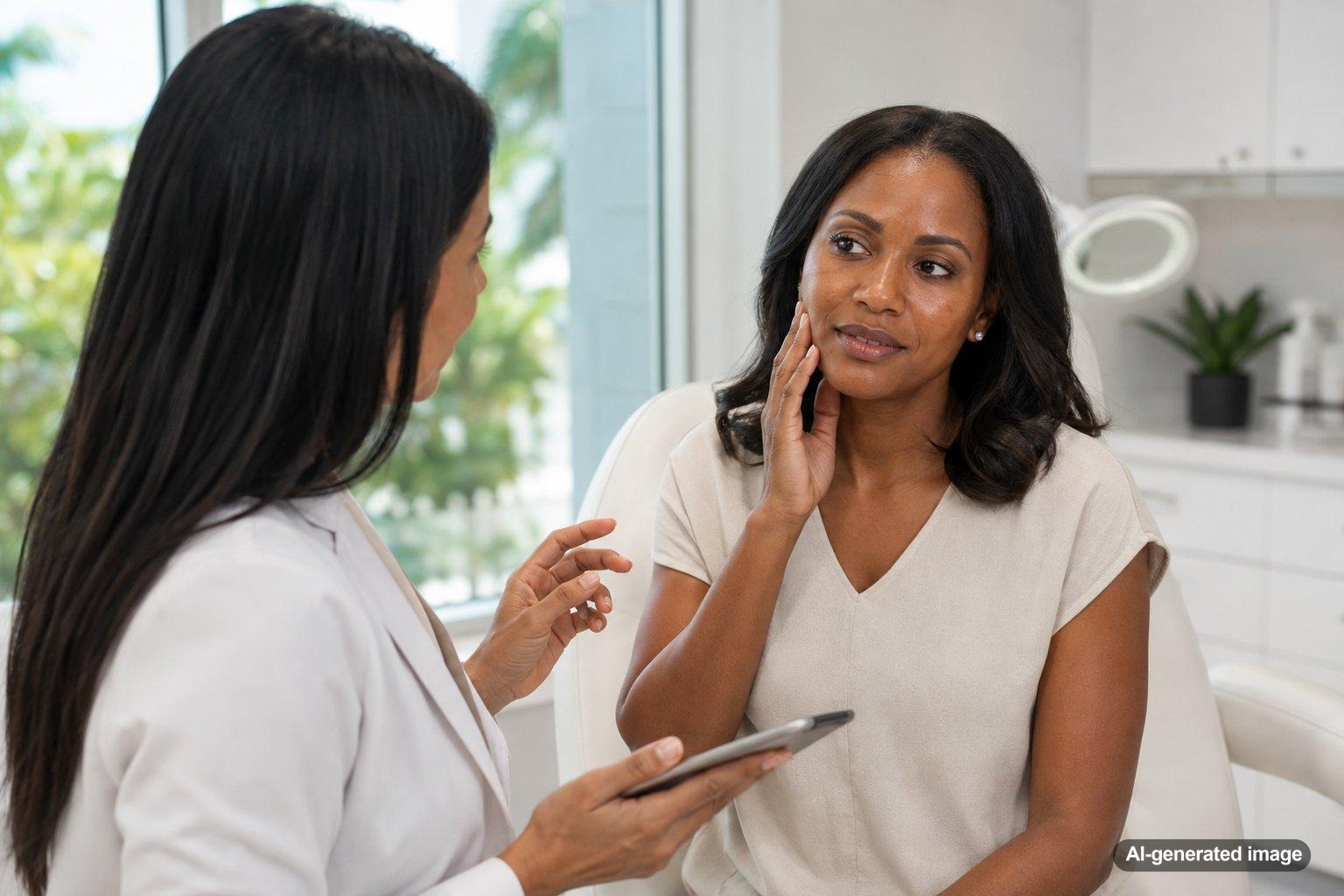
If your skin feels slicker, shinier, or heavier the moment South Florida humidity rises, you are not imagining it. Humid air can make sweat evaporate more slowly, which leaves moisture, oil, sunscreen, and skincare products sitting on the surface longer. The result can feel greasy even when your skin is simply reacting to heat, moisture, and a heavier product mix.
The goal is not to strip your face until it feels tight. In many cases, a calmer approach works better: lighter layers, consistent cleansing, smart sunscreen choices, and barrier-supportive skincare that keeps the skin comfortable without adding unnecessary weight.
Quick answer
- Humidity can make skin feel greasier because sweat evaporates more slowly and mixes with oil and skincare products.
- Heavier creams, rich sunscreens, and occlusive makeup may feel more noticeable in humid weather.
- Over-cleansing can leave the skin feeling tight, irritated, and more reactive.
- Lightweight, non-comedogenic products may feel more comfortable during hot, humid months.
- If greasiness comes with persistent breakouts, irritation, or a sudden skin change, a dermatologist can evaluate what is going on.
What is happening to your skin in humidity?
Humidity means there is more water vapor in the air. In a humid climate, sweat does not evaporate from the skin as efficiently as it does in dry air. Instead, it can linger on the surface and mix with sebum, sunscreen, moisturizer, and makeup. That combination can create the slippery or coated feeling many people describe as greasy skin.
Oil production also varies from person to person. Some people naturally make more sebum, while others feel oily only in certain zones, such as the forehead, nose, and chin. Heat, exercise, outdoor time, stress, and product choices can all influence how oily or shiny the skin appears throughout the day.
Common reasons your skin feels greasier
- Sweat is staying on the surface: When evaporation slows, your face can feel damp or slick even if oil production has not dramatically changed.
- Your products are too heavy for the weather: Rich creams, balm-like sunscreens, and heavier makeup may feel comfortable in cooler months but too occlusive in humid conditions.
- You are layering too much: Toner, serum, moisturizer, sunscreen, primer, and makeup can build a film that feels heavier by midday.
- You are cleansing too aggressively: Harsh scrubs or frequent washing can disrupt the skin barrier and make the skin feel uncomfortable or reactive.
- Breakout-prone areas are congested: Oil, sweat, and product residue may contribute to clogged-looking pores in some people, especially if products are not removed well at night.
What you can do at home
A few practical routine changes may help your skin feel fresher without pushing it into dryness or irritation.
- Use a gentle cleanser: Cleanse once or twice daily, depending on your skin type and activity level. After heavy sweating, a gentle wash can help remove residue without overdoing it.
- Switch to lighter hydration: A gel-cream or lightweight lotion may feel better than a rich cream in humid weather.
- Choose sunscreen thoughtfully: Look for a formula you will actually wear every day. Many people prefer lightweight, oil-free, or non-comedogenic options in humid climates.
- Blot instead of scrubbing: Oil-blotting papers or a soft tissue can reduce shine without adding more product or irritating the skin.
- Simplify daytime layers: In humid weather, fewer layers often feel better. Consider saving heavier actives or creams for nighttime if your skin tolerates them.
- Remove sunscreen and makeup at night: Consistent evening cleansing helps reduce product buildup and can support a clearer-feeling complexion.
Professional options
If your skin feels persistently oily, congested, or breakout-prone despite a thoughtful routine, professional guidance can help you sort out whether your products, skin type, hormones, acne tendency, or barrier health may be playing a role. Common office-based options may include customized skincare guidance, gentle exfoliation strategies, acne-focused treatment plans, or maintenance treatments that support smoother-looking skin.
At Waverly DermSpa, we offer HydraFacial and can help you understand whether it may be appropriate.
When to see a dermatologist
It is worth booking a visit if greasiness is paired with painful breakouts, sudden irritation, scaling, burning, persistent redness, or changes that do not improve with basic routine adjustments. A dermatologist can evaluate your skin, review your current products, and discuss options that fit your skin type and goals.
FAQ
Does humidity make my skin produce more oil?
Humidity can make skin feel oilier because sweat and surface moisture evaporate more slowly. Some people may also notice more shine in hot weather, but the greasy feeling is often a mix of sweat, sebum, sunscreen, and skincare residue.
Should I stop using moisturizer when it is humid?
Not necessarily. Many people still benefit from moisturizer, but the texture may need to change. A lightweight lotion or gel-cream may feel more comfortable than a rich cream.
Is greasy skin always a sign of acne?
No. Greasy-feeling skin does not automatically mean you have acne. If you are also seeing clogged pores, inflamed bumps, or painful breakouts, a dermatologist can help evaluate the best next step.
How often should I wash my face in humid weather?
Many people do well with cleansing in the morning and evening, especially after sunscreen, makeup, or heavy sweating. If your skin feels tight or irritated, your cleanser or cleansing frequency may be too harsh for your barrier.
What kind of sunscreen is best for humid weather?
The best sunscreen is one you will use consistently. In humid climates, many people prefer lightweight, non-greasy, oil-free, or non-comedogenic formulas that feel comfortable under daily conditions.
Ready to get help?
Schedule an appointment or send a message and our team will get back to you.
Prefer to call? 954-666-3736
Disclaimer
This article is for educational purposes and is not medical advice. For diagnosis and personalized treatment, please book an appointment with a board-certified dermatologist.
