

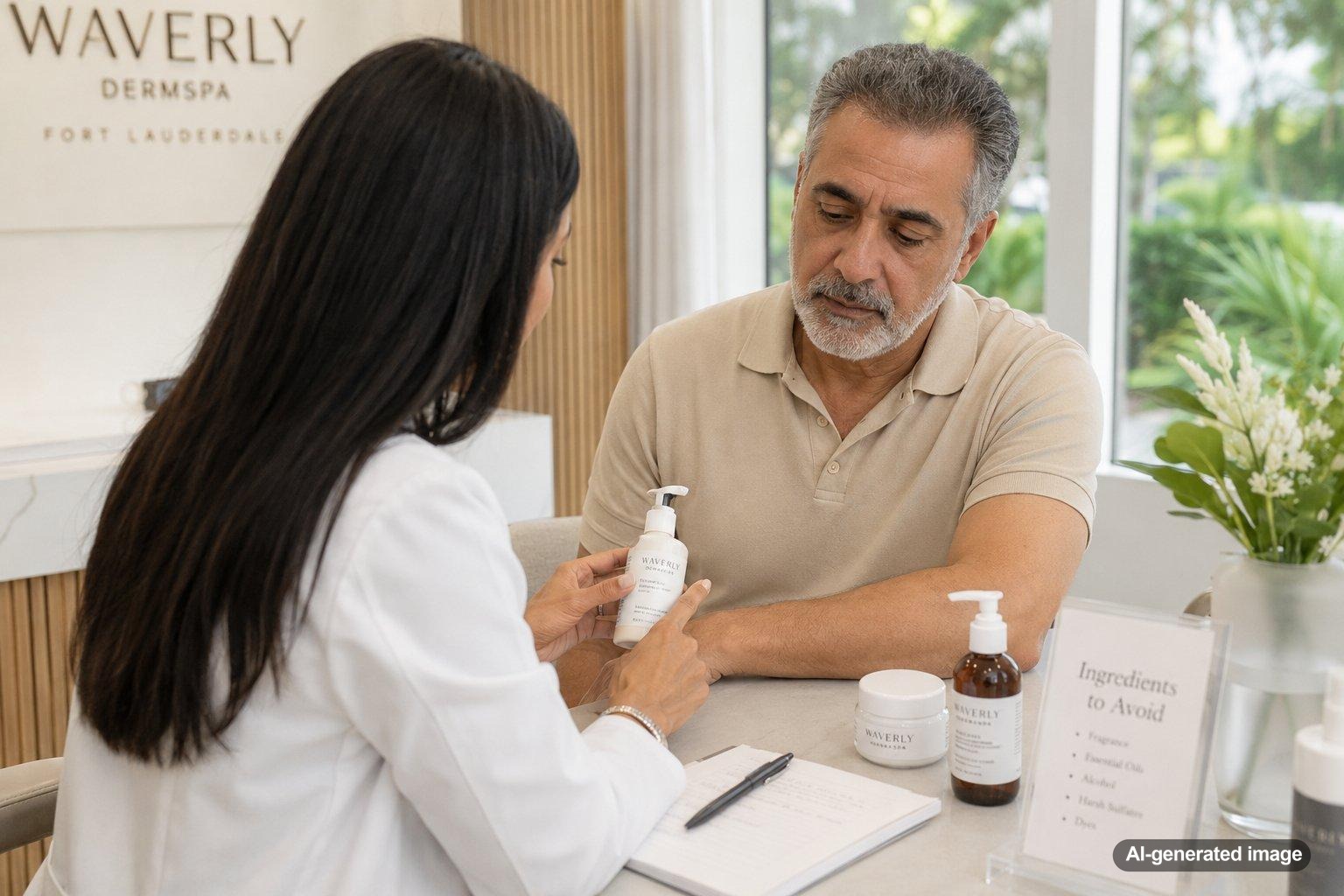
When skin is dry, itchy, or easily irritated, it is understandable to reach for products that sound gentle. Words like “natural,” “botanical,” “clean,” and “plant-based” can feel reassuring, especially when your skin already seems reactive.
For eczema-prone skin, however, natural does not always mean lower risk. Some plant extracts, essential oils, fragrances, exfoliants, and preservatives can irritate the skin barrier or trigger allergic contact dermatitis in certain people. The goal is not to fear every ingredient. It is to choose calmly, read labels carefully, and keep the routine simple enough that your skin has a chance to settle.
Quick answer
- Natural skincare can still contain fragrance, essential oils, acids, scrubs, or allergens that may aggravate eczema-prone skin.
- Fragrance-free is usually a better label clue than unscented, because unscented products may still contain masking fragrance.
- Simple moisturizers, gentle cleansers, and short ingredient lists are often easier to tolerate.
- Patch testing a new product on a small area before wider use may help you notice irritation early.
- If a rash is painful, spreading, crusting, oozing, or not improving, a dermatologist can evaluate what is going on.
What eczema-prone skin needs
Eczema is associated with inflammation and a more vulnerable skin barrier. When the barrier is not working well, skin may lose moisture more easily and react more strongly to common triggers. That is why a product that works beautifully for someone else may sting, burn, or cause redness on eczema-prone skin.
A helpful routine usually focuses on a few basics: gentle cleansing, regular moisturizing, and avoiding known triggers. For many people, the best skincare is not the most elaborate one. It is the one the skin can tolerate consistently.
Common triggers in natural skincare
- Essential oils: Tea tree, lavender, peppermint, citrus, eucalyptus, and similar oils may smell soothing, but they can be irritating or allergenic for some eczema-prone skin.
- Botanical fragrances: Plant-derived scent ingredients can be just as challenging as synthetic fragrance for sensitive skin.
- Harsh exfoliants: Scrubs, brushes, peels, and acidic toners may worsen dryness or stinging when the skin barrier is already stressed.
- Alcohol-heavy formulas: Some lightweight or fast-drying products may feel elegant but can be drying on reactive skin.
- Food-based ingredients: Ingredients such as nut oils, citrus extracts, or spice-derived components may not be right for every person, especially if irritation has happened before.
- Too many actives at once: Retinoids, acids, vitamin C, brightening ingredients, and acne treatments can be useful in the right setting, but layering them during an eczema flare may be too much.
What you can do at home
Keep the routine simple while the skin is irritated. Use a gentle, fragrance-free cleanser only where needed, avoid hot water, and apply moisturizer soon after bathing while the skin is still slightly damp. A bland cream or ointment may be more supportive than a highly scented lotion or oil blend.
When trying a new product, consider testing it on a small area first rather than applying it to the entire face or body right away. If burning, itching, redness, swelling, or a new rash appears, stop using it and consider saving the label or ingredient list for your visit. This can help your clinician look for patterns.
Professional options
If eczema symptoms are frequent, uncomfortable, or hard to control, a dermatologist can evaluate whether the issue is eczema, allergic contact dermatitis, irritation, infection, or another skin condition. Common options may include prescription anti-inflammatory creams or ointments, non-steroid topical medications, barrier-supportive skincare guidance, trigger review, and, when appropriate, further evaluation for allergy-related patterns.
Your clinician can also help you decide which products fit your skin, climate, travel habits, and medical history. This can be especially helpful in South Florida, where heat, sweating, sunscreen, pool exposure, and frequent travel may all affect sensitive skin routines.
When to see a dermatologist
- The rash is spreading, painful, crusting, oozing, bleeding, or becoming increasingly swollen.
- Itching is disrupting sleep or daily comfort.
- Over-the-counter skincare seems to sting or worsen the rash.
- You suspect a product allergy or repeated reactions to skincare, sunscreen, makeup, or hair products.
- The rash is around the eyes, on the face, on the hands, or in a sensitive area.
- You are unsure whether it is eczema or another condition.
FAQ
Is natural skincare better for eczema?
Not automatically. Some natural ingredients are well tolerated, while others can irritate or trigger allergy-prone skin. The ingredient list and your skin’s response matter more than the marketing language.
Should I avoid all essential oils?
Many people with eczema-prone or very sensitive skin do better with fragrance-free products, which often means avoiding essential oils used for scent. A dermatologist can help you decide what makes sense for your skin.
What does fragrance-free mean?
Fragrance-free generally means fragrance ingredients were not added to scent the product. This is different from unscented, which may still include ingredients used to mask odor.
Can moisturizer help eczema-prone skin?
Moisturizer may help support the skin barrier and reduce dryness. For many people, a gentle, fragrance-free cream or ointment is easier to tolerate than a scented lotion or botanical oil blend.
Can eczema be caused by skincare?
Skincare can sometimes aggravate eczema-prone skin or cause a separate irritation or allergic reaction. If reactions keep happening, it is worth getting checked so the pattern can be evaluated.
Ready to get help?
Schedule an appointment or send a message and our team will get back to you.
Prefer to call? 954-666-3736
Disclaimer
This article is for educational purposes and is not medical advice. For diagnosis and personalized treatment, please book an appointment with a board-certified dermatologist.
Sources & further reading
- National Eczema Association – 8 skincare ingredients to avoid if you have eczema
- American Academy of Dermatology (AAD) – How to treat eczema at home
- National Institute of Arthritis and Musculoskeletal and Skin Diseases (NIAMS) – Atopic Dermatitis: Diagnosis, Treatment, and Steps to Take
