

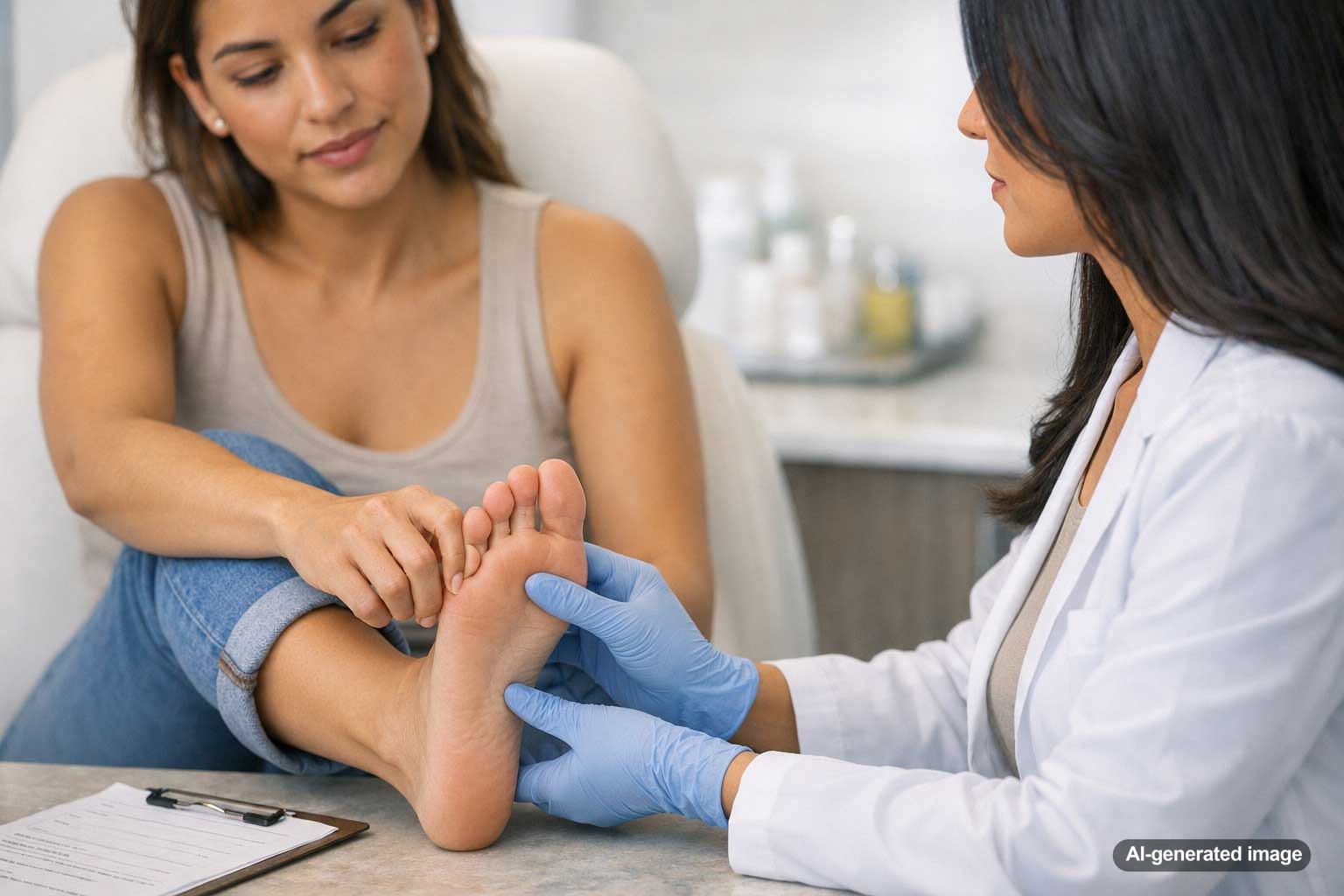
If your feet start itching the moment you take off your socks, it can feel oddly specific. The sensation may be related to sweat drying on the skin, friction from fabric, a sensitivity to detergent or sock material, dry skin, eczema, or a fungal infection such as athlete’s foot. The pattern matters: where the itch is, whether there is peeling or cracking, and whether it happens with certain shoes or socks can all offer clues.
In Fort Lauderdale’s warm, humid climate, feet often spend long hours in closed shoes, workout sneakers, travel shoes, or dress shoes. That can create a damp environment that may irritate the skin barrier or allow fungus to thrive. A dermatologist can evaluate persistent, recurring, or worsening foot itch and help you understand what is most likely in your case.
Quick answer
- Feet may itch after removing socks because sweat, heat, and friction have been trapped against the skin.
- Dryness can become more noticeable once socks come off and air hits the skin.
- Itching between the toes, peeling, scaling, odor, or cracking may be associated with athlete’s foot.
- Itching along the ankle, top of the foot, or sock line can sometimes point to contact irritation from fabric, elastic, dye, or laundry products.
- If the itch is intense, persistent, spreading, painful, or linked with open skin, swelling, drainage, or nail changes, it is worth getting checked.
Why feet can itch when socks come off
When socks are on, they hold warmth, moisture, and friction close to the skin. Once the socks come off, the skin is suddenly exposed to air, which can make already-irritated nerve endings feel more noticeable. This is especially common if the feet have been sweating, if the socks are tight, or if shoes do not breathe well.
Itching is not a diagnosis by itself. It is a symptom that can show up with several skin concerns, from simple dryness to inflammatory rashes or infections. Looking at the skin often matters more than the timing alone.
Common causes and triggers
- Sweat and trapped heat: Warm, damp socks can soften and irritate the outer skin layer, especially after exercise, long workdays, or travel.
- Friction from socks or shoes: Repeated rubbing can make the skin feel itchy, tender, or raw, particularly around the heel, toes, and sides of the feet.
- Dry skin: Dryness can cause tightness, flaking, and itch, and the feeling may become more obvious once socks are removed.
- Contact irritation or allergy: Elastic, dyes, fabric blends, shoe materials, or laundry detergent may irritate sensitive skin, often near the sock line or areas of contact.
- Athlete’s foot: This common fungal infection can be associated with itching, stinging, burning, scaling, peeling, cracking, and sometimes blisters, often between the toes or on the soles.
- Eczema or dermatitis: Inflammatory skin conditions can flare with sweat, friction, detergents, fragrance, or changes in routine.
- Nail or toe web changes: Thickened, discolored, brittle nails or persistent peeling between the toes may suggest that a dermatologist should evaluate for fungal involvement or another cause.
Clues that may help you describe it
Before your appointment, notice the pattern. Does the itch happen with one pair of socks, all socks, or only after certain shoes? Is it mainly between the toes, on the soles, around the ankles, or along the top of the feet? Is there peeling, cracking, redness, discoloration, odor, small blisters, or thickened toenails?
Those details can help your clinician separate irritation from infection, eczema, psoriasis, allergic contact dermatitis, and other possibilities. Photos taken when the itch is active can also be helpful, especially if the skin looks normal by the time you are seen.
What you can do at home
- Change out of damp socks promptly after sweating, exercise, or long walks.
- Choose breathable socks and rotate shoes so they have time to dry fully.
- Wash socks in a fragrance-free detergent if you suspect irritation.
- Moisturize dry areas of the feet, but avoid trapping heavy ointment between the toes if that area is damp or peeling.
- Keep the spaces between the toes gently dry after bathing.
- Avoid scratching, which can further irritate the skin and increase the chance of breaks in the skin barrier.
- Do not use over-the-counter steroid creams on a suspected fungal rash unless a clinician has advised it, because steroids can sometimes make fungal rashes harder to recognize or manage.
Professional options
A dermatologist can examine the skin and nails and, when appropriate, may check for fungus or consider other causes of inflammation. Common options may include guidance on barrier repair, fragrance-free skincare changes, antifungal medication, prescription anti-inflammatory treatment, or evaluation for contact dermatitis if the pattern suggests a trigger.
The right approach depends on what is actually causing the itch. A calm, targeted evaluation can help avoid months of guessing or rotating products that may not address the underlying issue.
When to see a dermatologist
- The itching keeps coming back or lasts more than a couple of weeks.
- There is peeling, cracking, scaling, blistering, drainage, pain, swelling, or spreading redness.
- The skin between the toes stays white, soggy, split, or irritated.
- Toenails are becoming thick, brittle, lifted, yellow, white, or discolored.
- You have diabetes, circulation concerns, immune system concerns, or open areas on the feet.
- You have tried basic care and the symptoms are not improving.
FAQ
Why do my feet itch only after I remove my socks?
Socks can trap sweat, heat, and friction. When they come off, air hits skin that may already be irritated or dry, making the itch feel more noticeable.
Does itching always mean athlete’s foot?
No. Athlete’s foot is one possibility, especially with itching, peeling, scaling, cracking, or irritation between the toes, but dryness, eczema, friction, and contact irritation can also cause itchy feet.
Can socks themselves cause itchy feet?
Yes, some people are sensitive to certain fabrics, elastic, dyes, tight bands, or detergent residue. The location of the itch can be a useful clue, especially if it follows the sock line.
Should I moisturize itchy feet?
Moisturizing can help when dryness or barrier irritation is involved. If the area between the toes is damp, peeling, or cracked, it is better to keep that space dry and ask a dermatologist what is appropriate.
When is itchy feet more concerning?
It is worth getting checked if the itch is persistent, severe, spreading, painful, linked with open skin or drainage, or accompanied by nail changes. People with diabetes or circulation concerns should be especially cautious with foot symptoms.
Ready to get help?
Schedule an appointment or send a message and our team will get back to you.
Prefer to call? 954-666-3736
Disclaimer
This article is for educational purposes and is not medical advice. For diagnosis and personalized treatment, please book an appointment with a board-certified dermatologist.
Sources & further reading
- Centers for Disease Control and Prevention (CDC) – Ringworm Basics
- Centers for Disease Control and Prevention (CDC) – Treatment of Ringworm
- American Academy of Dermatology (AAD) – Ringworm: Signs and symptoms
- Cleveland Clinic – What Is Athlete’s Foot & How Do You Treat It?
- DermNet – Tinea pedis
