

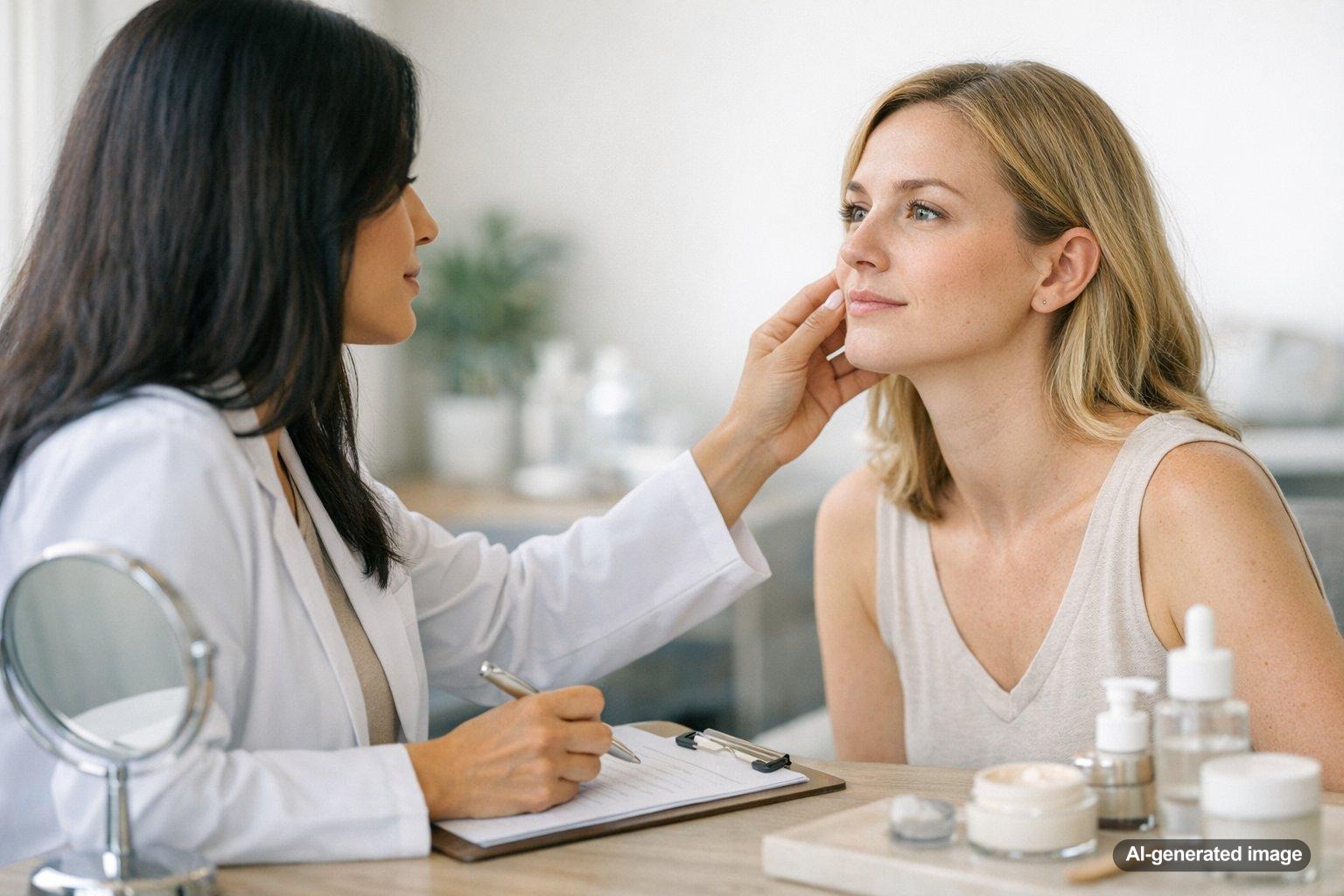
Rough or bumpy skin is common, but it can feel frustrating when your usual routine suddenly stops giving you a smooth, comfortable texture. The cause is not always the same for every person. Sometimes it is simple dryness or buildup on the surface. Other times, it may be related to clogged hair follicles, irritation, inflammation, sun damage, or a skin condition that deserves a closer look.
The short answer: your skin may feel rough or bumpy when the outer layer is dry, uneven, irritated, or not shedding smoothly. A dermatologist can evaluate the pattern, location, color, itching, tenderness, and timing to help narrow down what may be contributing to the texture and what options may be appropriate.
Quick answer
- Rough texture often comes from dryness, a weakened skin barrier, or dead skin cell buildup.
- Tiny bumps on the arms, thighs, cheeks, or buttocks may be associated with keratosis pilaris, a common rough follicle pattern.
- Itching, redness, scaling, cracking, pain, oozing, or spreading bumps should be checked by a dermatologist.
- Gentle cleansing, consistent moisturizing, daily sun protection, and cautious exfoliation may help some rough skin feel smoother over time.
- Professional options depend on the cause and may include prescription topicals, chemical peels, resurfacing treatments, or medical evaluation when needed.
What rough or bumpy skin can mean
Skin can feel rough when the surface becomes dry, flaky, thickened, or uneven. Bumps can form when pores or hair follicles become clogged, inflamed, irritated, or surrounded by excess keratin, which is a structural protein in the skin. Texture can also look more noticeable after sun exposure, travel, changes in humidity, new products, shaving, waxing, or seasonal shifts.
In Fort Lauderdale, texture concerns can be influenced by heat, sweat, sunscreen layers, saltwater, pool exposure, air travel, and the contrast between humid outdoor air and dry indoor air conditioning. None of these details diagnose the issue, but they can help explain why skin texture may change even when your routine has not changed dramatically.
Common causes or triggers
- Dryness and barrier stress: Skin may feel tight, flaky, or rough when it is not holding moisture well.
- Dead skin cell buildup: When surface cells do not shed evenly, skin may feel dull, gritty, or uneven.
- Keratosis pilaris: This can be associated with tiny, rough-feeling bumps, often around hair follicles on the upper arms, thighs, cheeks, or buttocks.
- Clogged pores: Congestion may create small bumps, especially on the face, chest, back, or areas exposed to heavy products or sweat.
- Irritation from products: Fragrance, harsh scrubs, strong acids, retinoids, or frequent product changes can make texture feel worse.
- Shaving, waxing, or friction: Repeated rubbing from clothing, workouts, or hair removal may contribute to bumps or roughness.
- Inflammatory skin conditions: Eczema, psoriasis, and other rashes can cause rough, scaly, itchy, or thickened areas that should be evaluated if persistent or uncomfortable.
- Sun-related rough spots: New, persistent, scaly, tender, or changing areas on sun-exposed skin should be checked, especially if they do not improve.
What you can do at home
Start with the basics before adding more active products. Use a gentle cleanser, avoid hot water, and moisturize soon after bathing while the skin is still slightly damp. Look for moisturizers that support the skin barrier and feel comfortable enough to use consistently.
- Keep showers short and use warm water instead of hot water.
- Pat skin dry rather than rubbing aggressively with a towel.
- Use a fragrance-free moisturizer on rough areas every day.
- Introduce exfoliating ingredients slowly, if your skin tolerates them.
- Avoid harsh scrubs, picking, or aggressive loofahs, especially if bumps are red, tender, or itchy.
- Use broad-spectrum sunscreen daily on exposed skin, especially if roughness appears on sun-exposed areas.
- Pause new products if roughness began soon after starting them, and consider bringing those products to your appointment.
If your skin stings, burns, cracks, bleeds, or becomes more inflamed with exfoliation, stop and choose a simpler, soothing routine until you can be evaluated.
Professional options
The right professional option depends on what is causing the texture. A dermatologist may recommend prescription topicals, barrier repair strategies, acne treatment, evaluation of a rash, or a biopsy for a concerning spot when appropriate. For texture concerns that are cosmetic or maintenance-focused, an aesthetic plan may include gentle facials, chemical exfoliation, microneedling, laser resurfacing, or other in-office treatments after a skin assessment.
At Waverly DermSpa, we offer Chemical Peels and can help you understand whether it may be appropriate.
When to see a dermatologist
It is worth getting checked if rough or bumpy skin is new, spreading, painful, bleeding, crusting, oozing, very itchy, changing color, or not improving with gentle care. You should also schedule an evaluation for a persistent scaly spot on sun-exposed skin, a lesion that looks different from your others, or any bump that grows, bleeds, or does not heal.
A dermatology visit can be especially helpful if you are unsure whether the texture is dryness, clogged follicles, acne, a rash, sun damage, or something else. The goal is not to overcomplicate your routine. It is to understand what your skin is showing and choose care that fits your skin, lifestyle, and goals.
FAQ
Why does my skin feel rough even though I moisturize?
Your moisturizer may not be enough for your current barrier needs, or the roughness may involve buildup, clogged follicles, irritation, or another skin pattern. A dermatologist can help identify whether your routine needs a small adjustment or a more targeted approach.
Are rough bumps always acne?
No. Bumps can come from clogged pores, keratosis pilaris, irritation, ingrown hairs, rashes, or other causes. The location, texture, color, tenderness, and whether the bumps itch can all matter.
Should I exfoliate rough skin?
Gentle exfoliation may help some types of rough texture, but too much can irritate the skin barrier. If your skin is red, burning, cracked, itchy, or sensitive, focus on soothing moisture and get guidance before using stronger exfoliants.
Can rough skin be related to sun exposure?
It can be. Sun exposure may contribute to uneven texture, and some persistent rough or scaly spots on sun-exposed skin should be evaluated by a dermatologist. Do not ignore a spot that is changing, tender, bleeding, or not healing.
When should I book an appointment?
Book an appointment if the texture is persistent, uncomfortable, spreading, changing, or concerning to you. It is also reasonable to come in if you have tried gentle care and still are not sure what is causing the bumps.
Ready to get help?
Schedule an appointment or send a message and our team will get back to you.
Prefer to call? 954-666-3736
This article is for educational purposes and is not medical advice. For diagnosis and personalized treatment, please book an appointment with a board-certified dermatologist.
Sources & further reading
- American Academy of Dermatology (AAD) – Keratosis pilaris: Overview
- American Academy of Dermatology (AAD) – Dermatologists’ top tips for relieving dry skin
- Mayo Clinic – Keratosis pilaris: Symptoms and causes
- Mayo Clinic – Actinic keratosis: Symptoms and causes
