

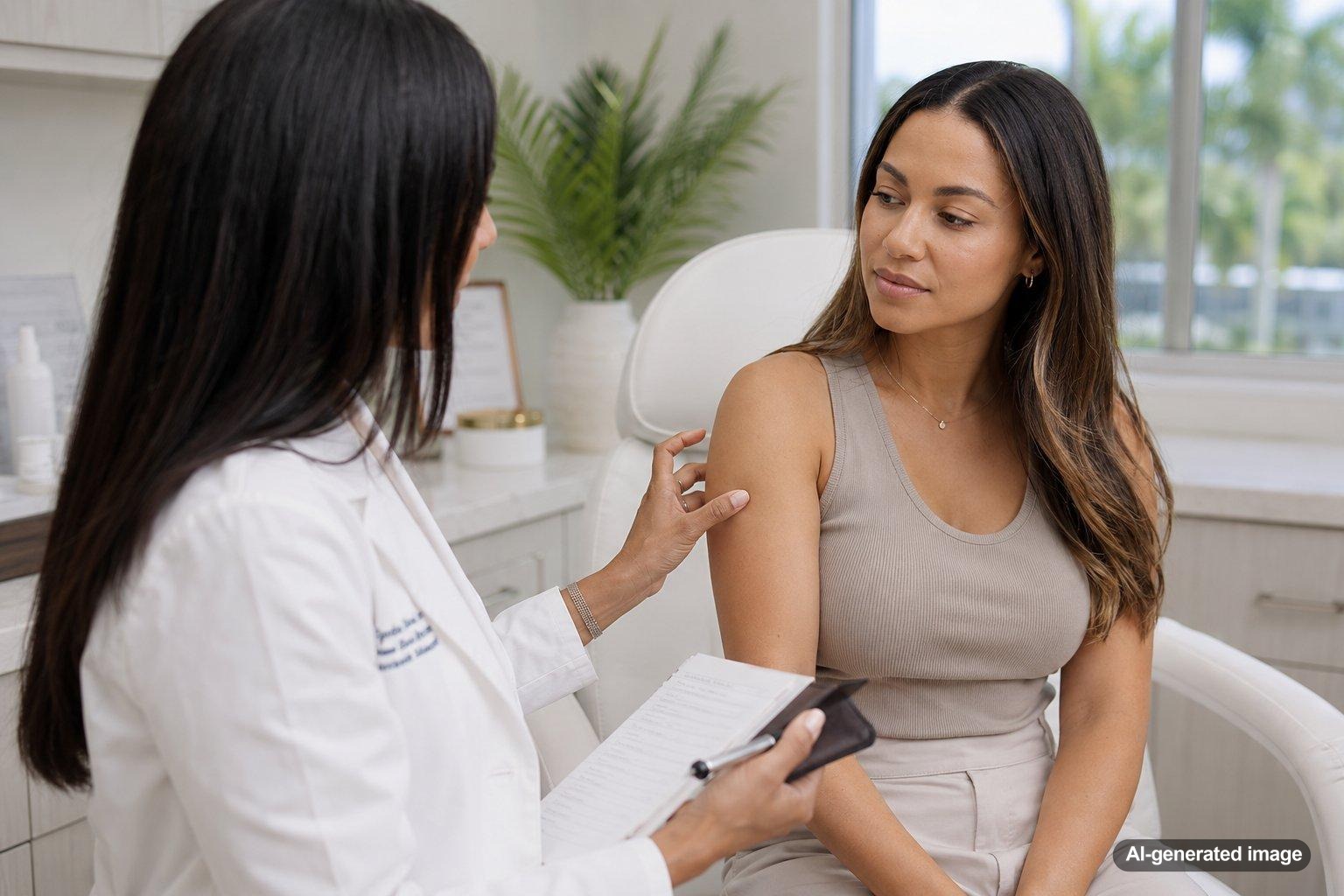
Insurance may cover mole removal when the visit or procedure is considered medically necessary, such as when a mole is changing, bleeding, painful, irritated, or suspicious enough that a dermatologist recommends removal or biopsy. When a mole is removed only because someone does not like how it looks, insurance often considers that cosmetic, which usually means it is not covered.
The most important first step is a skin evaluation. A dermatologist can examine the mole, discuss whether removal is medically appropriate, and help you understand what documentation may be sent to your insurance plan. Coverage can vary by plan, deductible, network status, and whether pathology testing is needed.
Quick answer
- Insurance may cover mole removal when there is a medical reason, such as concern for skin cancer, symptoms, irritation, or functional problems.
- Cosmetic mole removal is commonly self-pay when the mole is being removed only for appearance.
- A biopsy or pathology test may be covered differently from the office visit or removal procedure, depending on your plan.
- Pre-authorization is not always required, but some plans may have rules, referrals, or network requirements.
- Your dermatologist’s documentation matters, because medical necessity is usually based on the exam findings and reason for removal.
When insurance is more likely to consider mole removal medically necessary
Insurance plans often look for a medical reason behind the removal. A dermatologist may recommend removal or biopsy if a mole has features that need closer evaluation, or if it is causing repeated discomfort or irritation. This does not mean a mole is skin cancer, and it does not mean a biopsy will show something serious. It means the mole deserves a clinician’s judgment.
- A mole that is changing in size, shape, color, or texture
- A mole that bleeds, crusts, itches, becomes painful, or does not heal normally
- A mole that looks different from a person’s other moles
- A mole in a high-friction area that repeatedly catches on clothing, jewelry, shaving, or grooming
- A mole that a dermatologist believes should be sampled or removed for diagnosis
When mole removal is usually considered cosmetic
If a mole appears clinically harmless and the reason for removal is appearance, insurance commonly classifies the procedure as cosmetic. In that case, the visit, removal, and any related fees may be out of pocket. This can be frustrating, especially when a mole affects confidence, but insurance plans typically separate medical necessity from aesthetic preference.
Even when removal is cosmetic, it is still wise to have the mole assessed by a dermatologist first. Trying to remove a mole at home or using over-the-counter removal products can irritate the skin, cause scarring, and may delay evaluation of a mole that should be checked professionally.
What happens during a dermatologist evaluation
During the visit, your dermatologist will look at the mole and may ask when you first noticed it, whether it has changed, whether it causes symptoms, and whether you have a personal or family history of skin cancer. The exam helps determine whether monitoring, removal, or biopsy is the most appropriate next step.
If removal is recommended for a medical reason, the sample may be sent to a lab for pathology review. A skin biopsy removes a small amount of skin so it can be examined under a microscope. Your clinician can explain what type of removal is most appropriate for the mole’s size, location, appearance, and reason for removal.
Questions to ask your insurance plan before mole removal
Because every plan is different, it is helpful to contact your insurance company before the appointment or before a scheduled procedure. The best questions are specific and practical.
- Is a dermatology visit covered under my plan?
- Do I need a referral from my primary care clinician?
- Is this dermatologist in network?
- Does my plan cover mole removal when it is medically necessary?
- Do I need prior authorization for removal or biopsy?
- How are pathology lab fees covered?
- What deductible, copay, coinsurance, or out-of-pocket cost may apply?
What you can do before your appointment
A little preparation can make the visit more useful. If the mole has changed, take note of when you first noticed the change and whether it has bled, itched, crusted, grown, or become tender. Bring your insurance card and a list of medications or relevant medical history if asked by the office.
- Do not try to remove, burn, scrape, or treat the mole at home.
- Take clear photos if the mole has been changing, so you can discuss the timeline.
- Check whether your plan requires a referral.
- Ask the office whether they can provide procedure codes or billing guidance if needed.
- Keep in mind that final coverage decisions are made by your insurance plan.
Professional options for mole removal
Common professional approaches include shave removal, punch removal, or excision, depending on the mole and the reason it is being removed. If the mole is suspicious, the goal is usually diagnostic evaluation, not just flattening or lightening the spot. Your dermatologist can explain whether a sample should be sent for pathology and what type of wound care may be needed afterward.
For cosmetic removal, your dermatologist can also explain expected scarring, possible pigment changes, and whether removal is appropriate for that location. No technique can promise an invisible mark, so it is important to weigh the cosmetic goal against the possibility of a scar.
When to see a dermatologist
Schedule a dermatology visit if a mole is new, changing, bleeding, itching, painful, crusting, or noticeably different from your other spots. You should also get checked if you are unsure whether a spot is a mole, a skin growth, or something else. For visitors and seasonal residents in Fort Lauderdale, having a local dermatologist can be especially helpful if you notice a change while you are away from your usual care team.
Do not wait for an insurance answer if a mole is rapidly changing or concerning. A dermatologist can evaluate the area and help you understand the next appropriate step.
FAQ
Does insurance cover mole removal if I just do not like how it looks?
Often, no. If the mole is removed only for appearance and there is no medical concern, many insurance plans consider it cosmetic. The cost may be self-pay.
Does insurance cover a suspicious mole biopsy?
It may, depending on your plan. If a dermatologist documents a medical reason for biopsy, insurance is more likely to process it as medically necessary, but deductibles, copays, coinsurance, referrals, and lab fees may still apply.
Can the dermatologist tell me exactly what insurance will pay?
The office may be able to share general billing guidance, but your insurance plan makes the final coverage decision. Calling the number on your insurance card is the best way to ask about your specific benefits.
Will a removed mole always be sent to a lab?
Not always. If there is a medical concern or the dermatologist wants diagnostic information, the tissue may be sent for pathology. Your clinician can explain whether that is recommended in your case.
Is it safe to remove a mole at home?
No. Home removal can irritate the skin, increase the risk of infection or scarring, and may delay proper evaluation. A dermatologist can assess the mole and remove it in a medically appropriate way if needed.
Ready to get help?
Schedule an appointment or send a message and our team will get back to you.
Prefer to call? 954-666-3736
Disclaimer
This article is for educational purposes and is not medical advice. For diagnosis and personalized treatment, please book an appointment with a board-certified dermatologist.
Sources & further reading
- American Academy of Dermatology (AAD) – Moles: Diagnosis and treatment
- MedlinePlus (NIH) – Skin lesion biopsy
- The Skin Cancer Foundation – Melanoma Warning Signs and Images
