

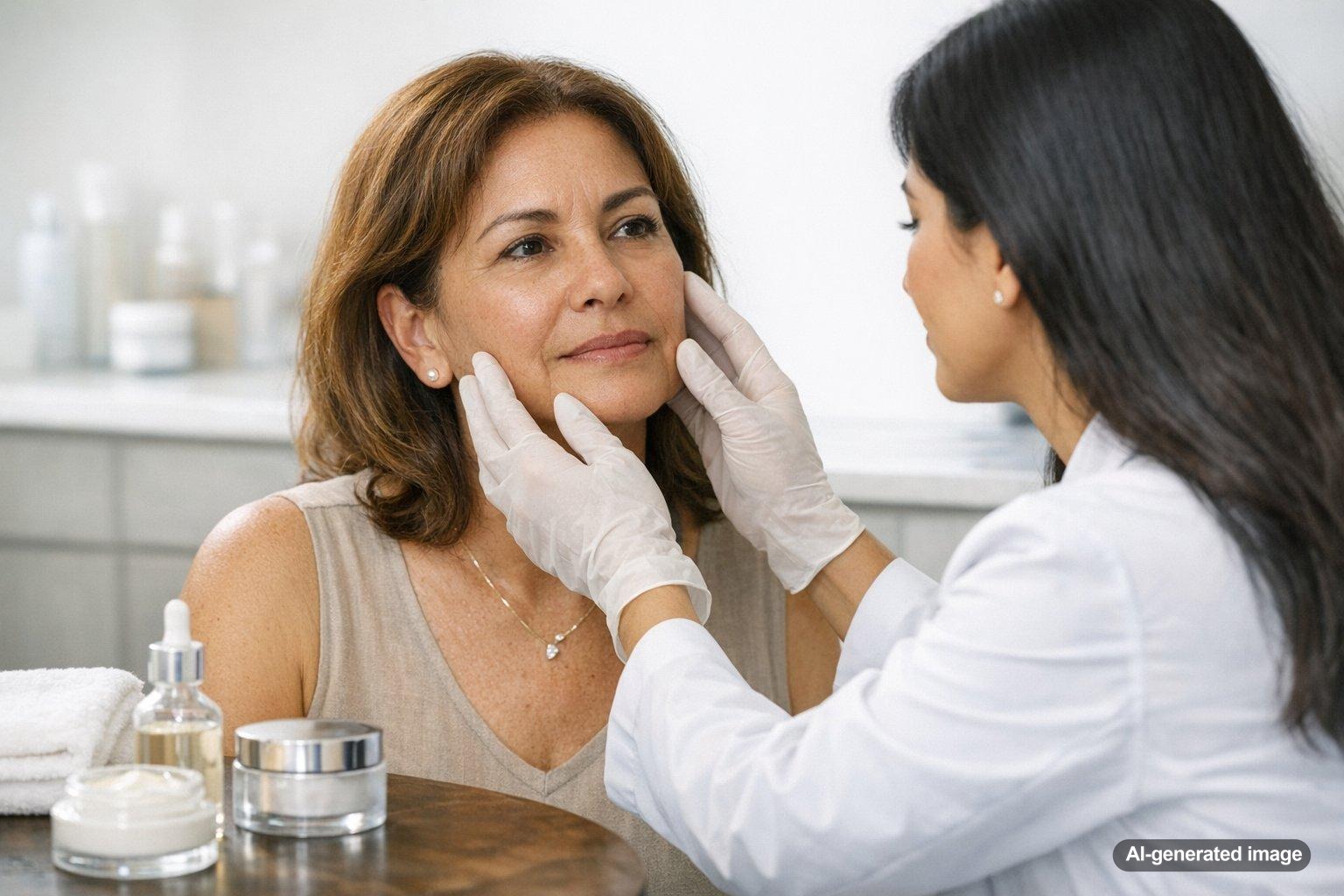
Yes, acne can still happen in your 30s or 40s, even if your skin was clear for years. Adult breakouts are common, and they can feel especially frustrating when you are also thinking about dryness, fine lines, discoloration, or skin sensitivity.
In many adults, acne is not caused by one single factor. Hormone shifts, stress, pore-clogging products, changes in skin care, medications, sweat, and irritation can all play a role. The reassuring part is that a thoughtful plan can often help calm breakouts while protecting the skin barrier and supporting long-term skin health.
Quick answer
- Adult acne may be linked to hormone fluctuations, stress, cosmetics, hair products, sweat, friction, or a disrupted skin barrier.
- Breakouts around the chin, jawline, cheeks, neck, or hairline can happen in adults, but pattern alone does not confirm the cause.
- Harsh scrubbing, over-exfoliating, or layering too many active ingredients can make acne-prone skin feel worse.
- A dermatologist can evaluate whether prescription options, in-office treatments, or a simpler skin care routine may be appropriate.
What adult acne is
Adult acne is acne that continues or appears after the teen years. It may look like clogged pores, whiteheads, blackheads, inflamed bumps, deeper tender spots, or a mix of several types. Some people notice occasional breakouts, while others have more persistent flares that seem to return in the same areas.
In your 30s and 40s, the skin may also become less tolerant of aggressive acne routines. Products that felt fine years ago may now cause dryness, stinging, or peeling. This is why adult acne care often needs to be balanced: enough support to reduce clogged pores and inflammation, but gentle enough to avoid weakening the skin barrier.
Common causes and triggers
Adult acne can be associated with several overlapping factors. A dermatologist can help sort out what may be contributing in your specific case.
- Hormone shifts: Changes related to menstrual cycles, perimenopause, certain health conditions, or other hormone-related factors may contribute to breakouts.
- Stress: Stress does not affect everyone the same way, but many people notice flares during busy or high-pressure seasons.
- Skin care overload: Too many exfoliants, drying spot treatments, or strong active ingredients can irritate the skin and make breakouts harder to manage.
- Pore-clogging products: Makeup, sunscreen, moisturizers, hair oils, and styling products may contribute if they are not a good fit for acne-prone skin.
- Sweat and friction: Heat, humid weather, hats, helmets, masks, workout gear, and tight collars can sometimes aggravate acne-prone areas.
- Medication or supplement changes: Some breakouts can be associated with certain medications or supplements, so it is worth discussing changes with your clinician.
What you can do at home
A simple, consistent routine is often a better starting point than doing more. Choose a gentle cleanser, a lightweight moisturizer, and a daily broad-spectrum sunscreen that feels comfortable on your skin. Look for labels such as non-comedogenic or oil-free when selecting makeup, sunscreen, and moisturizers, especially if you know you clog easily.
Avoid scrubbing, picking, or trying to dry out every breakout. These habits may increase irritation and can raise the risk of lingering marks. If you use acne-focused ingredients, introduce them slowly and avoid stacking several strong products at once. Skin that burns, flakes, or feels tight may need a calmer approach before adding more active treatment steps.
Professional options
Professional care for adult acne depends on the type of acne, your skin sensitivity, your medical history, and your goals. Common options may include prescription topical medications, oral medications when appropriate, professional extractions, chemical peels, light-based procedures, or supportive treatments aimed at texture and post-acne discoloration.
The right plan is not always the most aggressive one. For many adults, the goal is to reduce breakouts while keeping the skin comfortable and resilient. A dermatologist can evaluate whether your acne pattern suggests a need for medical treatment, while an aesthetician may support maintenance care, product selection, and barrier-friendly routines. At Waverly DermSpa, we offer Chemical Peels and can help you understand whether they may be appropriate.
When to see a dermatologist
It is worth booking an evaluation if acne is painful, deep, spreading, leaving marks, or not improving with a gentle routine. You should also consider professional guidance if breakouts began suddenly, seem connected to a medication or hormone change, or are affecting your confidence and daily life.
Adult acne can resemble or overlap with other concerns, including rosacea, folliculitis, irritation, or reactions to products. A board-certified dermatologist can help distinguish between possibilities and recommend a plan that fits your skin rather than relying on guesswork.
FAQ
Why did acne start now if I did not have it as a teenager?
Adult acne can appear even if your skin was clear in your teens. Hormone shifts, stress, product changes, lifestyle changes, and skin barrier disruption may all contribute.
Is jawline acne always hormonal?
Jawline breakouts can be associated with hormone-related patterns, but location alone does not confirm the cause. A dermatologist can evaluate the full picture, including timing, skin care, medications, and other symptoms.
Can anti-aging products make acne worse?
Some active ingredients, heavy creams, or layered routines may irritate acne-prone skin or contribute to clogged pores. The goal is not to avoid all active ingredients, but to use the right ones in a balanced way.
Should I stop moisturizing if I have acne?
Usually, no. A lightweight, non-comedogenic moisturizer can help support the skin barrier, especially if you are using acne-focused products that may be drying.
Can adult acne improve?
Many people notice improvement with the right combination of gentle skin care, trigger awareness, and professional guidance when needed. Results vary, and a personalized evaluation is the safest way to decide what may help.
Ready to get help?
Schedule an appointment or send a message and our team will get back to you.
Prefer to call? 954-666-3736
Disclaimer
This article is for educational purposes and is not medical advice. For diagnosis and personalized treatment, please book an appointment with a board-certified dermatologist.
