

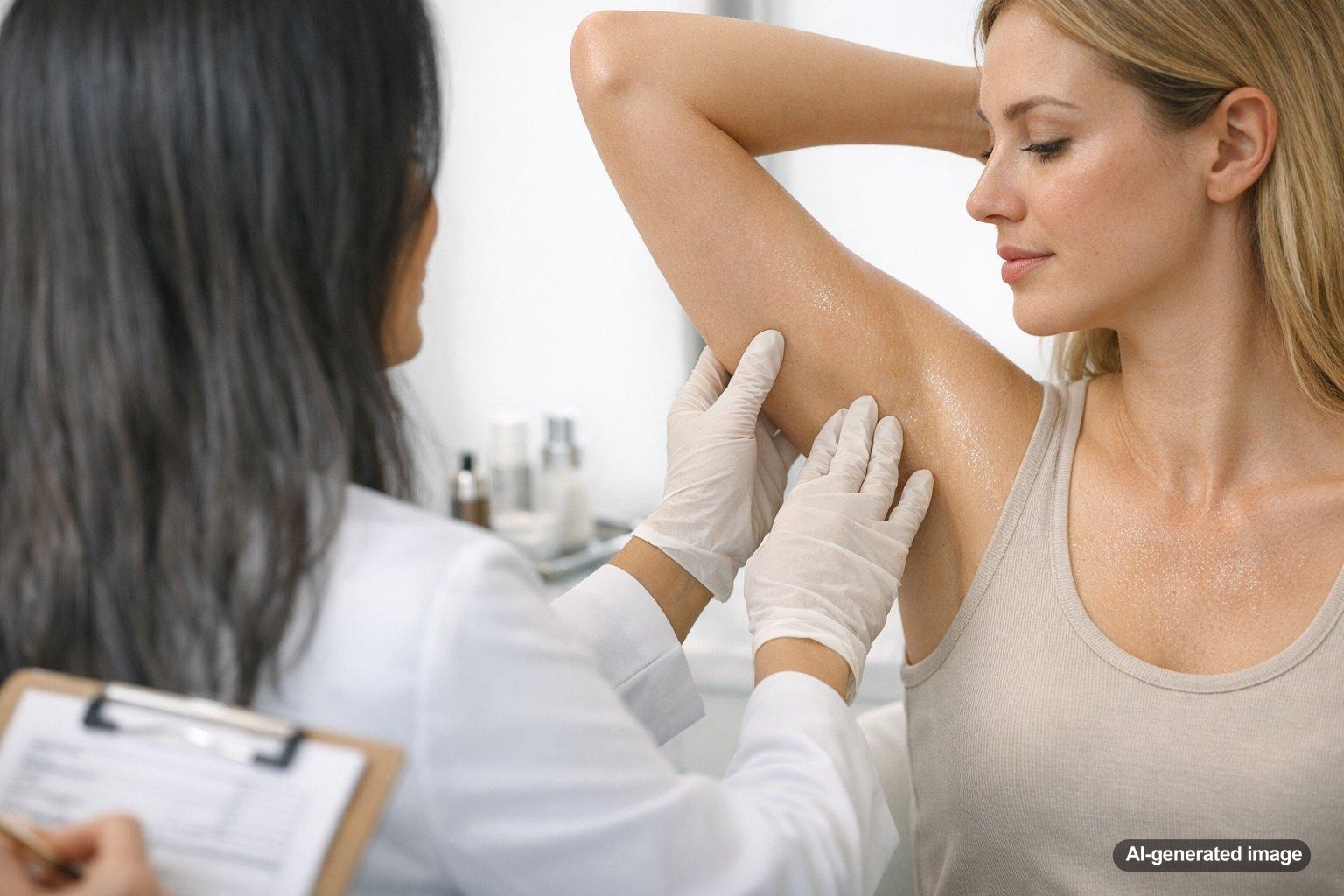
Yes, Botox may help reduce excessive sweating in certain areas, especially the underarms, for people with hyperhidrosis. In South Florida, where heat, humidity, travel, outdoor dining, and year-round sun can make sweating feel harder to manage, that can be a meaningful option to discuss with a dermatologist.
Hyperhidrosis is more than ordinary summer sweating. It can show up as sweat that soaks through clothing, interrupts work or social plans, or happens even when you are not exercising or overheated. A dermatologist can help determine whether sweating fits with hyperhidrosis, whether there may be another trigger, and whether Botox or another option may be appropriate.
Quick answer
- Botox can temporarily reduce excessive sweating where it is injected, most commonly in the underarms.
- It is not a one-size-fits-all answer, and a dermatologist should evaluate the pattern, severity, and possible causes of sweating.
- South Florida heat may make symptoms feel more noticeable, but hyperhidrosis can happen even without heat or exercise.
- At-home steps, prescription antiperspirants, and other professional options may also be considered.
- Results and duration vary, so the goal is thoughtful management rather than a guaranteed outcome.
What hyperhidrosis means
Hyperhidrosis is excessive sweating that can go beyond what the body needs for cooling. It may affect the underarms, palms, soles, face, scalp, or other areas. Some people notice it in specific locations, while others experience more generalized sweating. Because sweating can be linked with heat, stress, medications, medical conditions, or other factors, evaluation matters before choosing a treatment plan.
How Botox may help excessive sweating
Botox is a purified form of botulinum toxin used in very small, targeted amounts. For hyperhidrosis, it works by temporarily reducing the nerve signals that activate sweat glands in the treated area. In practical terms, that may mean less sweat production where the medication is placed.
For underarm sweating, Botox is an established medical option when topical approaches are not enough for some patients. A dermatologist can review whether the location of sweating, medical history, medications, and goals make it a reasonable consideration.
Why South Florida summers can make sweating feel worse
Fort Lauderdale humidity can make sweat evaporate more slowly, so skin and clothing may stay damp longer. For people who already sweat heavily, that can make daily life feel more uncomfortable during errands, outdoor lunches, travel days, weddings, boating, golf, tennis, or evening events.
- Heat and humidity: Warm air and moisture can make normal sweating more noticeable.
- Stress and social pressure: Worrying about visible sweat can sometimes make the experience feel more intense.
- Clothing choices: Synthetic or tight fabrics may trap moisture against the skin.
- Travel routines: Airports, luggage, walking outdoors, and schedule changes can trigger more sweating.
- Skin irritation: Damp skin can feel uncomfortable and may be more prone to friction.
What you can try at home first
Conservative steps may help some people manage mild or situational sweating. These do not replace a medical evaluation, but they can support comfort while you decide whether to schedule a visit.
- Use an antiperspirant rather than deodorant alone, since antiperspirants are designed to reduce sweat.
- Apply antiperspirant to completely dry skin, often at night, unless your clinician recommends a different routine.
- Choose breathable fabrics when possible, especially for long outdoor days.
- Keep a simple symptom diary noting timing, location, triggers, and whether sweating happens during rest.
- Avoid over-scrubbing damp or irritated skin, which may worsen sensitivity.
Professional options a dermatologist may discuss
Professional care depends on the sweating pattern and your health history. Common categories may include prescription-strength antiperspirants, topical or oral medications in select cases, device-based procedures, and targeted injections such as Botox. Each option has different considerations, and not every treatment is appropriate for every person.
At Waverly DermSpa, we offer Botox and can help you understand whether it may be appropriate.
When to see a dermatologist
It is worth scheduling a dermatology visit if sweating is interfering with your clothing choices, work, social life, travel, exercise, or confidence. You should also seek medical evaluation if sweating is new, generalized, happening at night, associated with fever, weight changes, chest symptoms, fainting, or other concerning changes. A dermatologist can help distinguish primary hyperhidrosis from sweating that may need additional medical workup.
FAQ
Can Botox completely stop sweating?
Botox may significantly reduce sweating in the treated area for many people, but it should not be viewed as a guaranteed complete shutdown of sweat. The response varies, and a dermatologist can set realistic expectations based on the treatment area and severity.
Is Botox for sweating only used in the underarms?
The underarms are a common treatment area, and dermatologists may also discuss other areas in select cases. The best approach depends on anatomy, safety considerations, and the pattern of sweating.
Is excessive sweating always hyperhidrosis?
No. Heavy sweating can be related to heat, exercise, stress, medications, hormonal changes, or other health factors. A dermatologist can evaluate whether your symptoms fit hyperhidrosis and whether any additional evaluation is appropriate.
Can I still sweat normally after treatment?
Botox is placed in a targeted area, so it does not stop the body from sweating everywhere. Your clinician can explain how localized treatment works and what to expect for your specific situation.
Is this a summer-only treatment?
Some people think about treatment before summer because symptoms feel more noticeable in hot, humid weather. Others deal with excessive sweating year-round and may discuss treatment at any time.
Ready to get help?
Schedule an appointment or send a message and our team will get back to you.
Prefer to call? 954-666-3736
Disclaimer
This article is for educational purposes and is not medical advice. For diagnosis and personalized treatment, please book an appointment with a board-certified dermatologist.
Sources & further reading
- American Academy of Dermatology (AAD) – Hyperhidrosis: Diagnosis and treatment
- U.S. Food and Drug Administration (FDA) – BOTOX Prescribing Information
- Cleveland Clinic – Hyperhidrosis: Types, Causes, Symptoms & Treatment
