

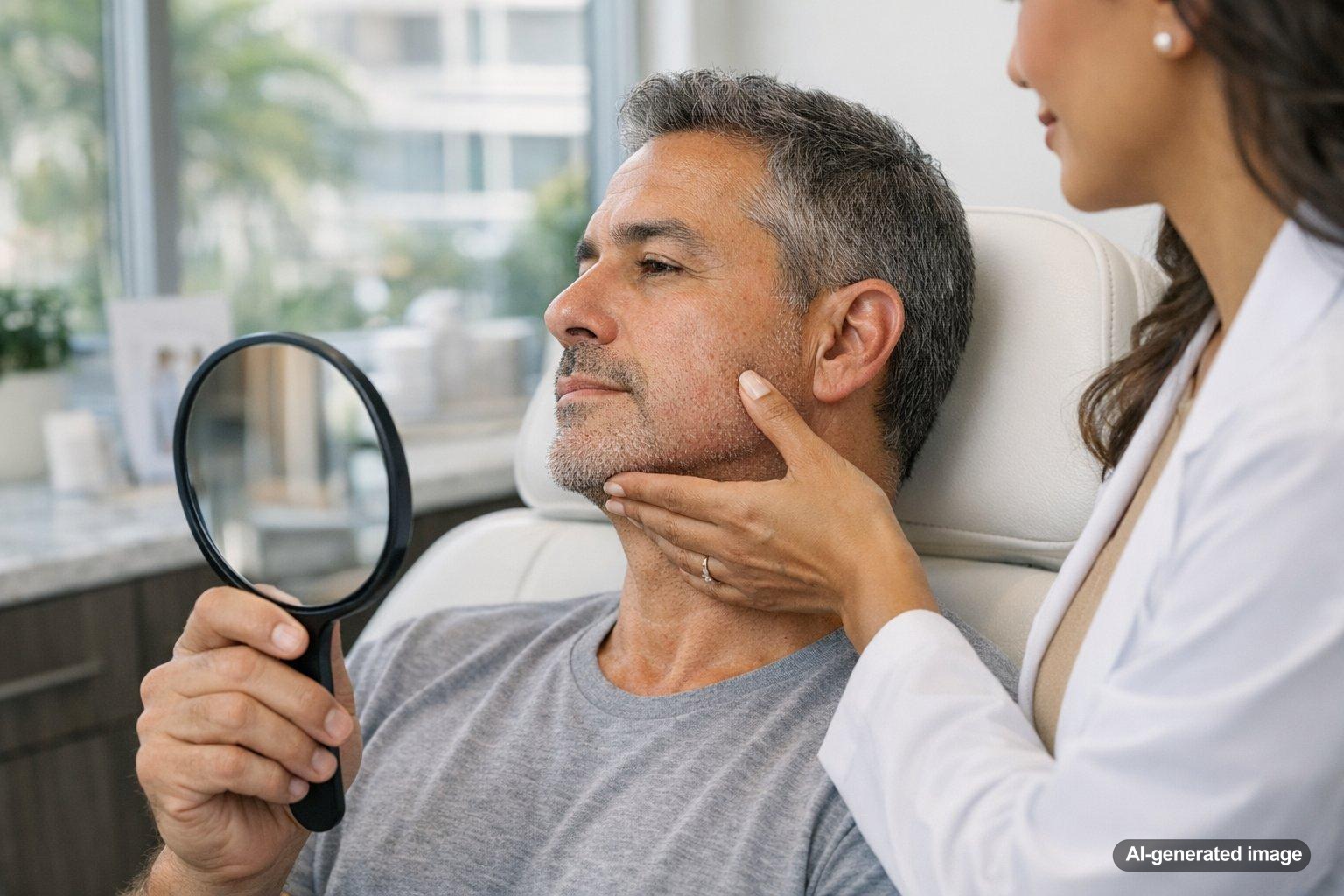
Men’s acne can be frustrating because it often sits at the intersection of shaving, sweat, oil, friction, and a skincare routine that may be too harsh or too minimal. Breakouts along the beard area, jawline, neck, chest, back, or forehead may be influenced by daily habits, workout routines, grooming products, or irritation from razors.
The good news is that small, steady changes can often support clearer-looking skin and a calmer skin barrier. A dermatologist can also help sort out whether bumps are more consistent with acne, razor irritation, ingrown hairs, follicle irritation, or another concern.
Quick answer
- Shaving can irritate acne-prone skin, especially if the blade is dull, pressure is heavy, or the skin is not prepared first.
- Sweat itself is not the only issue; trapped sweat, oil, friction, and delayed cleansing can contribute to clogged-looking pores.
- A simple routine with a gentle cleanser, non-comedogenic moisturizer, and daily sunscreen may help support the skin barrier.
- For persistent, painful, scarring, or widespread breakouts, a dermatologist can evaluate the skin and discuss appropriate options.
What men’s acne can look like
Acne-prone skin may show up as clogged pores, blackheads, whiteheads, red bumps, tender deeper bumps, or breakouts that seem to return in the same areas. In men, common trigger zones include the beard area, jawline, neck, shoulders, chest, and back, especially when shaving, sweating, tight collars, helmets, hats, or gym gear are part of the routine.
Not every bump after shaving is acne. Razor bumps and ingrown hairs can resemble breakouts, and irritation can make the skin feel sensitive or inflamed. If the pattern is confusing, it is worth getting checked so the plan matches what is actually happening.
Shaving tips for acne-prone skin
- Wash the face with a gentle cleanser before shaving to reduce surface oil and buildup.
- Use warm water and a cushiony shave gel or cream so the razor glides more comfortably.
- Shave with light pressure rather than pressing the blade into the skin.
- Consider shaving in the direction of hair growth if close shaving seems to worsen irritation.
- Replace blades regularly, since dull blades can tug and increase irritation.
- Rinse well after shaving and apply a lightweight, non-comedogenic moisturizer.
- Avoid alcohol-heavy aftershaves if they leave the skin stinging, tight, or overly dry.
Sweat, workouts, and breakouts
For active men, sweat can mix with oil, sunscreen, hair products, and friction from clothing or equipment. That combination may be associated with clogged-looking pores or irritated bumps, particularly on the forehead, chest, back, shoulders, and neck.
- Cleanse after workouts when practical, especially after heavy sweating.
- Change out of sweaty shirts, compression tops, and hats as soon as you can.
- Choose breathable workout fabrics when possible.
- Wash towels, hats, pillowcases, and gym gear regularly.
- Use a gentle body wash rather than scrubbing aggressively, which can aggravate the skin barrier.
A simple skincare routine for men with acne-prone skin
A routine does not need to be complicated to be consistent. Start with the basics and adjust slowly so you can tell what your skin tolerates.
- Morning: Use a gentle cleanser, a lightweight moisturizer, and a broad-spectrum sunscreen labeled for the face.
- After sweating: Rinse or cleanse when possible, then moisturize if the skin feels dry or tight.
- Evening: Cleanse again to remove sunscreen, sweat, oil, and product residue.
- Product choices: Look for terms like non-comedogenic, oil-free, or fragrance-free if your skin is easily irritated.
- Go slowly: Introduce one new product at a time so you can notice whether it helps or irritates.
Common acne triggers to watch
- Heavy beard oils, pomades, or styling products that migrate onto the face or forehead.
- Repeated friction from helmets, collars, chin straps, masks, or athletic gear.
- Over-cleansing, harsh scrubs, or drying products that leave the skin tight.
- Skipping moisturizer because the skin feels oily, which may leave the barrier more reactive.
- Not washing after heavy sweating or leaving sweaty clothing on for long periods.
- Using a razor blade too long or shaving too closely when the skin is already irritated.
Professional options
If acne is not improving with careful home care, a dermatologist can evaluate the pattern, severity, skin type, shaving habits, and any history of sensitivity or scarring. Common options may include prescription topical medications, oral medications in selected cases, or in-office treatments that support acne-prone skin. The right approach depends on the individual and should be guided by a clinician.
For skincare support, an aesthetician may help with product selection, gentle maintenance facials, and barrier-friendly routines. For painful, deeper, scarring, or persistent acne, dermatologist evaluation is the safer next step.
When to see a dermatologist
- Breakouts are painful, deep, or leaving marks or scars.
- Acne is spreading to the chest, back, shoulders, or neck.
- Shaving bumps are frequent, tender, or hard to distinguish from acne.
- Over-the-counter products keep causing burning, peeling, or irritation.
- Breakouts are affecting confidence or daily comfort.
- You are unsure whether the bumps are acne, ingrown hairs, follicle irritation, or something else.
FAQ
Can shaving make acne worse?
Shaving may irritate acne-prone skin, especially with heavy pressure, dull blades, or shaving over inflamed bumps. A gentler technique and a moisturizing, non-irritating routine may help support calmer skin.
Should men with acne moisturize?
Yes, many acne-prone skin types still benefit from moisturizer. A lightweight, non-comedogenic moisturizer can help support the skin barrier, especially if acne products or shaving leave the skin dry.
Is sweat causing my acne?
Sweat alone is not always the full story. Breakouts after workouts may be related to sweat mixing with oil, friction, sunscreen, hair products, or delayed cleansing.
Are razor bumps the same as acne?
Not always. Razor bumps and ingrown hairs can look similar to acne, but the causes and treatment approach may differ. A dermatologist can evaluate the pattern if you are unsure.
What should I avoid if my skin breaks out after shaving?
Consider avoiding dry shaving, dull blades, aggressive scrubbing, alcohol-heavy aftershaves, and heavy beard products that seem to clog or irritate the skin.
Ready to get help?
Schedule an appointment or send a message and our team will get back to you.
Prefer to call? 954-666-3736
Disclaimer
This article is for educational purposes and is not medical advice. For diagnosis and personalized treatment, please book an appointment with a board-certified dermatologist.
