

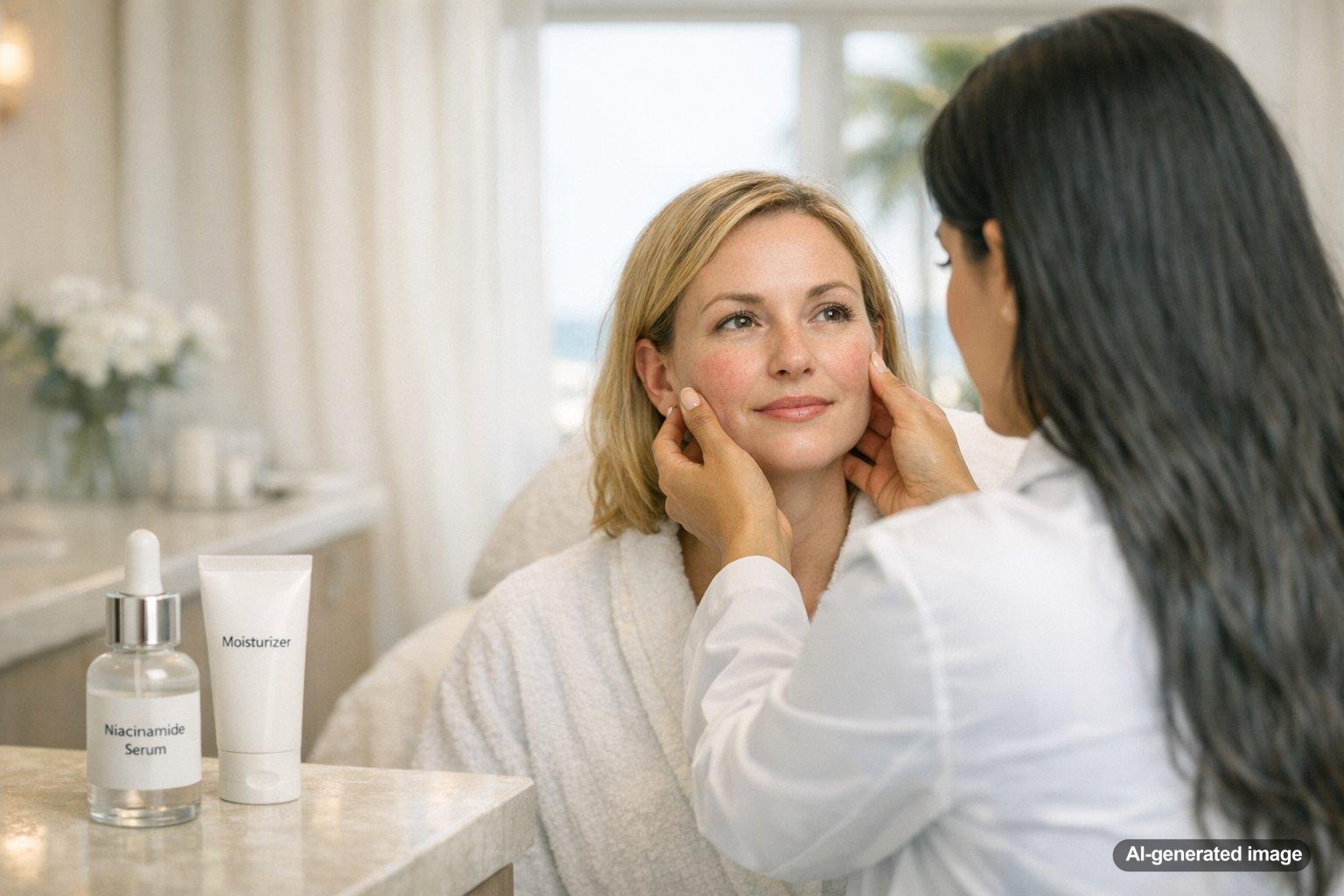
Niacinamide has become a common ingredient in skincare for people who notice redness, sensitivity, or an uneven-looking tone. It is not a quick fix, and it is not a substitute for a dermatology evaluation, but it may be a helpful part of a gentle routine when used thoughtfully.
For redness-prone skin, the goal is usually to support the skin barrier, reduce avoidable irritation, and keep the routine simple enough that the skin has a chance to feel more balanced. Niacinamide can fit into that approach for many people, especially when paired with sunscreen, a mild cleanser, and a well-chosen moisturizer.
Quick answer
- Niacinamide is a form of vitamin B3 used in many serums, moisturizers, and creams.
- It may help support the skin barrier, which can be useful for skin that looks easily flushed or reactive.
- Start slowly, especially if your skin is sensitive or you already use active ingredients.
- Redness can have many causes, so persistent, worsening, painful, or one-sided redness should be evaluated by a dermatologist.
- Daily sunscreen matters, because sun exposure can make redness-prone skin look more noticeable.
What it is
Niacinamide is a skincare ingredient related to vitamin B3. In topical products, it is often used to support barrier function, improve the look of uneven tone, and help skin appear calmer over time. It is found in many leave-on formulas, including lightweight serums and moisturizers.
For people focused on redness, niacinamide is usually not the only step that matters. A simple routine with a gentle cleanser, moisturizer, and broad-spectrum sunscreen can be just as important as any single active ingredient. The best routine is often the one your skin can tolerate consistently.
Common causes or triggers
Facial redness can happen for many reasons, and not all redness responds to the same routine. Common contributors can include:
- A weakened or irritated skin barrier
- Overuse of exfoliating acids, retinoids, scrubs, or harsh cleansers
- Sun exposure or heat
- Alcohol, spicy foods, hot beverages, or temperature changes in some people
- Fragrance or other irritating ingredients in skincare
- Underlying skin conditions that need a dermatology evaluation
What you can do at home
If you want to try niacinamide for redness-prone skin, keep the rest of your routine calm and steady. Choose one niacinamide product rather than layering several formulas that contain the same ingredient. Apply it as directed on the product label, and consider starting a few times per week before increasing use if your skin is comfortable.
- Use a gentle, non-scrubbing cleanser.
- Apply a moisturizer that supports the skin barrier.
- Wear broad-spectrum sunscreen every morning.
- Avoid adding multiple new active ingredients at once.
- Pause or simplify your routine if stinging, burning, peeling, or new irritation appears.
Higher-strength formulas are not always better for sensitive skin. Some people do well with modest percentages in a moisturizer or serum, while others may need to avoid certain formulas if they cause stinging or flushing. Patch testing a small area first can be a practical way to check tolerability.
Professional options
If redness is persistent, recurring, or difficult to calm, a dermatologist can evaluate what may be contributing to it. Professional options may include prescription topical medications, a review of your skincare routine, treatment for a specific skin condition, or in-office procedures when appropriate.
For some types of facial redness or visible vessels, laser-based treatment may be discussed during a consultation. At Waverly DermSpa, we offer Excel V+ and can help you understand whether it may be appropriate.
When to see a dermatologist
It is worth scheduling a dermatology visit if redness is new, worsening, painful, swollen, crusting, one-sided, associated with eye irritation, or not improving despite a gentle routine. You should also seek care if redness appears after a new medication or procedure, or if you are unsure whether your symptoms are related to irritation, rosacea, acne, an allergy, or another condition.
A dermatologist can help separate routine sensitivity from skin changes that may need medical treatment. That guidance can make your skincare plan more targeted and less frustrating.
FAQ
Can niacinamide help redness?
Niacinamide may help some people with redness-prone skin by supporting the skin barrier and improving the look of uneven tone. Results vary, and redness from an underlying condition may need professional evaluation.
Can niacinamide irritate sensitive skin?
It can, depending on the formula and the person. If a product stings, burns, or makes your skin look more irritated, stop using it and simplify your routine. A dermatologist can help if irritation continues.
Should I use niacinamide with retinol or acids?
Some people tolerate that combination, but redness-prone skin can become irritated when too many active ingredients are layered together. It is often better to introduce one active at a time and keep the rest of the routine gentle.
Is niacinamide enough for rosacea-like redness?
It may be supportive for some routines, but it is not a diagnosis or treatment plan. If you suspect rosacea or have persistent flushing, visible vessels, bumps, or eye symptoms, a dermatologist can evaluate your skin and discuss appropriate options.
How long should I try it?
There is no guaranteed timeline. Many skincare changes take consistent use and depend on your skin’s tolerance, the product formula, and the cause of redness. If redness is worsening or uncomfortable, do not wait to seek care.
Ready to get help?
Schedule an appointment or send a message and our team will get back to you.
Prefer to call? 954-666-3736
Disclaimer
This article is for educational purposes and is not medical advice. For diagnosis and personalized treatment, please book an appointment with a board-certified dermatologist.
