

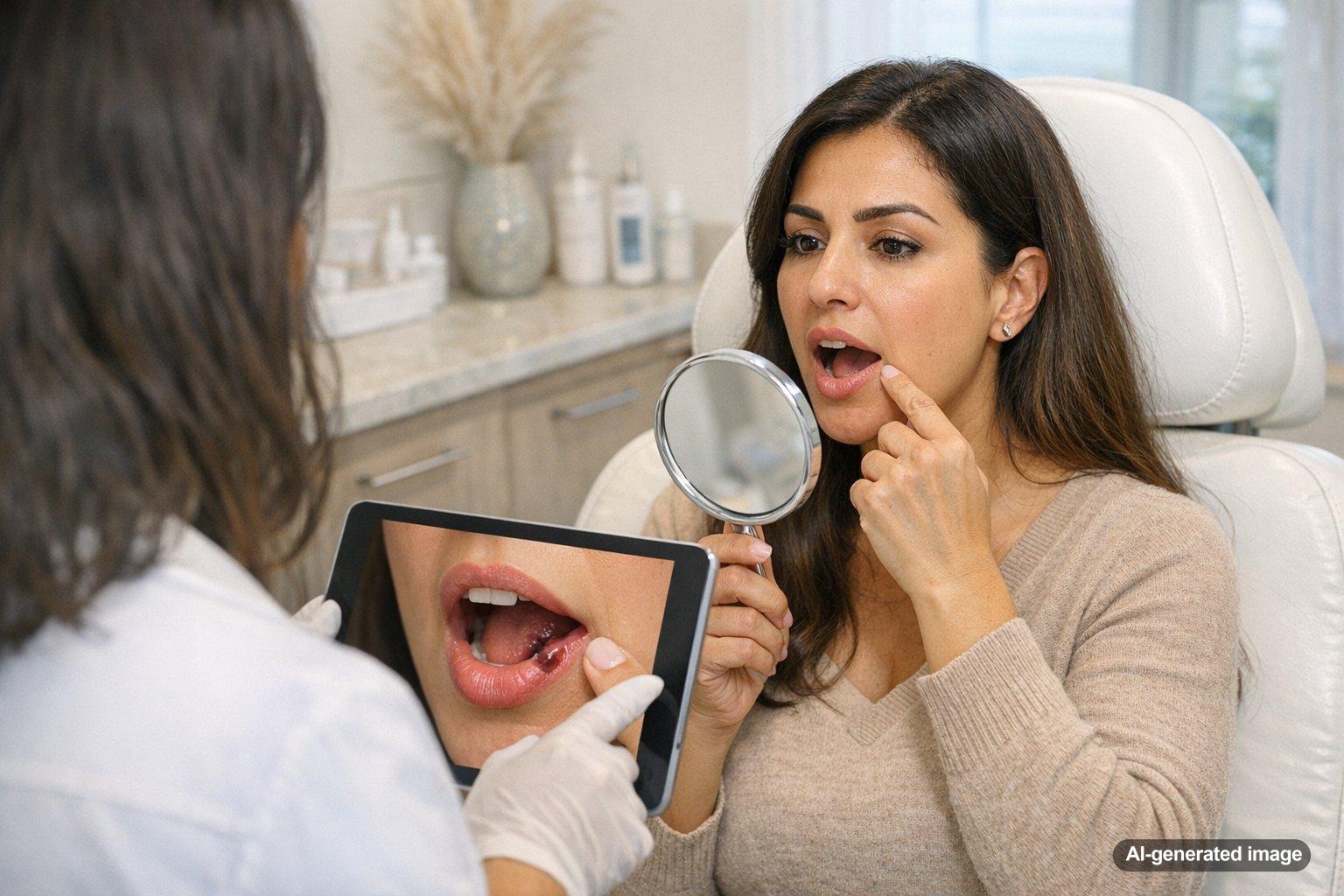
Finding a dark red or purple blister inside your mouth can feel unsettling, especially if it appears suddenly. In many cases, a blood blister in the mouth is linked to minor trauma, such as accidentally biting the cheek, eating something sharp or hot, or irritation from dental appliances. Sometimes, though, recurring or unexplained blisters can be associated with medication effects, inflammatory conditions, bleeding tendencies, or other concerns that deserve professional evaluation.
The most helpful first step is to look at the pattern: where it is, whether it hurts, how often it happens, and whether you have other symptoms. A dermatologist can evaluate oral lesions, help distinguish a simple irritation from something that needs care, and guide you on next steps.
Quick answer
- Blood blisters in the mouth often happen after minor injury, such as cheek biting or irritation from a sharp food edge.
- They may also be associated with a condition called angina bullosa hemorrhagica, where tense, blood-filled blisters develop in the mouth.
- Some medications, oral inflammation, immune-related conditions, or bleeding concerns may play a role in certain cases.
- A blister that is recurring, enlarging, very painful, slow to heal, or paired with bleeding elsewhere should be checked.
- Do not pop or pick at the blister, as this may increase irritation or infection risk.
What is a blood blister in the mouth?
A blood blister is a small pocket of blood under the surface tissue. In the mouth, it can look dark red, purple, blue-black, or almost bruised. It may be raised, smooth, and tender, or it may burst and leave a sore area behind.
One possible explanation is angina bullosa hemorrhagica, a benign condition described as sudden blood-filled blisters that form in the mouth. This is only one possibility, not a diagnosis. Similar-looking spots can come from irritation, ulcers, infection, immune-related blistering conditions, medication effects, or less common causes, so persistent or unusual changes should be evaluated.
Common causes or triggers
- Accidental biting: Biting the cheek, lip, or side of the tongue can injure small blood vessels and create a blister-like bruise.
- Sharp, crunchy, or hot foods: Chips, crusty bread, hard candy, or very hot foods may irritate delicate oral tissue.
- Dental appliances: Braces, aligners, dentures, night guards, or a rough tooth edge may rub the same spot repeatedly.
- Dental work or oral procedures: Local pressure or minor tissue trauma can sometimes lead to a temporary blister or sore.
- Medication-related factors: Blood thinners and certain other medications may make bruising or bleeding more noticeable for some people.
- Inflammatory or immune-related conditions: Some oral blistering disorders can involve recurring mouth blisters or erosions.
- Infections or mouth sores: Certain infections and oral conditions can cause sores or blisters that may be confused with blood blisters.
- Bleeding concerns: Easy bruising, frequent nosebleeds, or bleeding gums along with mouth blisters should be discussed with a clinician.
What you can do at home
For a small, mild blister that seems clearly linked to a bite or irritation, gentle care is usually best while you monitor it. Avoid popping it, picking at it, or using harsh mouth rinses. Choose softer foods for a short period, avoid spicy or acidic foods if they sting, and keep your mouth clean with gentle brushing.
If a dental appliance, sharp tooth edge, or new retainer seems to be rubbing the area, contact your dentist or orthodontist for guidance. If you take blood-thinning medication, do not stop or change it on your own. Your prescribing clinician can help you understand whether it may be relevant.
Professional options
A dermatologist may examine the mouth, review your health history and medications, and ask whether the blisters are isolated or recurring. Depending on the appearance and pattern, common next steps may include monitoring, addressing a friction source, coordinating with a dentist, considering lab work, or referring for further evaluation if an immune-related, infectious, or other medical cause is suspected.
If the lesion has an unusual appearance, does not heal as expected, or keeps returning in the same area, your clinician may recommend additional evaluation. The goal is not to overreact, but to avoid missing a condition that needs targeted care.
When to see a dermatologist
It is worth booking an appointment if you are unsure what you are seeing or if the blister is not clearly explained by a simple injury. Seek prompt medical attention if you notice any of the following:
- A blister or sore that does not improve or keeps returning
- Rapidly enlarging swelling, significant pain, fever, or difficulty swallowing
- Bleeding that seems unusual or hard to stop
- Multiple blisters, widespread mouth sores, or sores involving the eyes or genital area
- Easy bruising, frequent nosebleeds, or bleeding gums
- A firm, thickened, white, red, or ulcerated area that persists
- A history of immune suppression, cancer treatment, or a new medication around the time symptoms began
FAQ
Are blood blisters in the mouth dangerous?
Many are related to minor trauma and settle without aggressive care, but not every dark or blood-filled mouth lesion has the same cause. If it is unexplained, recurring, slow to heal, or paired with other symptoms, it should be evaluated.
Should I pop a blood blister in my mouth?
No. Popping it can further irritate the tissue and may raise the chance of infection. Gentle care and observation are safer while you arrange evaluation if needed.
Can stress cause blood blisters in the mouth?
Stress is commonly linked with habits such as cheek biting or teeth clenching, which may contribute to irritation. Stress alone is not the only possible explanation for a blood-filled oral blister.
What if I keep getting them in the same spot?
Recurring blisters in the same area may suggest ongoing friction from a tooth, appliance, or bite pattern, but they can also have other causes. A dermatologist, dentist, or oral specialist can help identify the source.
Can a mouth blood blister be confused with a canker sore?
Yes. A blood blister often starts as a raised, dark, blood-filled spot, while a canker sore is usually an open ulcer with a pale or yellowish center and red border. Once a blister breaks, the area can look more like a sore.
Ready to get help?
Schedule an appointment or send a message and our team will get back to you.
Prefer to call? 954-666-3736
This article is for educational purposes and is not medical advice. For diagnosis and personalized treatment, please book an appointment with a board-certified dermatologist.
Sources & further reading
- DermNet – Angina bullosa haemorrhagica
- Cleveland Clinic – Blood Blister: Symptoms, Causes & Treatment
- MedlinePlus (NIH) – Mouth sores
