

If your scalp feels sore, tight, itchy, or tender when your hair is overdue for a wash, sebum may be part of the story. Sebum is the natural oil made by your skin. It helps protect the scalp, but when oil mixes with sweat, dead skin cells, styling products, and environmental buildup, the scalp can feel irritated and uncomfortable.
The short answer: dirty hair itself does not usually make the scalp hurt. More often, discomfort comes from buildup around hair follicles, oil-related inflammation, traction from heavy or oily hair, scratching, or an underlying scalp condition that becomes more noticeable between washes. A dermatologist can help sort out what is simple buildup and what needs a closer look.
Quick answer
- Sebum is normal, but excess oil and buildup can make the scalp feel tender, itchy, or tight.
- Oil can trap styling residue, sweat, and dead skin cells near follicles, which may contribute to irritation.
- Dandruff or seborrheic dermatitis can be associated with itching, flaking, burning, and greasy scale on the scalp.
- Scalp pimples or folliculitis-like bumps may feel sore, especially if follicles are clogged or inflamed.
- If pain is persistent, severe, one-sided, associated with hair loss, drainage, scabbing, or a rash, it is worth being evaluated.
What sebum does on the scalp
Sebum is produced by sebaceous glands connected to hair follicles. In the right amount, it helps keep the scalp comfortable and supports the skin barrier. The challenge is that sebum is sticky by design. It can hold onto sweat, product residue, pollution, and shed skin cells, especially in warm weather, after workouts, or when wash days are spaced far apart.
For some people, that buildup creates a sensation of pressure or soreness at the roots. For others, the main feeling is itch, burning, flaking, or tenderness when moving the hair. The scalp has many nerves and blood vessels, so even mild inflammation around follicles can feel surprisingly uncomfortable.
Why dirty hair can make the scalp feel sore
Several overlapping factors may explain why the scalp feels worse when hair is oily or unwashed.
- Buildup around follicles: Oil, sweat, dry shampoo, styling creams, hairspray, and dead skin can collect where hair exits the scalp.
- Inflammation: When the scalp becomes irritated, the nerve endings around follicles may feel more sensitive.
- Itching and scratching: Even light scratching can create tenderness, especially if the skin barrier is already irritated.
- Heavier hair at the roots: Oil can make hair feel weighed down. Tight ponytails, buns, clips, or extensions may add traction and make soreness more noticeable.
- Scalp conditions: Dandruff, seborrheic dermatitis, scalp acne, contact irritation, psoriasis, and folliculitis can all overlap with oiliness or buildup.
How sebum, yeast, and flakes may connect
Oily areas of the body, including the scalp, are more prone to certain forms of flaking and irritation. Seborrheic dermatitis, for example, can cause greasy scale, itch, and redness or discoloration on the scalp. It is not a sign of poor hygiene, and it can come and go.
Many people notice that symptoms feel more obvious when the scalp is oily. That does not mean oil is the only cause. It simply means the scalp environment may be more reactive, and a consistent routine may help reduce irritation.
What you can do at home
For mild, occasional discomfort, conservative scalp care is a reasonable place to start.
- Wash often enough to keep the scalp comfortable, especially after sweating or heavy product use.
- Massage shampoo into the scalp rather than only the hair lengths, using fingertips instead of nails.
- Rinse thoroughly so cleanser, conditioner, and styling products do not sit on the scalp.
- Use dry shampoo sparingly if it seems to increase itch, flakes, or tenderness.
- Avoid very tight hairstyles when the scalp already feels sore.
- Consider a fragrance-free or gentle shampoo if your scalp feels easily irritated.
- If flakes or grease are recurring, an over-the-counter dandruff shampoo may help some people, but stop if it worsens irritation.
Professional options
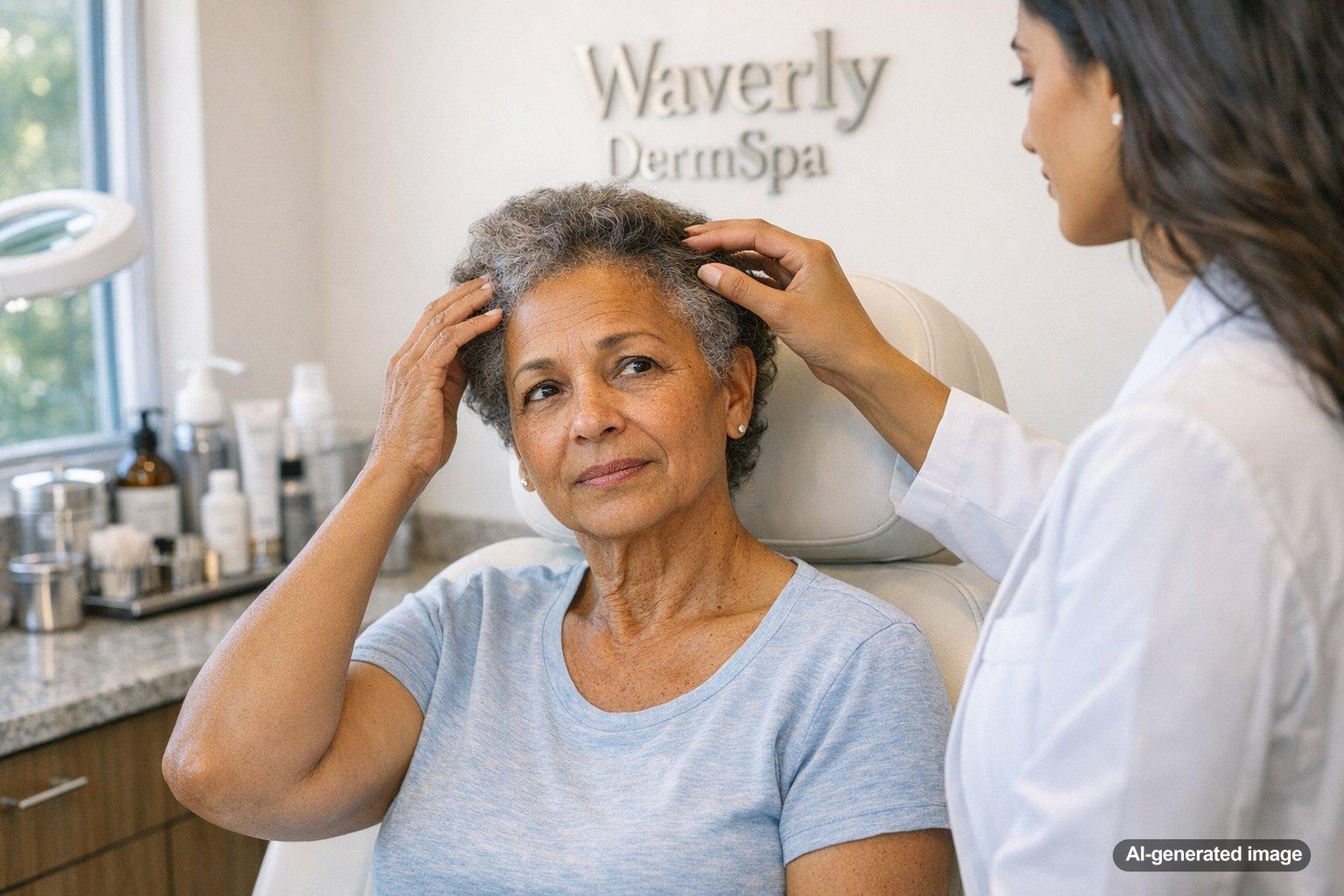
If scalp soreness keeps returning, a dermatologist can examine the scalp, look for inflammation, scale, clogged follicles, hair shedding patterns, or signs of infection, and recommend next steps. Depending on the findings, common options may include medicated shampoos, topical anti-inflammatory treatments, treatments aimed at yeast overgrowth, guidance on product triggers, or further evaluation if hair loss or scarring is a concern.
At Waverly DermSpa, we offer PRFM for Hair Loss and can help you understand whether it may be appropriate.
When to see a dermatologist
It is worth getting checked if scalp pain is intense, persistent, or comes with other changes. Seek professional evaluation if you notice:
- Patchy hair loss, widening areas of shedding, or tenderness with shedding.
- Pus, crusting, bleeding, scabs, or open sores.
- Raised bumps that are painful or keep returning.
- Thick scale, spreading rash, or burning that does not improve with gentle care.
- Pain in one area of the scalp, especially if it is new or worsening.
- Symptoms after a new hair dye, relaxer, keratin treatment, fragrance, or styling product.
FAQ
Can oily hair really make my scalp hurt?
Oily hair can make scalp discomfort more noticeable, but the pain usually comes from irritation, buildup, inflammation, tension, or an underlying scalp issue rather than oil alone.
Does scalp pain mean my hair is falling out?
Not necessarily. Tenderness can happen without hair loss. However, if soreness appears with increased shedding, bald patches, or scaling, a dermatologist can evaluate the cause.
Should I wash my hair every day if my scalp hurts?
Some people feel better with more frequent washing, while others become irritated by overwashing or harsh products. The right schedule depends on your scalp, hair type, activity level, and products used.
Can dry shampoo cause scalp tenderness?
Dry shampoo can be useful occasionally, but frequent use may contribute to residue at the scalp for some people. If tenderness, itch, or flakes increase, try reducing use and washing the scalp more directly.
Is a sore scalp from dirty hair a hygiene problem?
No. Scalp sensitivity is common and can be influenced by oil production, inflammation, styling habits, product residue, and skin conditions. It is not a personal failure.
Ready to get help?
Schedule an appointment or send a message and our team will get back to you.
Prefer to call? 954-666-3736
Disclaimer
This article is for educational purposes and is not medical advice. For diagnosis and personalized treatment, please book an appointment with a board-certified dermatologist.
Sources & further reading
- American Academy of Dermatology (AAD) – Seborrheic dermatitis: Overview
- American Academy of Dermatology (AAD) – Seborrheic dermatitis: Diagnosis and treatment
- Cleveland Clinic – Pimples & Acne on Scalp: Causes, Shampoo & Other Treatments
- MedlinePlus (NIH) – Seborrheic dermatitis
