

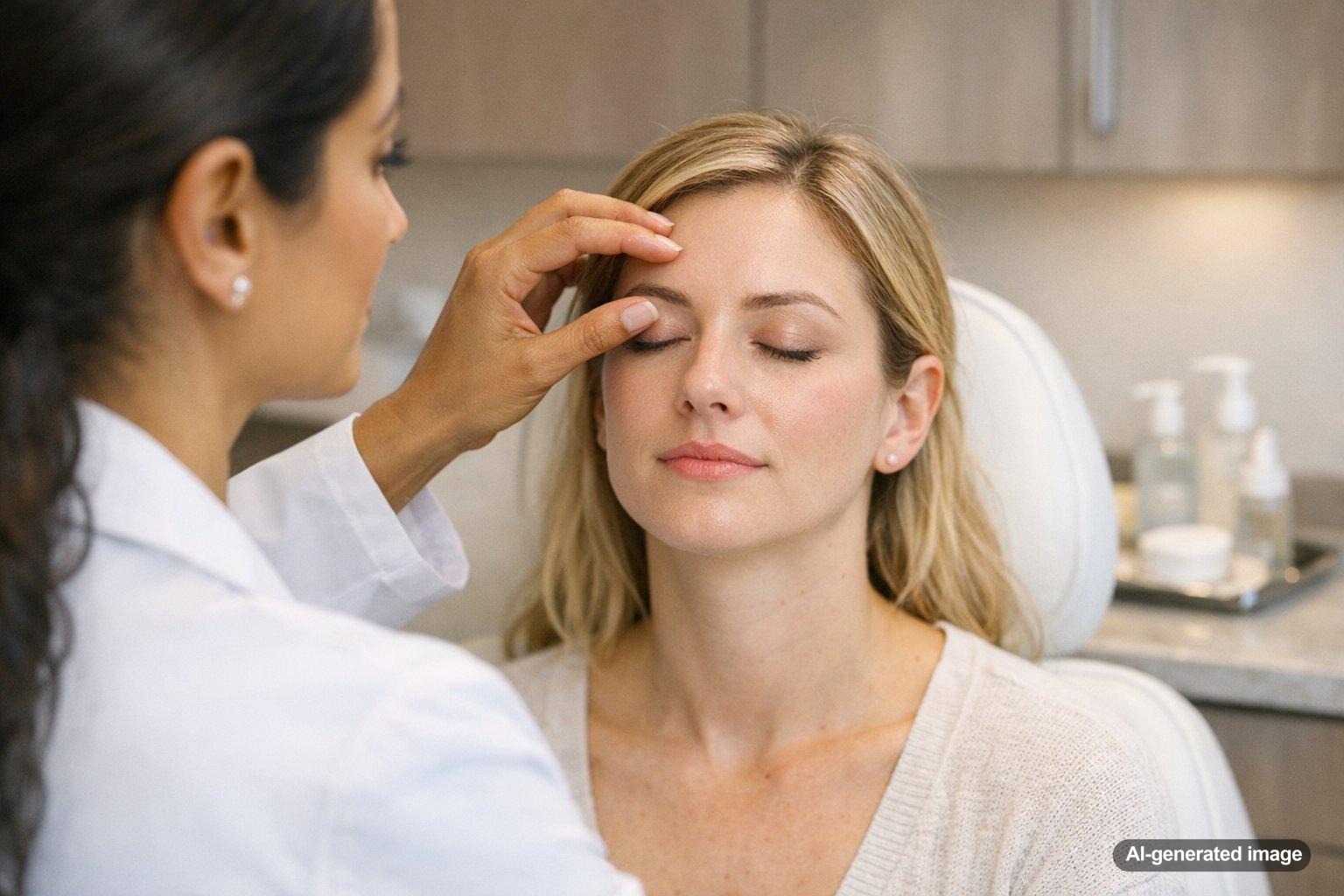
Eyelid dermatitis can be uncomfortable, visible, and surprisingly difficult to trace back to one clear cause. Because eyelid skin is thin and sensitive, a small amount of irritation from skincare, makeup, shampoo, fragrance, eye drops, nail products, or airborne allergens may be enough to trigger redness, dryness, scaling, swelling, or itching.
The safest next step is usually a calm, conservative reset while avoiding anything that could further irritate the eye area. If symptoms are severe, recurring, painful, spreading, or affecting your eyes or vision, a board-certified dermatologist can evaluate what is happening and help you choose appropriate care.
Quick answer
- Eyelid dermatitis is inflammation of the eyelid skin and may be related to irritants, allergies, eczema-prone skin, or other skin conditions.
- Common triggers include cosmetics, sunscreen, facial products, hair products, fragrance, nail polish or gel nails, eye drops, contact lens solutions, metals, pollen, and dust.
- A gentle pause on nonessential products around the eyes may help reduce irritation while you arrange appropriate care.
- Do not use strong active ingredients, essential oils, or over-the-counter steroid creams near the eyes unless a clinician has advised you to do so.
- See a dermatologist if the rash keeps coming back, involves swelling, crusting, pain, discharge, or any change in vision.
What eyelid dermatitis is
Eyelid dermatitis means the skin of the upper eyelid, lower eyelid, or skin around the eyes is inflamed. It can look dry, flaky, red, darker than the surrounding skin, puffy, cracked, or irritated. Some people notice burning or stinging, while others mainly feel itch.
One reason eyelid dermatitis can be confusing is that the trigger does not always touch the eyelid directly. A hair product rinsed down the face, nail polish transferred from the fingers, fragrance in a product, or an ingredient in eye makeup may affect the delicate eyelid area.
Common causes and triggers
Many different exposures can be associated with eyelid dermatitis. Common possibilities include:
- Makeup and makeup removers: Mascara, eyeliner, eyeshadow, concealer, cleansing balms, micellar water, and makeup wipes may contain ingredients that irritate sensitive eyelid skin.
- Skincare products: Retinoids, exfoliating acids, vitamin C serums, fragranced moisturizers, sunscreen, and anti-aging eye creams can be too active or irritating for some people.
- Hair and nail products: Shampoo, conditioner, hair dye, hairspray, nail polish, gel nails and acrylic nail products can transfer to the eyelids through rinsing or touching.
- Eye-related products: Eye drops, contact lens solutions, lash serums, lash glue, and false lashes may play a role for some patients.
- Allergens and irritants: Fragrance, preservatives, metals such as nickel, dust, pollen, smoke, and airborne particles can be triggers.
- Underlying skin tendencies: Atopic dermatitis, seborrheic dermatitis, rosacea, or other inflammatory skin conditions may contribute.
What you can do at home
At-home care should be gentle and low-risk. Consider simplifying your routine for a short period by pausing nonessential products around the eyes, including eye makeup, fragranced products, exfoliating acids, retinoids, lash serums, and new skincare. Use a mild cleanser, avoid scrubbing, and apply a bland, fragrance-free moisturizer that your skin already tolerates.
Cool compresses may help calm the feeling of itch or irritation. Try not to rub the eyes, since rubbing can worsen inflammation and may irritate the eye surface. If you wear contacts and your eyes feel irritated, glasses may be more comfortable until you are evaluated.
Because the eyelids sit so close to the eyes, avoid experimenting with strong actives, essential oils, medicated creams, or steroid creams near the eyelids unless a clinician has specifically recommended them for you.
Professional options
A dermatologist can examine the area, review your skincare and product exposures, and consider whether eyelid dermatitis, allergic contact dermatitis, irritant contact dermatitis, eczema, seborrheic dermatitis, rosacea, infection, or another condition may be involved. Depending on the situation, professional care may include identifying and avoiding triggers, patch testing for allergic contact dermatitis, prescription topical medications appropriate for eyelid skin, or referral to an eye specialist when eye symptoms are present.
The goal is not just to calm the current flare, but to understand what may be setting it off so future episodes are less likely.
When to see a dermatologist
It is worth scheduling an appointment if eyelid symptoms are persistent, recurring, or unclear. Seek prompt medical care if you notice significant swelling, eye pain, drainage, crusting, blisters, spreading redness, fever, light sensitivity, or changes in vision. These symptoms deserve individualized evaluation rather than trial-and-error skincare.
FAQ
Can eyelid dermatitis come from products that never touch my eyelids?
Yes. Triggers can transfer from the hands, hair, nails, or nearby facial skin. Shampoo, nail products, fragrance, and facial skincare are common examples to review with your dermatologist.
Should I stop wearing makeup?
A temporary pause may help reduce irritation while the skin settles and while you look for possible triggers. When reintroducing products, your clinician may recommend doing so slowly so patterns are easier to notice.
Is eyelid dermatitis contagious?
Dermatitis itself is not typically contagious. However, some infections or other eye-area conditions can mimic dermatitis, which is one reason worsening, painful, crusted, draining, or one-sided symptoms should be checked.
Can I use hydrocortisone near my eyes?
Do not use steroid creams near the eyes unless a clinician has advised you to do so. Eyelid skin is delicate, and the eye area requires extra caution with medications.
How can a dermatologist identify the trigger?
Your dermatologist may review your products, timing, exposures, and medical history. If allergic contact dermatitis is suspected, patch testing may be discussed to help identify specific allergens.
Ready to get help?
Schedule an appointment or send a message and our team will get back to you.
Prefer to call? 954-666-3736
Disclaimer: This article is for educational purposes and is not medical advice. For diagnosis and personalized treatment, please book an appointment with a board-certified dermatologist.
Sources & further reading
- DermNet – Eyelid contact dermatitis
- American Academy of Dermatology (AAD) – Adults with eczema should watch for eye problems
- National Eczema Association – Eyelid Eczema
