

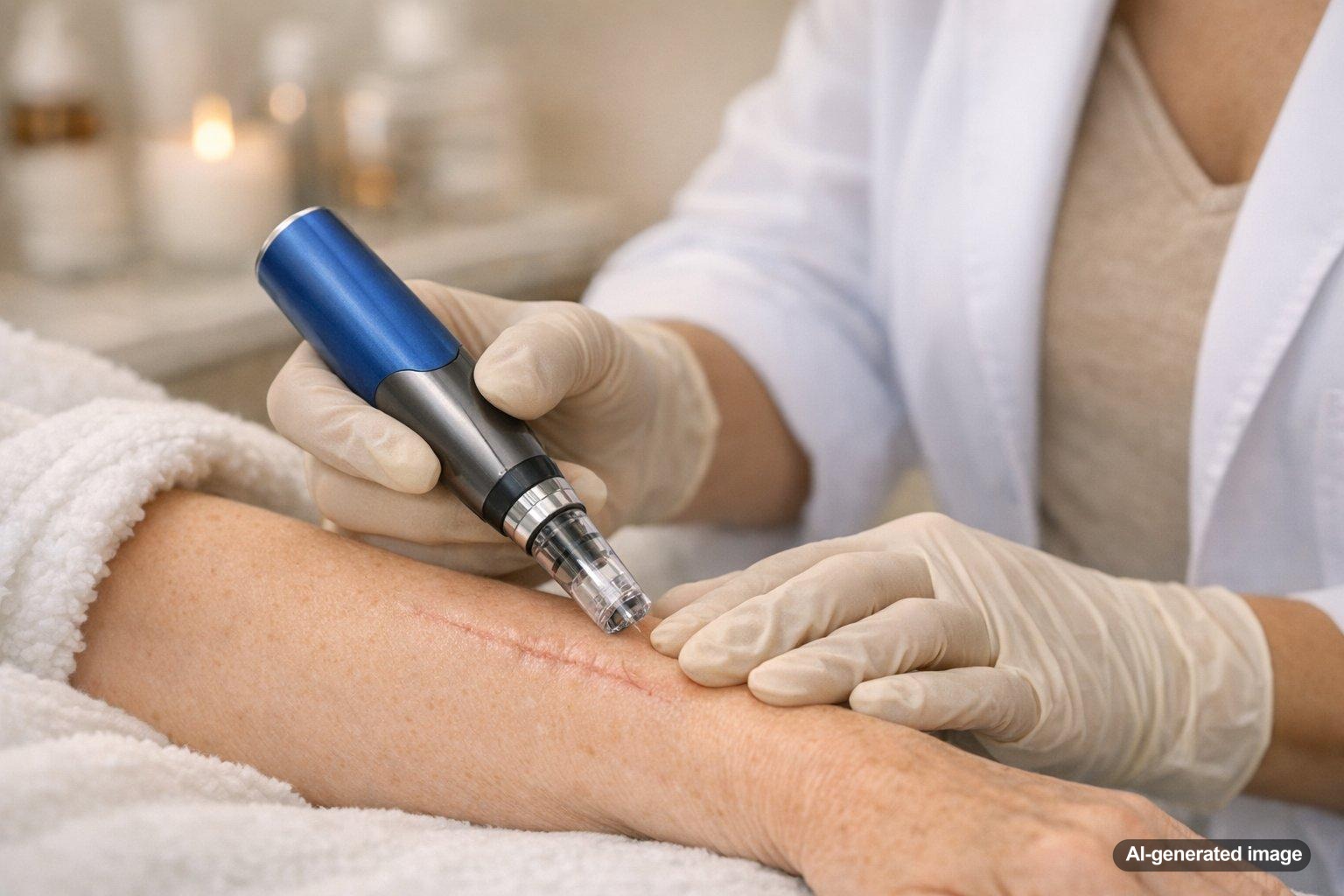
Surgical and trauma scars can tell a story, but that does not always mean you want their texture or visibility to stay exactly the same. Many people look for a treatment that feels measured, modern, and realistic rather than aggressive or overhyped. SkinPen microneedling is one option that may help improve the look and feel of certain scars by encouraging the skin’s natural renewal process.
For the right candidate, this approach can be a thoughtful way to address uneven texture and support smoother-looking skin over time. Results vary from person to person, and the best plan depends on the type of scar, its location, your skin tone, and how your skin heals. A dermatologist can help determine whether microneedling makes sense on its own or as part of a broader scar treatment plan.
Quick answer
- SkinPen microneedling may help improve the appearance of some surgical and trauma scars by supporting collagen remodeling.
- It is often considered for texture concerns, mild contour irregularities, and scars that look healed but still feel noticeable.
- It is not a one-size-fits-all option, and some scars may need a different or combined approach.
- A good consultation focuses on scar type, skin tone, healing history, and realistic expectations.
What it is
SkinPen is a microneedling device that creates controlled micro-injuries in the skin’s surface. In plain English, it uses very fine needles to stimulate a repair response in the treated area. That process may help soften the look of a scar and improve how the skin feels and reflects light. The goal is not to pretend a scar never happened. The goal is to improve visible texture and help the area blend more naturally with the surrounding skin.
This can be especially appealing for people who want a minimally invasive option and a treatment plan that can be customized over time. It is also a treatment that benefits from patience and a careful assessment instead of promises.
Common causes or triggers
- Surgical incisions that healed with visible texture or thickness
- Trauma-related scars from cuts, falls, or accidents
- Changes in scar appearance over time, including uneven tone or surface irregularity
- Tension on a healing wound, which can affect how a scar settles
- Individual healing patterns that make some people more prone to noticeable scarring
What you can do at home
Home care will not replace an in-office evaluation, but it can support healthier-looking skin around a scar. Gentle cleansing, consistent moisturization, and avoiding unnecessary friction can all help protect the skin barrier. Daily sun protection matters too, since UV exposure can make scars look more noticeable and can prolong visible discoloration.
It is also wise to avoid experimenting with harsh scrubs, aggressive acids, or intense at-home devices over a scar unless your clinician has advised it. When the skin is irritated, it can become harder to judge what the scar actually needs.
Professional options
Professional scar treatment is rarely about one universal solution. Common options may include microneedling, laser-based treatments, topical protocols, or a combination approach depending on the scar’s age and appearance. For some people, SkinPen microneedling may be a useful option when the main concern is texture or blending the scar more naturally into the surrounding skin.
A consultation should also look at what kind of scar you have. Raised scars, depressed scars, discolored scars, and scars in high-movement areas may respond differently. Your clinician can help you decide whether microneedling is a reasonable fit or whether another category of treatment may be more appropriate.
When to see a dermatologist
- If a scar is painful, itchy, thickening, or changing in a way that concerns you
- If the area still seems inflamed, tender, or not fully healed
- If you are unsure whether the mark is a scar or something else
- If you have a history of difficult healing or darker post-inflammatory discoloration
- If you want a personalized plan instead of guessing with over-the-counter products
FAQ
Can SkinPen remove a scar completely?
No treatment should be framed that way. Microneedling may help improve the appearance of some scars, but outcomes vary and depend on the scar itself, your skin, and your overall treatment plan.
Is microneedling better for newer or older scars?
That depends on the scar and how it healed. Some mature scars can still be treated, while other scars benefit from timing and a specific sequence of care. A dermatologist can help you decide when treatment makes the most sense.
Does every surgical scar respond the same way?
No. Scar depth, thickness, location, skin tone, and tension on the original wound can all influence how the area responds. That is why a personalized evaluation matters.
Can I combine microneedling with other treatments?
Sometimes, yes. Combination treatment is common in scar care, but the right approach depends on what the scar looks like and how your skin typically heals.
Is there downtime?
Most people expect some short-term redness and sensitivity after microneedling, but the exact recovery experience varies. Your clinician can explain what is typical for your skin and treatment plan.
At Waverly DermSpa, we offer SkinPen and can help you understand whether it may be appropriate.
Ready to get help?
Schedule an appointment or send a message and our team will get back to you.
Prefer to call? 954-666-3736
This article is for educational purposes and is not medical advice. For diagnosis and personalized treatment, please book an appointment with a board-certified dermatologist.
