

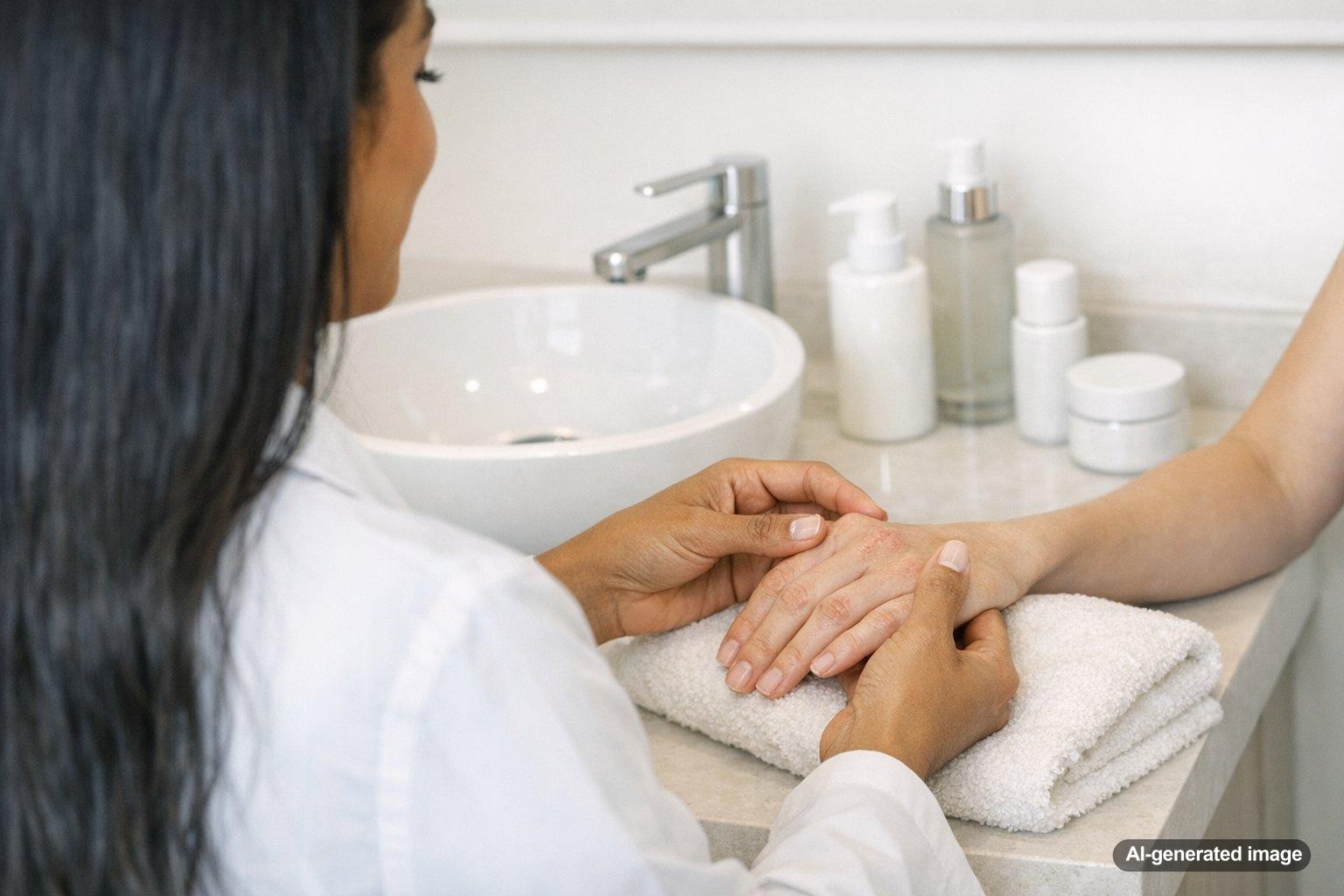
If your hands crack, sting, or even bleed during the winter, you’re not imagining it. Cold outdoor air, low indoor humidity, frequent handwashing, and irritating soaps can all strip away the skin’s protective barrier. Once that barrier is weakened, hands can become rough, inflamed, and painfully fissured.
The short answer is that winter hand cracking is often related to severe dryness, irritation, or hand eczema. Many people improve with simple barrier-focused care, but deep cracks, persistent redness, worsening pain, or signs of infection are worth having evaluated.
Quick answer
- Winter air and indoor heat can dry out the skin and make hands more likely to crack.
- Frequent washing, hand sanitizer, and cleaning products can further weaken the skin barrier.
- Some people are dealing with more than dryness alone, including irritant dermatitis or hand eczema.
- Thick, fragrance-free creams or ointments used often may help protect and soften the skin.
- If cracks are deep, very painful, or not improving, a dermatologist can evaluate the cause and discuss treatment options.
What’s happening to your skin
Your hands depend on a healthy outer barrier to hold in moisture and keep irritants out. In winter, that barrier can become depleted. Skin loses water more easily, becomes rough and tight, and may start to split in areas that bend or rub a lot, especially around the knuckles, fingertips, and sides of the fingers.
Sometimes this is straightforward dry skin. In other cases, the pattern can be associated with hand dermatitis or hand eczema, which may look red, itchy, scaly, or chronically cracked. That’s one reason symptoms that linger or keep returning deserve a closer look.
Common winter triggers
- Cold, dry weather: Lower humidity can pull moisture from the skin.
- Indoor heating: Heated indoor air often makes dryness worse.
- Frequent handwashing: Repeated washing removes protective oils.
- Hand sanitizer and harsh cleansers: Alcohol and fragrance can be irritating, especially on already damaged skin.
- Cleaning products and wet work: Dishwashing, housework, and repeated water exposure can aggravate cracking.
- Underlying sensitive skin or eczema tendency: Some people are simply more prone to barrier breakdown on the hands.
What you can do at home
Simple changes can make a meaningful difference when your hands are dry and sore. Focus on reducing irritation and locking in moisture as consistently as possible.
- Apply a thick, fragrance-free cream or ointment after every handwash and again before bed.
- Choose lukewarm water instead of hot water when washing your hands.
- Use a gentle, non-fragranced cleanser rather than a harsh soap.
- Wear gloves for dishwashing, cleaning, or other wet work.
- Consider cotton gloves over moisturizer at night if your hands are very dry.
- Protect your hands outdoors with gloves when it’s cold or windy.
- Avoid picking at loose skin, which can make fissures deeper and more painful.
If one product seems to burn every time you apply it, that can be a sign your skin is very inflamed or irritated. In that setting, a professional evaluation may be more useful than layering on more products and hoping for the best.
Professional options
If home care is not enough, a dermatologist can help sort out whether this looks more like simple xerosis, irritant contact dermatitis, allergic contact dermatitis, or hand eczema. Treatment depends on the pattern and severity.
Common options include prescription anti-inflammatory topicals, guidance on barrier repair, and a review of possible irritants at home or work. If allergy is a concern, patch testing may sometimes be discussed. When cracks are severe, painful, or recurrent, getting the right diagnosis can make care much more efficient.
When to see a dermatologist
- Your hands are cracking deeply or bleeding often.
- You have redness, swelling, crusting, or drainage that could suggest infection.
- The rash is spreading or becoming more painful.
- Moisturizers and gentle skin care are not helping after a reasonable trial.
- Your work or daily routine exposes your hands to water, chemicals, or frequent irritation.
- You’re not sure whether this is dry skin, eczema, or another skin condition.
FAQ
Can winter alone make hands crack and bleed?
Yes. Winter air and heated indoor environments can dry the skin enough to cause fissures, especially if you’re also washing your hands often or using irritating products.
Does cracked skin always mean eczema?
No. Some people simply have severe dryness, while others may have irritant dermatitis, allergic dermatitis, or hand eczema. The appearance, timing, and triggers all matter.
Should I use lotion or ointment?
For very dry, cracked hands, thicker creams and ointments often work better than lightweight lotions because they help seal in moisture more effectively.
When should I worry about infection?
Increasing pain, swelling, warmth, yellow crusting, pus, or rapidly worsening redness are good reasons to get medical care sooner rather than later.
Ready to get help?
Schedule an appointment or send a message and our team will get back to you.
Prefer to call? 954-666-3736
This article is for educational purposes and is not medical advice. For diagnosis and personalized treatment, please book an appointment with a board-certified dermatologist.
Sources & further reading
- American Academy of Dermatology (AAD) – Dry, scaly, and painful hands could be hand eczema
- DermNet – Hand dermatitis
- MedlinePlus (NIH) – Eczema
