

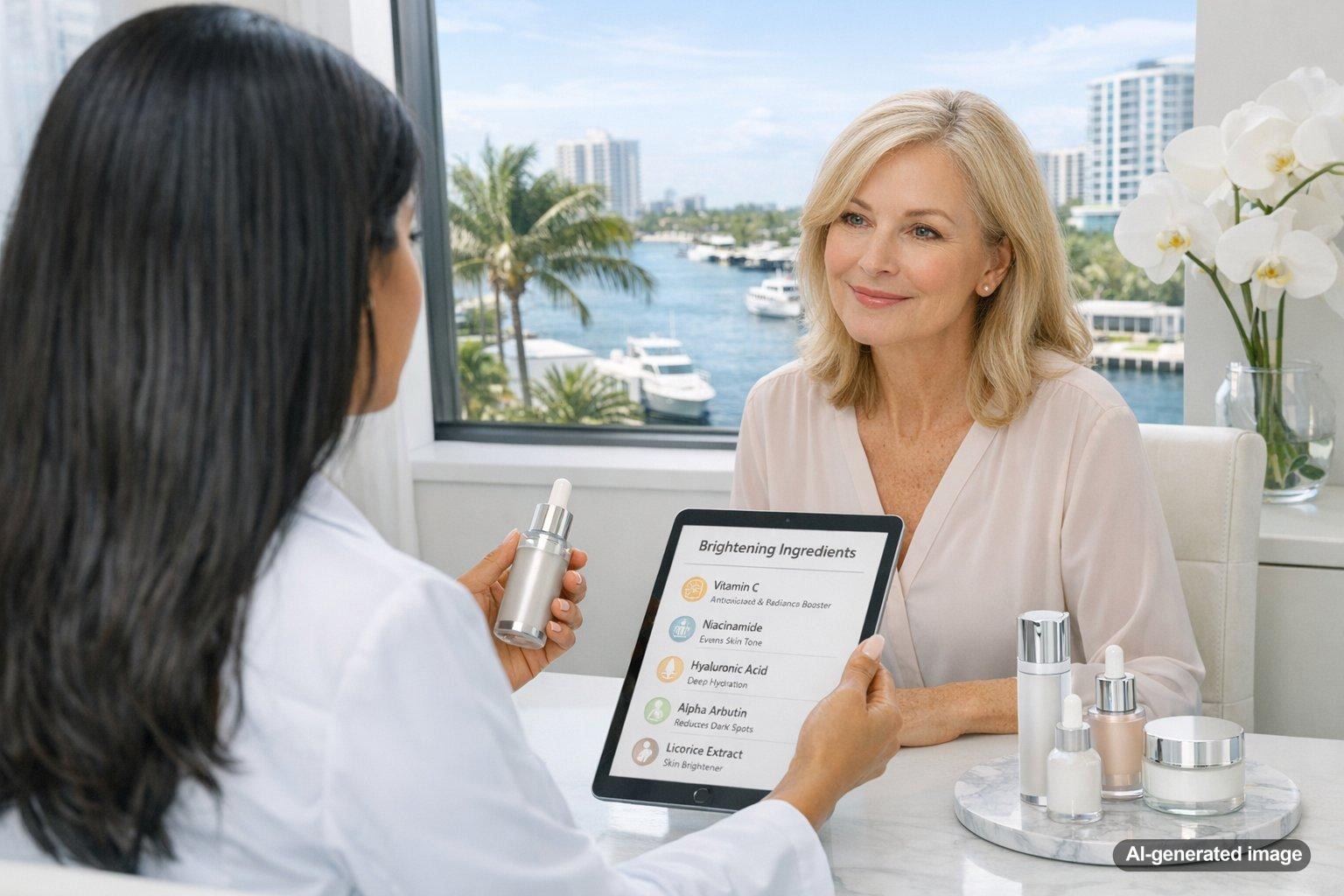
Brightening products are everywhere, and the marketing can make them sound simple: apply a serum, wake up glowing, and watch dark spots fade away. In real life, skin is more nuanced. Uneven tone can come from sun exposure, post-acne marks, irritation, melasma, or a mix of factors, and not every product is built for every cause.
The good news is that some brightening products can be genuinely helpful when they are chosen well and used consistently. The catch is that expectations matter. A product may help support a more even-looking complexion, but it usually is not a shortcut, and it is not a substitute for a thoughtful diagnosis when discoloration keeps returning or seems to worsen.
Quick answer
- Marketing: Many products promise fast, dramatic brightening. Reality: Most over-the-counter products work gradually, if they help at all.
- Marketing: One serum fits everyone. Reality: The cause of discoloration matters, and the wrong routine can make skin more reactive.
- Marketing: Stronger always means better. Reality: Overdoing actives can irritate the skin barrier and make uneven tone look worse.
- Marketing: Brightening is only about one hero ingredient. Reality: Sunscreen, patience, and a supportive routine matter just as much.
Marketing promise vs reality
| Claim | What is more realistic |
|---|---|
| “Removes dark spots fast” | Some products may help gradual fading, but improvement is usually subtle and variable. |
| “Safe for everyone” | Sensitive skin, melasma-prone skin, and post-procedure skin often need a more careful approach. |
| “One product does it all” | Brightening products work best as part of a broader plan that includes daily sun protection and barrier support. |
| “More tingling means more results” | Irritation is not a sign of success. It can leave skin looking more inflamed and uneven. |
What brightening products are actually trying to do
In plain English, brightening products are meant to help skin look more even-toned and less dull. Some target leftover discoloration after breakouts. Some are marketed for sun spots or melasma. Others focus on overall radiance by smoothing texture or reducing the look of surface buildup.
That sounds straightforward, but “brightening” is a broad marketing word, not a diagnosis. Two people can both say they want brighter skin while dealing with very different issues. One may have post-inflammatory marks from acne. Another may have melasma that tends to flare with heat and sun. Another may simply have dryness that makes the complexion look tired. That is why the same product can feel impressive for one person and disappointing for another.
Where marketing often gets ahead of reality
- It blurs the reason for discoloration. Not all dark spots behave the same way, and they do not all respond to the same routine.
- It makes timelines sound universal. Skin turnover, sensitivity, sun exposure, and consistency all affect what someone may notice.
- It downplays irritation. A product that is too aggressive can leave skin red, dry, and more reactive.
- It skips the sunscreen conversation. Brightening without daily sun protection is often an uphill battle.
- It oversells single ingredients. Even good ingredients usually work best when the rest of the routine is sensible and well tolerated.
What can make a brightening routine more realistic
A realistic routine usually starts with restraint, not intensity. A gentle cleanser, moisturizer, and broad-spectrum sunscreen can do more for long-term progress than layering too many strong actives at once. Once the skin barrier feels steady, a well-chosen brightening product may be easier to tolerate and more useful over time.
It also helps to think in terms of support rather than rescue. Brightening products may help reduce the look of uneven tone, but they are rarely magic. Many people do best when they use one targeted product consistently instead of constantly switching between trendy formulas. Patience matters, but so does knowing when a product is clearly not a good match.
What you can do at home
- Keep your routine simple enough that your skin does not stay irritated.
- Use sunscreen every day, even when you are mostly indoors or in the car.
- Add only one new brightening product at a time so it is easier to judge tolerance.
- Do not scrub, pick, or over-exfoliate areas that already look uneven.
- Be especially careful if your skin tends to sting, flush, or react easily.
When professional care may make more sense
If discoloration is stubborn, keeps coming back, or seems to spread, it may be worth getting an expert opinion instead of buying a fourth or fifth serum. A dermatologist can evaluate whether you are dealing with sun-related pigmentation, post-inflammatory change, melasma, irritation, or something else entirely. That distinction matters because the best next step is not always another over-the-counter product.
Professional options can include prescription-strength topical therapy, in-office procedures, or a plan to calm irritation before trying additional treatment. For some patients, skincare support from an aesthetician can also be useful as part of a broader plan, especially when the goal is to maintain skin comfort and support a steady routine without overdoing it. At Waverly DermSpa, we offer Chemical Peels and can help you understand whether it may be appropriate.
When to see a dermatologist
- Your discoloration appeared suddenly or is changing in a way that concerns you.
- You think you may have melasma, especially if over-the-counter products keep disappointing you.
- Your skin is becoming red, burning, peeling, or unusually sensitive from your routine.
- You are dealing with persistent acne marks and are not sure what is helping versus hurting.
- You want a more tailored plan instead of continued trial and error.
FAQ
Are brightening products the same as bleaching products?
Not usually. In modern skincare, “brightening” generally refers to helping skin look more even-toned and radiant, not changing your natural skin color.
Can one serum treat every kind of dark spot?
No. Different causes of discoloration can respond differently, which is one reason results vary so much from person to person.
Does tingling mean the product is working?
Not necessarily. Tingling can simply mean irritation, and irritated skin often becomes harder to manage.
If a product is expensive, is it automatically better?
Price does not guarantee that a formula is the right match for your skin. A simpler routine that you can tolerate may be more useful than a luxury product that leaves you irritated.
What is the most overlooked part of brightening?
Daily sunscreen. Without it, even a well-formulated routine may feel inconsistent or frustrating.
Ready to get help?
Schedule an appointment or send a message and our team will get back to you.
Prefer to call? 954-666-3736
This article is for educational purposes and is not medical advice. For diagnosis and personalized treatment, please book an appointment with a board-certified dermatologist.
