

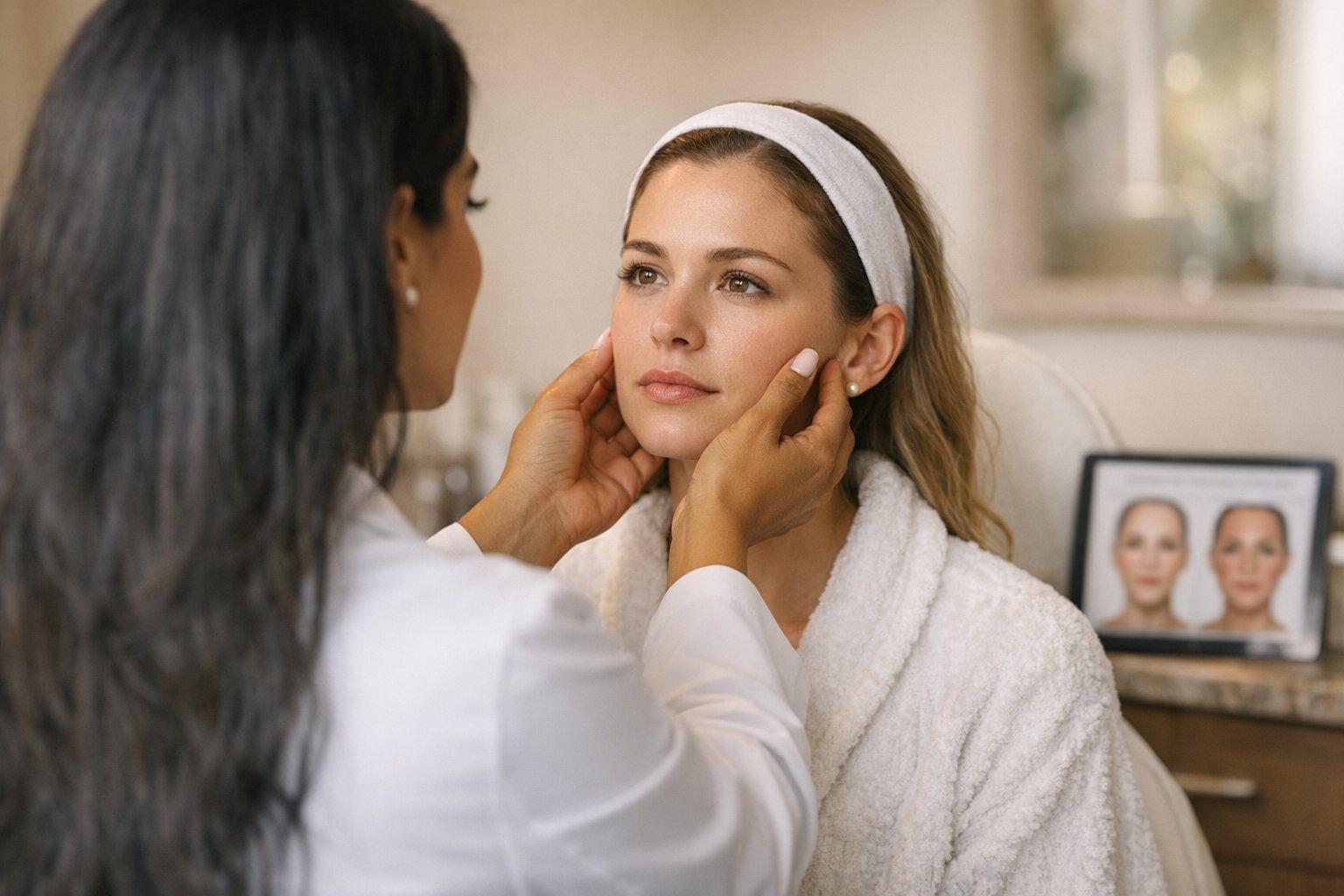
Not every dark spot should be treated the same way. That is especially true when comparing melasma and sun spots. They can look similar at first glance, but they behave differently, respond differently to heat and light, and often need different treatment strategies.
The short version is this: sun spots are often more straightforward to treat with the right laser, while melasma usually calls for a more cautious plan because too much heat can make pigment look worse instead of better. A board-certified dermatologist can help sort out the difference and recommend an approach that fits your skin, your goals, and your tolerance for downtime.
Quick answer
- Sun spots are usually more localized and often respond well to targeted laser treatment.
- Melasma tends to be patchier, more reactive, and more likely to flare with heat, sun exposure, or hormones.
- The “right” laser depends on the type of pigment, your skin tone, and how easily your skin develops post-inflammatory discoloration.
- When melasma is involved, a conservative plan is often safer than aggressively chasing quick clearance.
- Daily sun protection matters either way, because untreated UV exposure can bring pigment right back.
Melasma vs. sun spots: what is the difference?
Sun spots, sometimes called age spots or solar lentigines, are usually small, defined areas of extra pigment that develop over time from cumulative sun exposure. They often show up on the cheeks, forehead, chest, shoulders, and hands.
Melasma usually appears as broader, more diffuse patches of discoloration, often on the cheeks, upper lip, forehead, or jawline. It can be associated with sun exposure, heat, hormones, and genetics. Unlike a single spot that sits in one place, melasma often behaves more like a pattern.
That difference matters because lasers that are helpful for a sharply defined sun spot may be too stimulating for melasma-prone skin. In other words, the treatment is not just about what the pigment looks like. It is about how that pigment behaves.
A side-by-side comparison
| Feature | Melasma | Sun Spots |
|---|---|---|
| Typical appearance | Patchy, symmetrical, diffuse areas | Discrete, well-defined brown spots |
| Common triggers | Sun, heat, hormones, genetic tendency | Long-term sun exposure |
| Laser caution level | Higher caution because heat may worsen pigment | Often more laser-friendly when properly selected |
| Treatment strategy | Usually gradual and combination-based | Often targeted and straightforward |
| Risk of recurrence | Common if triggers are not controlled | Can recur with ongoing sun exposure |
Why laser choice matters so much
People often hear “laser for brown spots” and assume one device works for every form of discoloration. In reality, lasers differ in wavelength, pulse duration, intensity, and how much heat they place into the skin. That matters because pigment disorders are not all created equal.
For sun spots, a dermatologist may consider a pigment-targeting laser or another focused device-based treatment if it fits your skin type and the spots are clearly benign. These treatments are usually aimed at isolated pigment.
For melasma, the plan is often more selective. Some people may be candidates for very conservative laser settings or non-heat-forward options, while others may do better starting with topical care, strict photoprotection, or procedures chosen with extra caution. The goal is not simply to break up color. The goal is to avoid triggering more inflammation and more pigment afterward.
Clues that the darker area may be melasma
- The pigment looks more like a patch than a single spot.
- It appears on both sides of the face in a similar pattern.
- It gets worse after sun, heat, or vacation.
- It has flared during pregnancy or around hormonal changes.
- It improved temporarily before coming back again.
These are not self-diagnosis rules, but they help explain why an in-person exam can be so useful before committing to laser treatment.
Clues that the darker area may be a sun spot
- The pigment is more sharply defined.
- It sits as one spot or a small cluster rather than a broad patch.
- It developed slowly over years of sun exposure.
- It is common on sun-exposed areas like the cheeks, chest, shoulders, or hands.
- It does not seem to wax and wane as much as melasma can.
Even so, not every brown mark is a harmless sun spot, which is another reason evaluation matters before treatment.
What you can do at home before considering treatment
If you are dealing with either melasma or sun-related discoloration, home care still matters. A daily broad-spectrum sunscreen, reapplication when outdoors, and sun-protective habits can make a real difference in helping maintain results and reduce future darkening.
A gentle routine also helps. Over-scrubbing, harsh exfoliation, or cycling through too many active products can leave skin irritated, and irritated skin is more likely to look uneven. If your pigment worsens easily, consistency usually beats intensity.
Professional options beyond laser
Laser is only one tool. Depending on the type of pigmentation and your skin goals, common office-based options may include carefully selected peels, prescription-based plans managed by a dermatologist, or other device treatments designed around your skin tone and sensitivity. The best plan is often a layered one rather than a single “fix.”
At Waverly DermSpa, we offer Clear + Brilliant Touch and can help you understand whether it may be appropriate.
When to see a dermatologist
- The spot is new, changing, irregular, or unlike your other marks.
- The pigment seems to spread quickly or behave unpredictably.
- You have tried over-the-counter products without improvement.
- You want laser treatment but are not sure whether the discoloration is melasma or a sun spot.
- You have a history of sensitive skin or post-inflammatory darkening after procedures.
A dermatologist can evaluate whether the discoloration appears consistent with melasma, sun spots, or something else entirely, and help you avoid treatments that may not fit your skin.
Frequently asked questions
Can melasma be treated with laser?
Sometimes, but it is not always the first or best starting point. Because melasma can be reactive, laser treatment usually needs a thoughtful, conservative approach.
Are sun spots easier to treat than melasma?
In many cases, yes. Sun spots are often more localized and can be more straightforward to target when they have been properly evaluated.
Can one treatment work for both?
Not always. Even if two pigment issues look similar in a mirror, the safest and most effective treatment path may be very different.
Why did my pigmentation get darker after a procedure?
Heat and inflammation can sometimes stimulate more pigment, especially in people who are prone to melasma or post-inflammatory discoloration.
Do I still need sunscreen after treatment?
Yes. Sun protection is one of the most important parts of maintaining progress and helping prevent pigment from returning.
Ready to get help?
Schedule an appointment or send a message and our team will get back to you.
Prefer to call? 954-666-3736
This article is for educational purposes and is not medical advice. For diagnosis and personalized treatment, please book an appointment with a board-certified dermatologist.
