

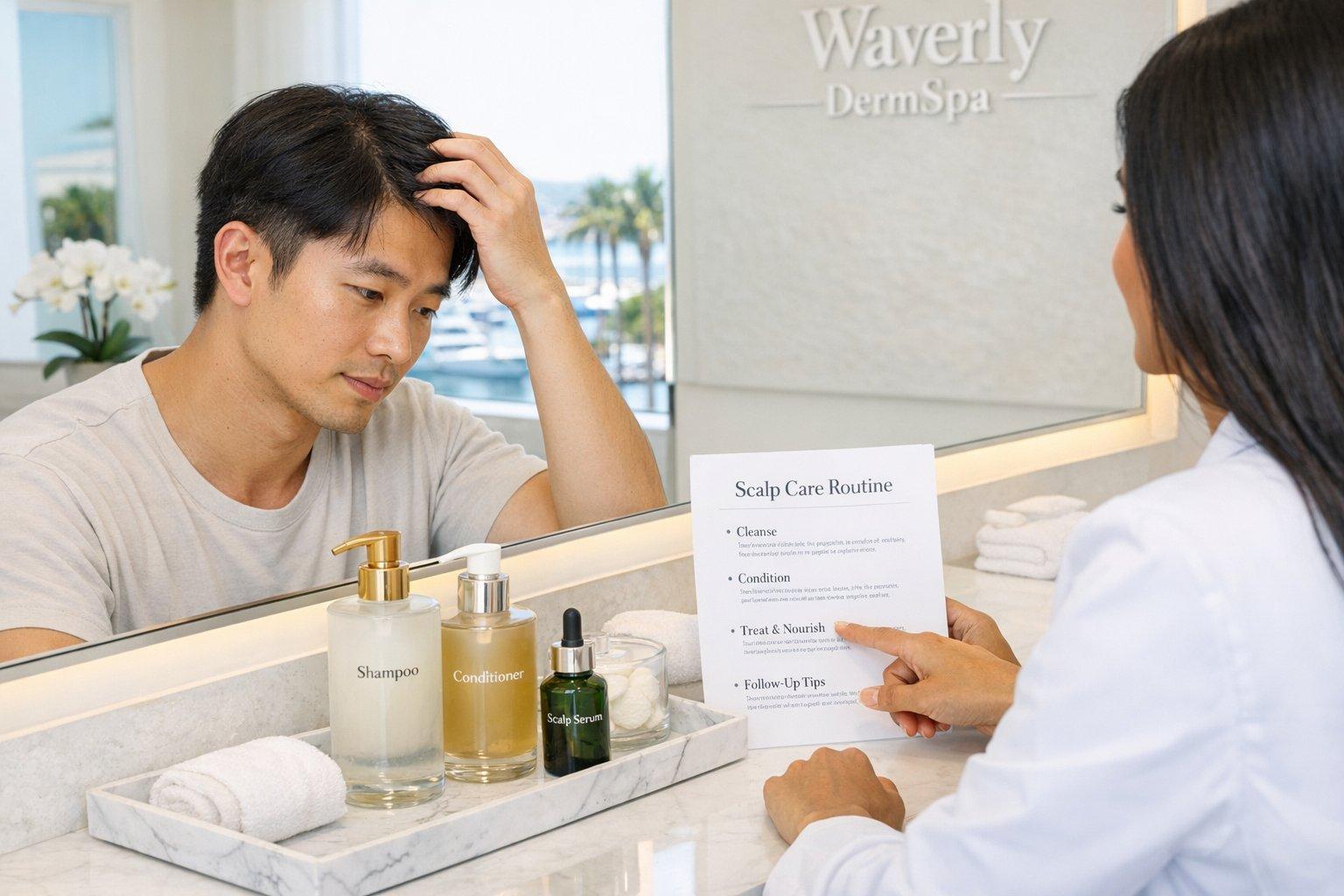
Having an oily scalp and dry ends can feel confusing because your hair seems to need two different routines at once. The roots may look greasy quickly, while the mid-lengths and ends feel rough, fragile, or thirsty.
The good news is that this combination is common, and a few smart adjustments can make your routine feel much more balanced. The goal is usually to cleanse the scalp well without overhandling the lengths, then protect the ends so they stay softer and easier to manage.
Quick answer
- Wash your scalp based on how oily it gets, but keep shampoo focused mainly at the roots.
- Use conditioner from the mid-lengths to the ends, not all over the scalp.
- Choose lightweight products near the roots and richer moisture on the ends.
- Limit heat and rough brushing, which can make dry ends feel even more brittle.
- If flaking, itching, shedding, or irritation are part of the picture, it is worth seeing a dermatologist for an evaluation.
What this pattern usually means
An oily scalp and dry ends often happen when the scalp produces more oil than the rest of the hair shaft can benefit from. Natural oil forms close to the roots, but it does not always travel evenly down the hair, especially if your hair is long, textured, color-treated, or heat-styled often. That can leave the scalp looking shiny while the ends still feel dry.
This does not automatically mean something is wrong. In many cases, it is more about matching the routine to what each part of the hair needs.
Common causes or triggers
- Frequent touching or brushing that moves oil around the crown but stresses the ends
- Overwashing with harsh cleansers that leave lengths drier over time
- Heavy styling products near the scalp that create buildup
- Color processing, chemical services, sun exposure, or heat styling that dry out the ends
- Skipping trims for too long, which can make the ends feel rougher and harder to style
- Using one product approach for the whole head instead of treating scalp and ends differently
What you can do at home
1. Shampoo the scalp, not the whole length
When you wash, focus the shampoo at the scalp where oil and buildup collect most. As you rinse, the cleanser that runs through the rest of the hair is often enough for the lengths. This simple change can help reduce that squeaky, stripped feeling on the ends.
2. Condition only where you need it
Apply conditioner from the mid-lengths to the ends. If your roots get oily fast, keeping conditioner away from the scalp can help hair feel fresher longer while still giving dry areas more slip and softness.
3. Use lighter products near the roots
Rich creams, oils, and heavy leave-ins can weigh down the scalp area quickly. A lighter volumizing or balancing shampoo near the roots may help, while a more nourishing mask or leave-in can be reserved for the ends.
4. Be strategic with wash frequency
Many people with oily scalps do better washing often enough to stay comfortable, rather than waiting so long that buildup becomes harder to manage. At the same time, washing more aggressively does not always improve things. A steady, gentle schedule usually works better than swinging between overwashing and stretching too long.
5. Protect the ends every day
Dry ends tend to respond best to small, consistent habits. Detangle gently, reduce very hot tools when possible, and consider a lightweight leave-in or serum only on the ends. Sleeping on a smoother pillowcase and avoiding tight styles may also help reduce friction.
6. Trim when the ends stop cooperating
If the ends feel crunchy, knot easily, or look frayed no matter what you use, they may simply need a trim. Hair that has split or weathered significantly often looks better with routine maintenance than with more product layered on top.
Professional options
If home changes are not enough, professional guidance can help narrow down what is driving the imbalance. Common options include scalp-focused evaluation, recommendations for better-matched hair and scalp products, and discussion of any underlying irritation or inflammation if symptoms are present. If the dryness is related to damage from coloring or heat, salon-level conditioning support may also be part of the conversation.
When to see a dermatologist
It is a good idea to book an evaluation if the oily scalp comes with itching, burning, tenderness, visible redness, thick flaking, sudden shedding, patchy hair loss, or bumps on the scalp. Those signs can be associated with more than routine oiliness and may need a closer look. A dermatologist can evaluate whether something beyond everyday hair care is contributing.
FAQ
Should I stop conditioning if my scalp is oily?
Usually, no. Conditioner can still be helpful, but it is often best applied only from the mid-lengths to the ends.
Can dry shampoo help?
It may help between washes for some people, especially at the roots. The main thing is not to rely on it so heavily that buildup accumulates on the scalp.
Why do my ends still feel dry even when my scalp is greasy?
Oil starts at the scalp, and it may not travel well through the rest of the hair shaft. Longer hair, textured hair, chemical processing, and heat styling can all make the ends feel drier.
Do I need separate products for my scalp and ends?
Often, yes. Many people do best with a lighter scalp-focused cleanser and a more moisturizing product for the lengths and ends.
Ready to get help?
Schedule an appointment or send a message and our team will get back to you.
Prefer to call? 954-666-3736
This article is for educational purposes and is not medical advice. For diagnosis and personalized treatment, please book an appointment with a board-certified dermatologist.
