

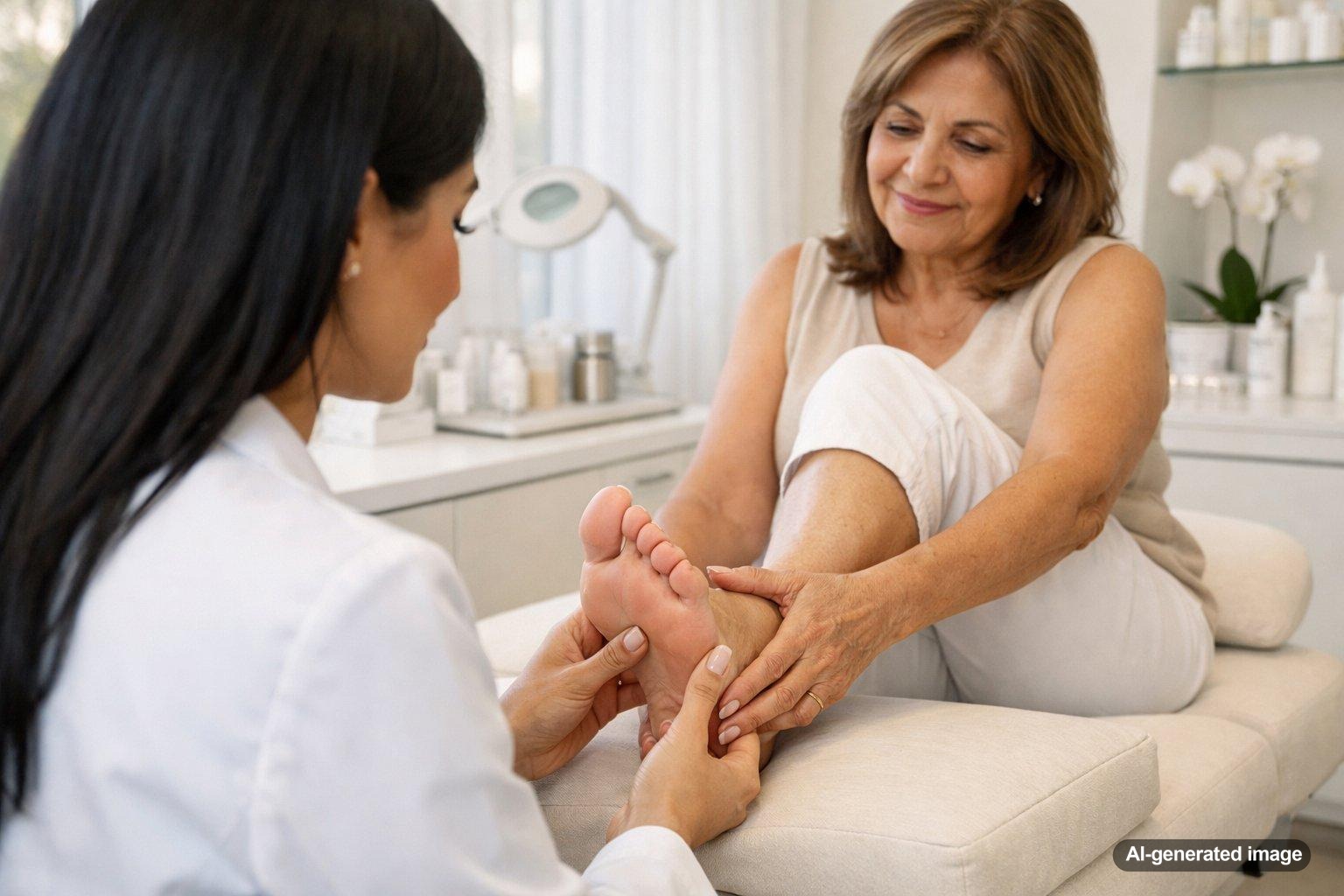
If you notice small, soft bumps along the edge of the heel that become more visible when you stand, pieogenic pedal papules may be one possible explanation. These papules are often related to pressure on the heel and can look surprising, especially when they feel tender after long periods of standing, walking, or exercise.
In many cases, they are harmless, but discomfort can happen when pressure, body weight, repetitive impact, or prolonged standing makes the area more sensitive. Because heel pain can have more than one cause, it is worth having persistent symptoms evaluated rather than guessing.
Quick answer
- Pieogenic pedal papules are small pressure-related bumps that may appear on the heel when standing.
- They can be associated with tiny areas of fat pushing through connective tissue under pressure.
- Some people have no symptoms, while others notice aching, tenderness, or pain with standing or activity.
- Supportive footwear, cushioning, and reducing repetitive pressure may help ease discomfort.
- If the bumps are painful, changing, or hard to identify, a dermatologist can evaluate them and rule out other causes.
What it is
Pieogenic pedal papules are small, soft, skin-colored bumps that usually appear on the sides or back of the heel. They often become easier to see when body weight is placed on the foot and may flatten or become less noticeable when the pressure is removed. In plain English, they are commonly described as tiny fat hernias, meaning small pockets of heel fat can press outward through weakened or stressed connective tissue.
That description sounds dramatic, but it does not automatically mean something dangerous is going on. The main issue is usually whether the papules are painless and purely cosmetic or whether they are causing real discomfort during daily life.
Common causes or triggers
- Long periods of standing on hard surfaces
- Running, jumping, or repeated impact on the heels
- Footwear with limited cushioning or support
- Pressure related to body weight or prolonged time on the feet
- Connective tissue that may be more prone to strain
What you can do at home
Simple pressure-reducing steps may help. Many people start with more supportive shoes, cushioned heel cups, or soft insoles to decrease stress on the heel. Taking breaks from prolonged standing when possible can also make a difference. If high-impact exercise seems to aggravate symptoms, temporarily lowering intensity or rotating to lower-impact activity may be worth considering.
It can also help to pay attention to patterns. For example, discomfort that consistently worsens after long work shifts, travel days, or exercise may point to pressure as a major factor. That kind of detail can be useful to share during an appointment.
Professional options
If home measures are not enough, a dermatologist can examine the area and confirm whether the bumps are likely pieogenic pedal papules or something else. Professional guidance may include confirming the diagnosis, discussing pressure-management strategies, and considering whether another specialist should be involved if the pain seems more structural, orthopedic, or activity-related.
The goal is not just to label the bumps, but to understand why they are painful and what conservative next steps make sense for your situation. Because several heel conditions can overlap in appearance or symptoms, an in-person evaluation is often the clearest path.
When to see a dermatologist
- The bumps are painful enough to affect walking, work, or exercise.
- You are not sure the heel bumps are pieogenic pedal papules.
- The area is changing in color, texture, or size.
- There is one-sided swelling, significant redness, or a new tender spot that feels different from the others.
- Home measures have not helped and the problem keeps recurring.
FAQ
Are pieogenic pedal papules dangerous?
They are often benign, but pain or an uncertain diagnosis deserves evaluation so other causes of heel symptoms are not missed.
Why do they show up more when standing?
Standing increases pressure on the heel, which can make the small bulges more visible and sometimes more uncomfortable.
Can they go away on their own?
Some people notice that the bumps are only visible under pressure, while others continue to see them over time. Symptoms can vary, and improvement is not guaranteed.
Should I stop exercising?
Not necessarily. It may help to reduce activities that clearly trigger heel pain and switch temporarily to lower-impact options while you monitor symptoms.
Ready to get help?
Schedule an appointment or send a message and our team will get back to you.
Prefer to call? 954-666-3736
This article is for educational purposes and is not medical advice. For diagnosis and personalized treatment, please book an appointment with a board-certified dermatologist.
