

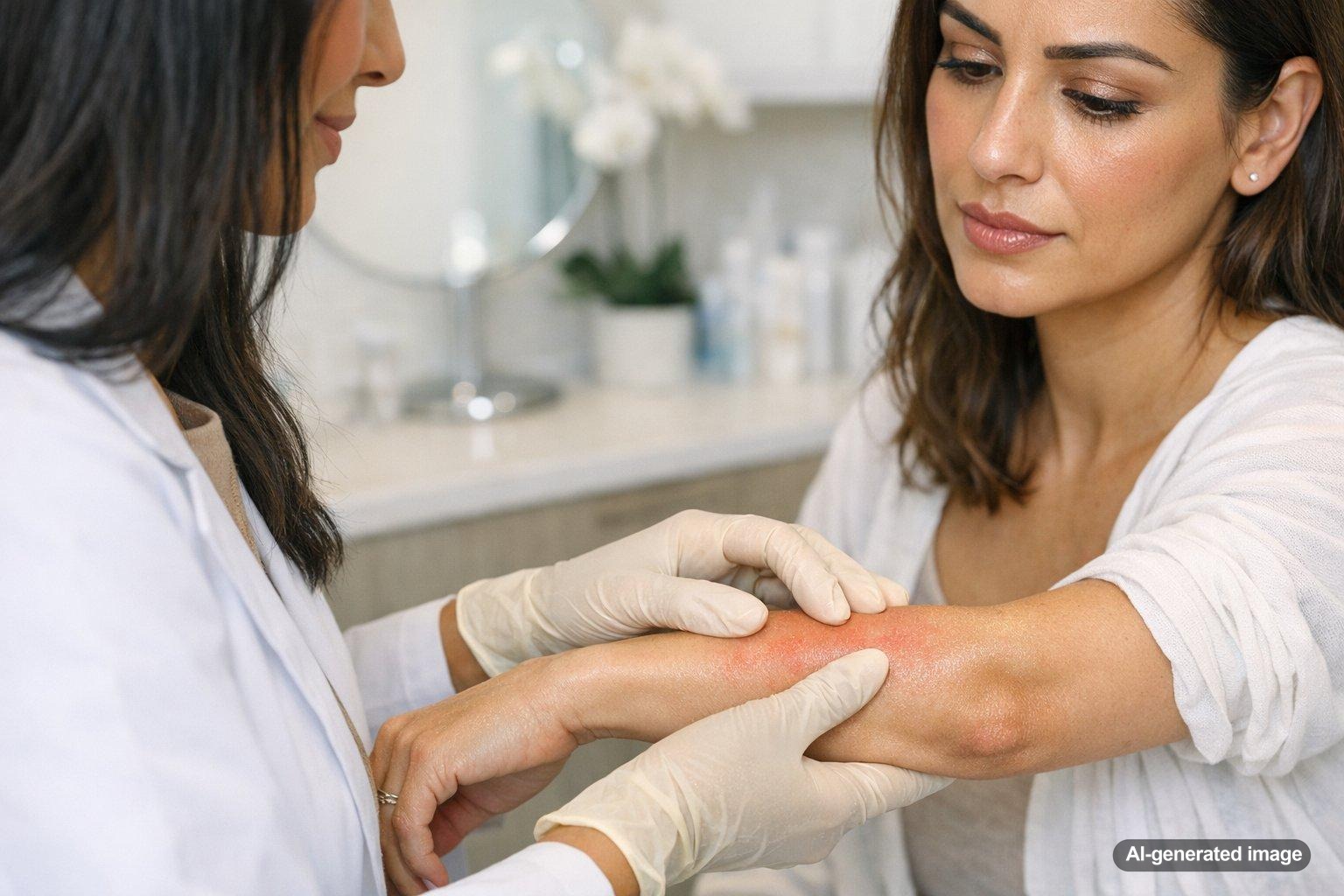
Persistent itching can be surprisingly disruptive. It may keep you up at night, distract you at work, or leave your skin feeling sore from repeated scratching. Sometimes the cause is simple, like very dry skin or a new product that is not agreeing with you. Other times, ongoing itching can be associated with a rash, inflammation, irritation, or a health issue that deserves a closer look.
The important thing to know is that persistent itching is not something you have to just live with. While many cases are related to common skin concerns, an itch that keeps coming back, spreads, or shows up with other changes is worth checking with a board-certified dermatologist.
Quick answer
- Persistent itching is commonly linked to dry skin, eczema, contact irritation, hives, or psoriasis.
- Itching can happen with or without a visible rash.
- Scratching may temporarily feel helpful, but it often worsens inflammation and can damage the skin barrier.
- If itching is severe, keeps returning, interrupts sleep, or comes with skin changes, it is worth getting checked.
What persistent itching may mean
Itching, also called pruritus, is a symptom rather than a diagnosis. In plain English, it is your skin signaling that something is irritating it, drying it out, inflaming it, or otherwise setting off a reaction. Sometimes the reason is easy to spot, such as a rough patch of eczema or a reaction to fragrance. In other cases, the skin may look almost normal even though the itch is very real.
Because itching can have more than one trigger at the same time, it helps to think about patterns. Is it worse after hot showers? Did it begin after a new detergent, skincare product, medication, or travel? Is there a rash, flaking, bumps, welts, or redness? These details can help narrow down what is going on.
Common causes worth checking
- Dry skin: One of the most common reasons for ongoing itch, especially when skin feels tight, rough, or flaky.
- Eczema or dermatitis: Often linked with dry, inflamed, irritated skin and can flare after weather changes, stress, or exposure to triggers.
- Contact irritation or allergy: Fragrance, preservatives, detergents, fabrics, and certain topical products can all play a role.
- Hives: Raised, itchy welts that may come and go quickly and can be associated with foods, infections, medications, heat, or pressure.
- Psoriasis: Some forms can feel itchy as well as scaly, thickened, or inflamed.
- Scalp or body irritation: Hair products, sweat, friction, and sun exposure can sometimes trigger itching in specific areas.
- Infections: Certain fungal, viral, or other skin infections may cause itch and should be evaluated rather than treated by guesswork.
- Less obvious medical causes: In some cases, persistent itching can be associated with medication effects or internal health issues, which is one reason a professional evaluation can matter when the itch does not settle down.
What you can do at home
Start simple and focus on supporting the skin barrier. Use lukewarm rather than hot water, keep showers short, and apply a bland moisturizer right after bathing while skin is still slightly damp. Fragrance-free cleansers and creams are usually a safer place to start when skin is reactive or uncomfortable.
Try to reduce scratching as much as possible, even though that is easier said than done. Cool compresses, soft clothing, and keeping nails short may help limit the itch-scratch cycle. If a new product or detergent seems suspicious, stop using it and give your skin a chance to calm down.
It is also helpful to note where and when the itching happens. A short list on your phone of products used, timing, and any visible skin changes can be useful if you end up seeing a dermatologist.
Professional options
When persistent itching is not improving, a dermatologist can look for patterns that are easy to miss on your own. Professional care may include a closer skin exam, a review of triggers and medications, and discussion of whether the itch is more consistent with eczema, psoriasis, hives, contact dermatitis, infection, or another cause.
Treatment depends on what is driving the itch. Common options may include barrier-repair skincare, prescription topicals, anti-inflammatory treatment, guidance on trigger avoidance, or additional evaluation when the cause is not straightforward. The goal is not just temporary relief, but figuring out why the itching keeps happening.
When to see a dermatologist
- The itching lasts more than a couple of weeks or keeps coming back.
- It is affecting sleep, concentration, or daily comfort.
- You notice a spreading rash, thickened skin, open areas, crusting, or bleeding from scratching.
- The itch is focused around a mole, lesion, or patch that looks new or different.
- You think a medication, infection, or allergic reaction could be involved.
- Home care is not helping, or the skin seems to be getting more irritated over time.
FAQ
Can you have persistent itching without a rash?
Yes. Itching can happen even when the skin looks fairly normal. Dry skin, irritation, medication effects, and some internal causes may present that way, which is why persistent symptoms should not be ignored.
Is scratching making it worse?
Often, yes. Scratching can further inflame the skin, damage the barrier, and keep the itch-scratch cycle going. It can also lead to thicker, rougher skin over time.
When is itchy skin more concerning?
It is more concerning when it is persistent, severe, spreading, interfering with sleep, or showing up with skin changes such as scaling, bumps, open areas, or a changing lesion.
Should I try over-the-counter products first?
A gentle, fragrance-free moisturizer and mild cleanser are reasonable first steps for many people. But if you are guessing between too many products or the itch is not improving, it is better to get evaluated than keep experimenting.
Ready to get help?
Schedule an appointment or send a message and our team will get back to you.
Prefer to call? 954-666-3736
This article is for educational purposes and is not medical advice. For diagnosis and personalized treatment, please book an appointment with a board-certified dermatologist.
Sources & further reading
- American Academy of Dermatology: 10 reasons your skin itches uncontrollably and how to get relief
- Mayo Clinic: Itchy skin (pruritus) – Symptoms and causes
- MedlinePlus: Itching
