

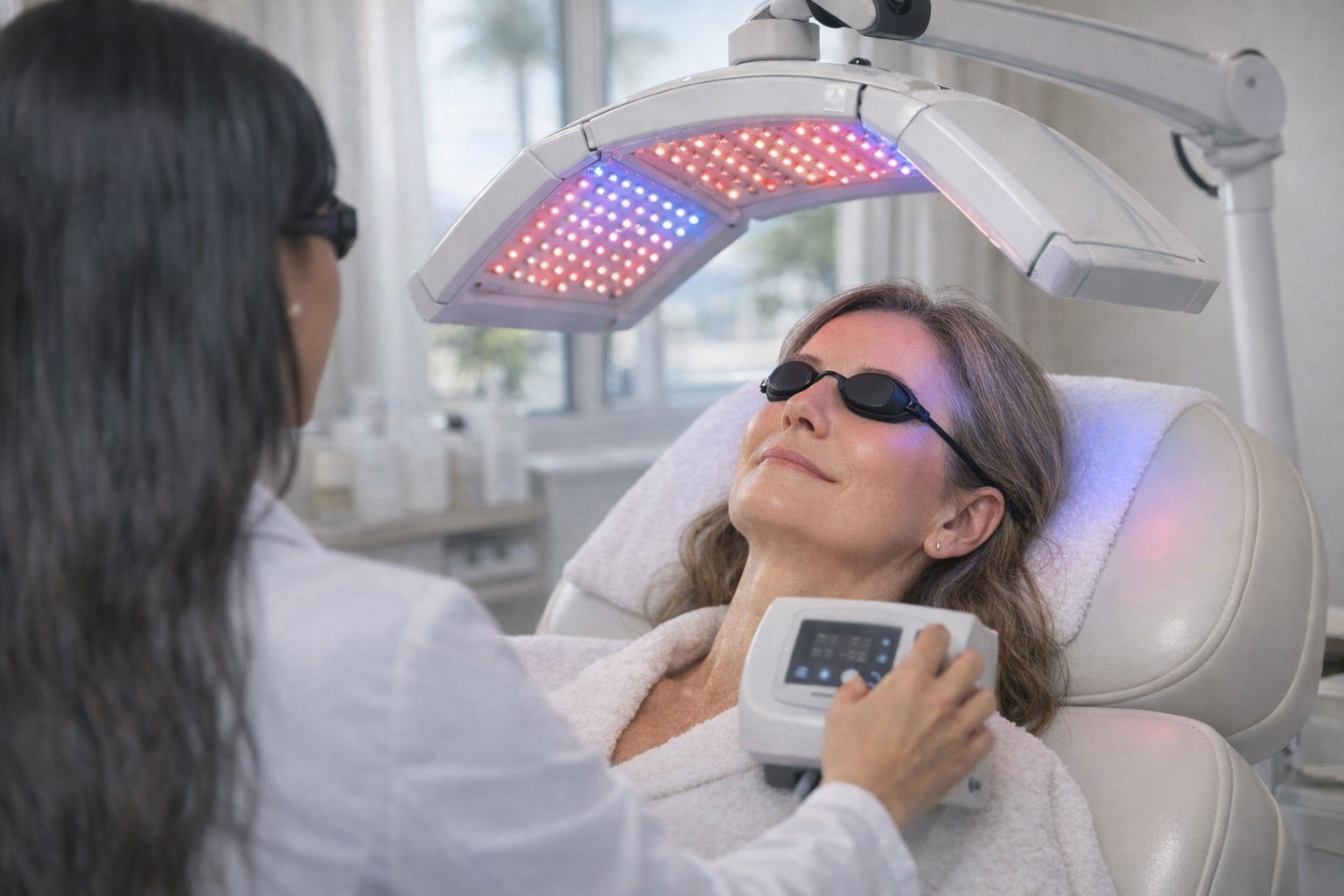
LED light therapy is a noninvasive treatment that uses specific wavelengths of light on the skin. Depending on the setting and your skin goals, it may help support acne-prone skin, calm visible redness, and improve the overall look of tone and texture over time. It is often chosen by people who want something gentle, low-downtime, and easy to fit into a broader skincare plan.
That said, LED light therapy is not a one-size-fits-all solution. Results can vary, and it works best when the treatment plan matches your skin concerns. A thoughtful evaluation can help you decide whether it makes sense on its own or as part of a larger approach.
Quick answer
- LED light therapy may help with acne-prone skin, mild redness, and early visible signs of aging.
- It is generally considered a gentle, noninvasive option with little to no downtime.
- Different light settings are used for different concerns, so the right approach matters.
- Many people use it as part of a larger skincare or in-office treatment plan.
- If your skin issue is persistent, worsening, or unclear, a dermatologist can help you decide what fits best.
What LED light therapy is
LED stands for light-emitting diode. In skincare, these devices deliver controlled light energy to the skin without breaking the surface. Different wavelengths are selected for different goals. In plain English, it is a gentle way to expose the skin to specific types of light that may support healthier-looking skin.
Because it is noninvasive, LED light therapy is often appealing to people who want a calm, minimalist treatment experience. It is commonly used in dermatology and aesthetic settings as a standalone option or alongside other services, depending on the concern being treated.
Common concerns LED light therapy may help with
- Acne-prone skin: It may help reduce the look of active breakouts and support clearer-looking skin over time.
- Visible redness: Some people use it to help calm skin that looks flushed or reactive.
- Early signs of aging: It may help soften the look of fine lines and improve overall skin appearance.
- Dull tone or uneven texture: It can be part of a plan to support smoother, more refreshed-looking skin.
- Post-procedure support: In some settings, clinicians may use it as a gentle add-on after certain treatments.
How different light colors are often used
You have probably heard people talk about blue light, red light, and other colors. In practice, the color reflects a different wavelength, and each wavelength is chosen for a different purpose. Blue light is often associated with acne-focused care, while red light is more commonly discussed for visible inflammation and early cosmetic aging concerns.
Not every device is the same, and not every concern responds the same way. That is one reason professional guidance can be useful, especially if you are trying to decide between at-home devices and in-office treatments.
What you can do at home
If you are considering an at-home LED device, keep your routine simple and consistent. Start with gentle cleansing, use products that suit your skin type, and avoid layering too many potentially irritating actives on the same day if your skin already feels sensitive. Slow and steady is usually better than doing too much at once.
- Follow the device instructions carefully.
- Use clean skin unless your clinician advises otherwise.
- Be cautious if your skin is irritated, peeling, or unusually sensitive.
- Keep expectations realistic and think of LED as supportive care, not a guaranteed fix.
- Stop and check in with a professional if something feels off or your skin worsens.
Professional options
In an office setting, LED light therapy may be offered on its own or paired with other treatments depending on your goals. Common options include acne-focused care, calming support for redness-prone skin, and cosmetic treatment plans aimed at maintaining a brighter, smoother appearance. The main advantage of a professional evaluation is that your clinician can help match the approach to your skin rather than guessing.
If your concern is more than mild, or if you are dealing with stubborn breakouts, ongoing redness, or texture changes that are not improving, it may make sense to look at a broader treatment plan instead of relying on LED alone.
When to see a dermatologist
LED light therapy can be part of a thoughtful skincare plan, but it is not the answer to every skin issue. It is worth seeing a dermatologist if you have breakouts that leave marks, redness that keeps returning, a rash you cannot identify, or skin changes that seem persistent or unexplained. If you are unsure, it is worth getting checked.
A dermatologist can evaluate what is actually going on and help you decide whether LED light therapy may be appropriate, whether something else may be a better fit, or whether a medical condition should be ruled out first.
FAQ
Is LED light therapy painful?
Most people describe it as comfortable and gentle. It is generally not associated with the kind of discomfort you might expect from more intensive procedures.
How quickly does LED light therapy work?
That can vary. Many people notice gradual changes rather than dramatic overnight improvement, and consistency usually matters.
Can LED light therapy replace my skincare routine?
Usually not. It is better thought of as one part of a broader plan that may also include a gentle routine, sun protection, and professional guidance when needed.
Is at-home LED the same as in-office treatment?
Not always. Devices vary, and professional treatment may offer a more tailored approach depending on your skin concerns.
Ready to get help?
Schedule an appointment or send a message and our team will get back to you.
Prefer to call? 954-666-3736
This article is for educational purposes and is not medical advice. For diagnosis and personalized treatment, please book an appointment with a board-certified dermatologist.
