

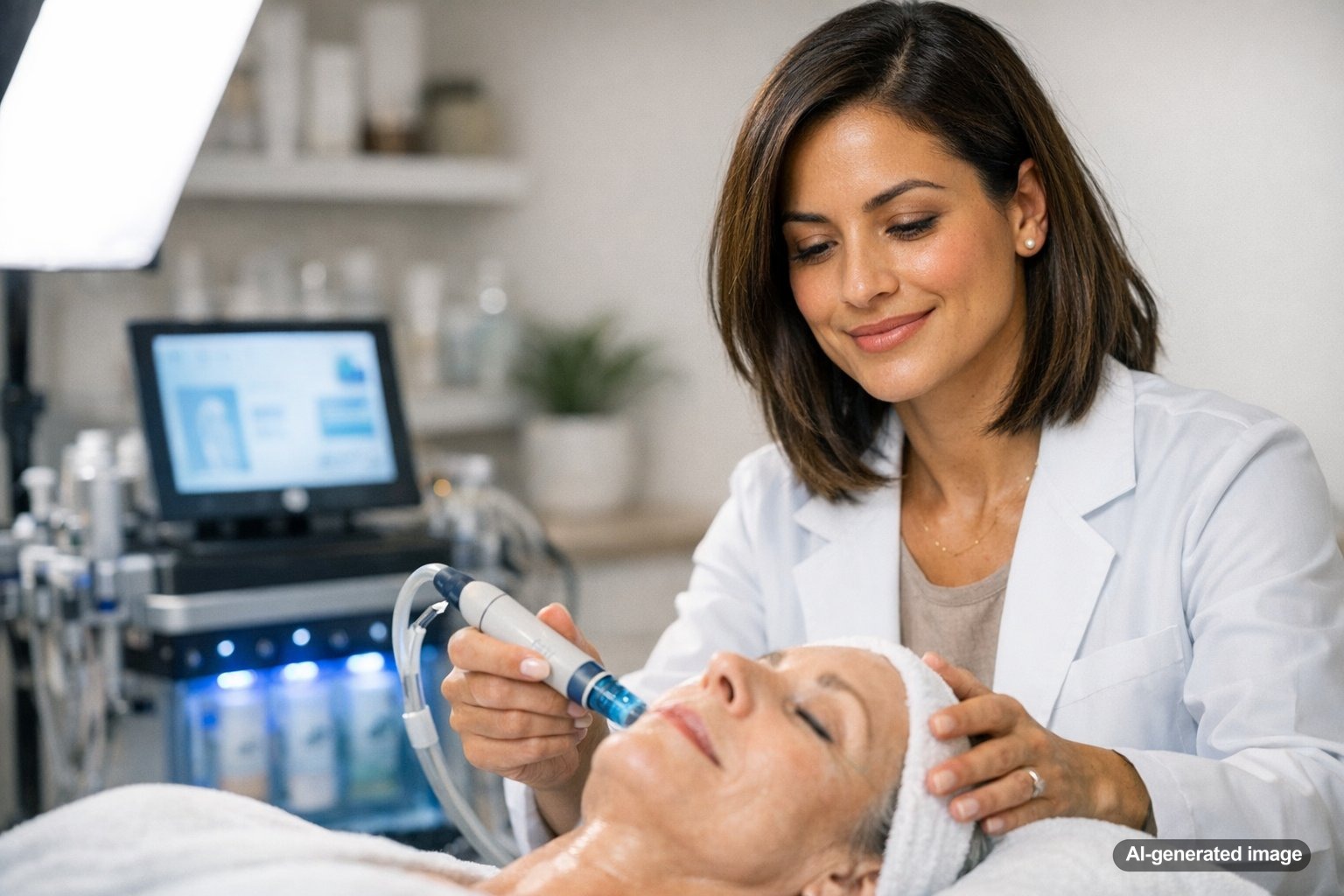
Hydrafacial-style treatments are popular because they can feel polished, efficient, and easy to fit into a busy routine. For many people, the appeal is simple: a treatment that focuses on cleansing, exfoliation, and hydration without a complicated recovery period.
If you’re curious but not sure what to expect, it helps to start with the basics. Below are some of the most common questions people ask before booking, along with straightforward answers to help you decide whether this kind of facial may fit your goals.
Quick answer
- Hydrafacial-style treatments usually focus on cleansing, exfoliating, extracting debris, and hydrating the skin in one session.
- Many people choose them when they want skin that looks fresher, smoother, and more polished.
- They may be a good fit for maintenance, event prep, or support for an overall skincare routine.
- Sensitivity level, active breakouts, and your current skincare products can affect how a treatment is approached.
- If you have ongoing skin concerns or you’re unsure what your skin needs, a dermatologist can evaluate your options.
1. What is a Hydrafacial-style treatment, exactly?
In plain English, it’s a facial treatment designed to clean the skin thoroughly while also helping it feel hydrated and refreshed. The exact steps can vary by office or device, but the general idea is similar: remove surface buildup, loosen congestion, and deliver hydrating ingredients in a controlled, gentle way.
People often like these treatments because they feel more structured than a basic facial, while still being approachable for routine maintenance. They are usually considered cosmetic skincare treatments rather than a substitute for medical dermatology care.
2. What skin concerns can it help with?
Hydrafacial-style treatments may help improve the look and feel of dullness, rough texture, dryness, mild congestion, and skin that seems tired or uneven. Many people notice that makeup applies more smoothly afterward and that their skin looks more refreshed.
That said, these treatments are not a cure-all. If someone has persistent acne, significant redness, melasma, a rash, or another ongoing concern, a cosmetic facial may be only one piece of the picture. In those situations, your clinician can help you decide whether a skincare treatment, a dermatologist visit, or both make the most sense.
3. Is it good for sensitive skin?
Sometimes, yes, but it depends on the person and on how the treatment is customized. Sensitive skin is not one single category. One person may react to strong acids, another may be irritated by friction, and someone else may simply have a more easily disrupted skin barrier.
A well-planned treatment can often be adjusted to be more conservative, but it is still important to mention stinging, flushing, recent irritation, retinoid use, or any history of strong reactions before treatment starts. If your skin has been acting unusually reactive, it’s worth getting checked before moving forward.
4. Does it hurt or have downtime?
Most people describe Hydrafacial-style treatments as comfortable. You may feel light suction, coolness, or a mild active sensation depending on the products used. For many patients, there is little to no downtime, which is one reason these treatments are often chosen before events or during travel-heavy seasons.
Still, responses vary. Some people notice temporary pinkness, especially if their skin is sensitive or if exfoliating steps are part of the session. Results and recovery can vary, so it’s better to think in terms of what is commonly noticed rather than what is guaranteed.
5. How should I prepare before the appointment?
Keep things simple. In the days leading up to a facial, many people do best when they avoid layering too many strong products at once. If your skin is already irritated, over-exfoliated, sunburned, or peeling, it may be better to postpone and have your skin evaluated first.
It’s also smart to mention recent treatments, active breakouts, cold sore history around the mouth, current skincare products, and any upcoming event. Even small details can help your provider choose a gentler approach.
6. What should I do after a Hydrafacial-style treatment?
Aftercare is usually straightforward: use a gentle cleanser, keep the skin moisturized, and be consistent with sunscreen. Many people also prefer to skip harsh scrubs, aggressive acids, or extra retinoid use right away if their skin feels freshly treated.
The goal after treatment is not to overwhelm the skin. A calm, simple routine often supports the best short-term experience, especially if your skin leans sensitive or dry.
When should you see a dermatologist instead of booking a facial?
A facial may be helpful for maintenance, but it is not the right first step for every concern. If you have a rash, painful acne, persistent redness, new or changing spots, repeated irritation, or a skin issue that keeps coming back, a dermatologist can evaluate what is going on and help you decide on the next step.
That is especially important if you are not sure whether your concern is cosmetic, inflammatory, or something that needs medical attention. Clear guidance early on can save time, money, and frustration.
FAQ
How is this different from a regular facial?
Hydrafacial-style treatments are usually more device-based and process-driven, with a focus on cleansing, exfoliation, extraction, and hydration in a set sequence. A regular facial may be more customized and hands-on, depending on the provider and your goals.
Can I get one before an event?
Many people do, especially when they want skin to look smoother and more refreshed. Because skin can react differently, it’s often better not to try any treatment for the first time right before an important event.
How often do people get these treatments?
That varies widely. Some people schedule them occasionally for maintenance, while others use them as part of a broader skincare plan. Frequency depends on goals, skin sensitivity, and budget.
Can it replace my skincare routine?
No. In most cases, it works best as a complement to a thoughtful home routine, not a replacement for one.
At Waverly DermSpa, we offer HydraFacial and can help you understand whether it may be appropriate.
Ready to get help?
Schedule an appointment or send a message and our team will get back to you.
Prefer to call? 954-666-3736
This article is for educational purposes and is not medical advice. For diagnosis and personalized treatment, please book an appointment with a board-certified dermatologist.
