

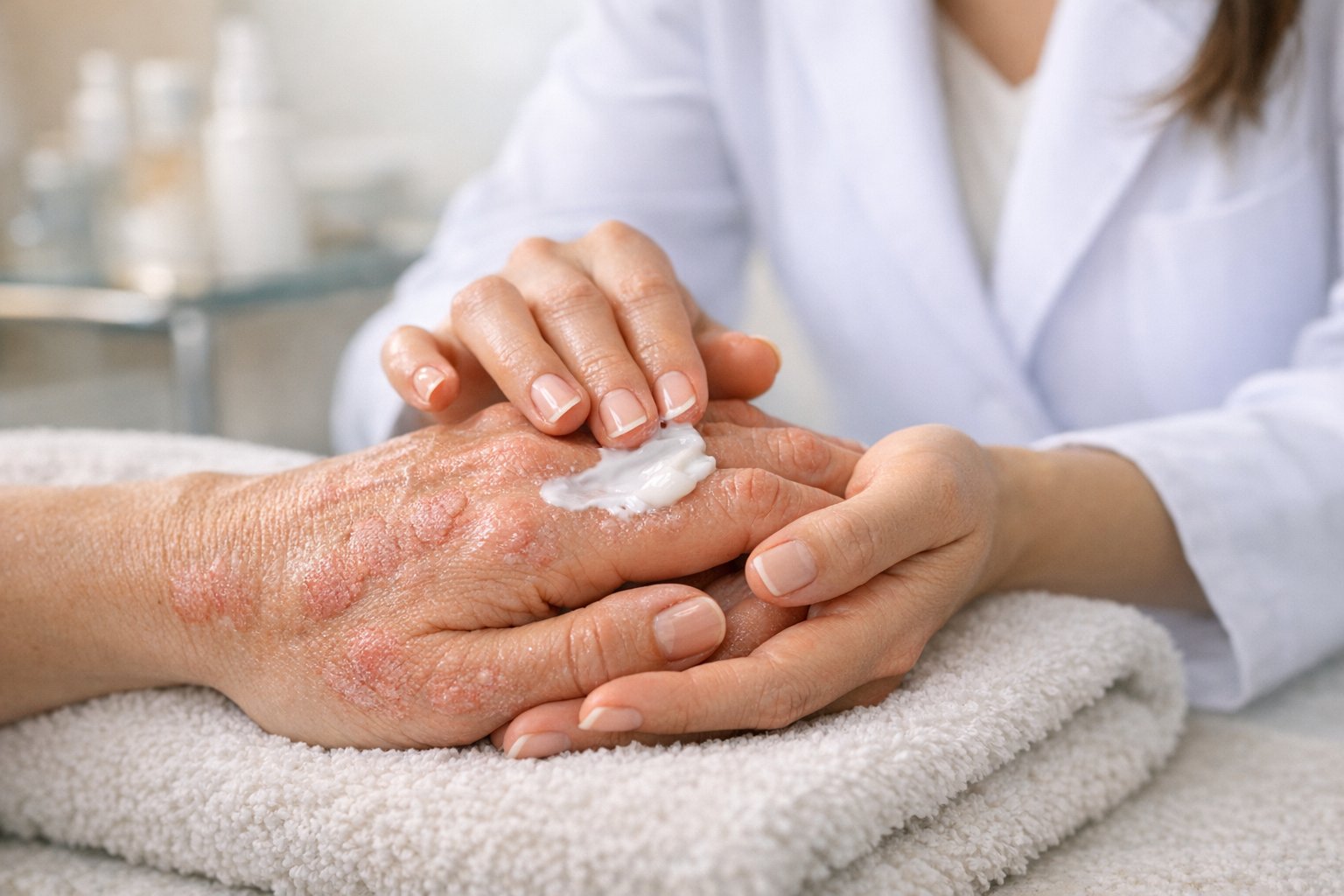
When psoriasis shows up on the hands, it can feel especially frustrating. Hands are constantly in motion and constantly exposed: soap, sanitizer, hot water, friction, weather, and whatever the day brings.
The goal of daily protection is simple: reduce irritation, support the skin barrier, and create consistent habits that make flares less likely. This guide shares practical, low-effort steps that many people find helpful, plus clear signals for when a dermatologist should take a closer look.
Quick answer
- Use lukewarm water and a gentle cleanser; avoid harsh scrubs and very hot water.
- Moisturize after every hand wash; ointments and thick creams often help most for rough, cracked skin.
- Protect hands during wet work and cleaning with task-appropriate gloves, and keep cotton liners handy if needed.
- Reduce friction where you can: pat dry, avoid picking, and consider barrier creams before irritant exposure.
- If cracks bleed, pain is escalating, or it is not improving, a dermatologist can evaluate and tailor treatment.
What it is (in plain English)
Psoriasis is an inflammatory skin condition where the immune system activity in the skin can speed up how quickly skin cells build up. On the hands, this can show up as thickened, dry patches, scaling, redness, tenderness, or painful fissures (cracks). Because hands get frequent washing and friction, even mild psoriasis can feel intense and disruptive.
Not every scaly or cracked hand rash is psoriasis. Eczema (including irritant or allergic contact dermatitis), fungal infections, and other conditions can look similar. A dermatologist can help sort out what is going on, especially if home care is not enough.
Common causes and triggers
Psoriasis is not caused by being unclean, and it is not contagious. Flares can be influenced by a mix of internal and external factors. Common triggers for hand flares can include:
- Frequent hand washing, hot water, and harsh soaps or detergents
- Alcohol-based sanitizers and repeated exposure without re-moisturizing
- Wet work (dishwashing, cleaning, hair care, healthcare work)
- Cold, dry air and rapid weather changes
- Friction and pressure (tools, sports equipment, repeated gripping)
- Skin injury or irritation (scratches, picking, cracking)
- Stress and poor sleep (for some people)
- Certain illnesses or infections (in some cases)
What you can do at home
These are conservative, skin-friendly steps that can support comfort and the skin barrier. They are not a substitute for medical care, but they can be a strong foundation.
Make hand washing gentler
Use lukewarm water, keep wash time brief, and choose a gentle, fragrance-free cleanser when possible. Pat hands dry rather than rubbing. If sanitizer is needed, let it fully dry, then moisturize soon after.
Moisturize with strategy (not just occasionally)
Hands often do best with thicker textures. Many people prefer an ointment or rich cream after washing and before bed. Apply to slightly damp skin if you can. If fingertips crack easily, focus on those areas first and reapply often.
Use gloves the right way
For cleaning or dishwashing, gloves can reduce irritant exposure. If sweating makes things worse, try cotton glove liners under protective gloves, and take breaks to let skin breathe. Avoid wearing occlusive gloves for long stretches unless needed for a specific task.
Lower friction and reduce micro-irritation
Small changes add up. Keep nails short to reduce accidental scratching. Avoid picking scale, which can worsen irritation and lead to deeper cracking. If you use tools or weights, consider padded grips or protective tape where skin repeatedly rubs.
Watch for contact triggers
If flares cluster after a new product or repeated exposure at work, consider what touches your hands most: soaps, fragrances, cleaning agents, adhesives, and even some glove materials. A dermatologist can help evaluate for allergic contact dermatitis if the pattern suggests it.
Professional options
If hand psoriasis is persistent or interfering with daily life, a dermatologist can evaluate severity, rule out look-alikes, and discuss options. Common categories may include:
- Prescription topical medications to reduce inflammation and scale
- Targeted light-based therapy in appropriate cases
- Systemic or biologic medications for more extensive or refractory disease
- Evaluation for coexisting hand dermatitis or infection when suspected
Because the hands are a high-use area, treatment plans often combine medical therapy with barrier repair and trigger reduction for best long-term control.
When to see a dermatologist
It is worth booking an evaluation if any of the following are true:
- Deep cracks, bleeding, significant pain, or trouble using your hands
- Signs of infection such as increasing warmth, swelling, pus, or spreading redness
- Rapid worsening, new pustules, or severe tenderness
- Uncertainty about the diagnosis (psoriasis vs eczema, fungus, or another condition)
- Home care is not helping, or symptoms keep returning quickly
- Nail changes (pitting, lifting, thickening) or joint pain and stiffness
FAQ
Is psoriasis on the hands contagious?
No. Psoriasis is not contagious and cannot be spread through touch, sharing towels, or handshakes.
Why do my hands flare more than other areas?
Hands face frequent washing, friction, and exposure to irritants. That daily wear can disrupt the skin barrier and make inflammation more noticeable in this location.
Could it be eczema instead of psoriasis?
Yes. Hand eczema and contact dermatitis can look similar, and some people have both. If the pattern is unclear or treatments are not working, an exam can help clarify.
Are sanitizers always bad for hand psoriasis?
Not always, but frequent use can be drying. If you need sanitizer, a practical approach is to moisturize after it dries and to use a gentle cleanser and lukewarm water when washing.
What moisturizer texture is usually best for cracked hands?
Many people find thick creams or ointments feel most protective, especially after washing and before sleep. The best choice is the one you can use consistently and comfortably.
Ready to get help?
Schedule an appointment or send a message and our team will get back to you.
Prefer to call? 954-666-3736
Disclaimer
This article is for educational purposes and is not medical advice. For diagnosis and personalized treatment, please book an appointment with a board-certified dermatologist.
Sources & further reading
- American Academy of Dermatology: Psoriasis overview
- NIAMS: Psoriasis symptoms, causes, and risk factors
- National Psoriasis Foundation: Psoriasis on hands
